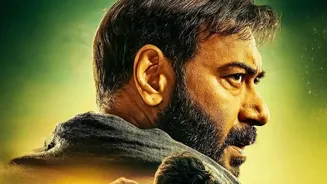







Bhuvan Shome (1969)
Often credited with launching the Indian New Wave cinema movement, Mrinal Sen's 'Bhuvan Shome' is a landmark film. It won three National Film Awards: Best Feature Film, Best Director for Sen, and Best Actor for Utpal Dutt. The story follows a rigid and lonely
senior bureaucrat, Bhuvan Shome (Dutt), who takes a holiday to rural Gujarat. His experiences there, particularly his encounter with a charming young woman, lead to a profound personal transformation. The film was celebrated for its departure from mainstream cinematic conventions, using a modest budget, location shooting, and a fresh narrative style. It demonstrated that Hindi cinema could be artistically ambitious and deeply personal, paving the way for a generation of independent filmmakers.
Manthan (1976)
A film of the people, by the people, for the people. Shyam Benegal's 'Manthan' is a powerful drama with a unique distinction: it was crowdfunded by 500,000 dairy farmers from Gujarat, each contributing two rupees. The film, which won the National Film Award for Best Feature Film in Hindi and Best Screenplay, is a fictionalised account of the genesis of the White Revolution in India. It tells the story of a young veterinarian who arrives in a village to start a milk cooperative, facing resistance from local businessmen and caste hierarchies. Featuring stellar performances from Girish Karnad, Smita Patil, and Naseeruddin Shah, 'Manthan' is a testament to the power of collective action and a brilliant example of social realism in Indian cinema. Its recent restored screening at Cannes proves its story is as relevant as ever.
Salaam Bombay! (1988)
Mira Nair's directorial debut is a raw, unflinching, and deeply compassionate look at the lives of street children in Mumbai. Winner of the National Film Award for Best Feature Film in Hindi, 'Salaam Bombay!' was also India's second-ever submission to be nominated for the Academy Award for Best Foreign Language Film. The film follows a young boy, Krishna, as he navigates the city's underbelly after being abandoned by his mother. To achieve its stunning authenticity, Nair cast actual street children in many roles, providing them with acting workshops before filming. The result is a heart-wrenching and unforgettable cinematic experience that blurs the line between documentary and fiction, giving a voice to the voiceless and inspiring the creation of the Salaam Baalak Trust to aid street children.
Lagaan (2001)
A masterful blend of historical epic, sports drama, and musical, 'Lagaan' proved that a film could be both a massive commercial success and a critical darling. The film won a staggering eight National Film Awards, including the award for Best Popular Film Providing Wholesome Entertainment. Set in 1893 during the British Raj, the story revolves around a small village challenged by an arrogant officer to a game of cricket as a wager to cancel their high taxes. Director Ashutosh Gowariker crafted a universally appealing underdog story that captivated audiences globally, earning an Academy Award nomination for Best Foreign Language Film. With a stellar cast led by Aamir Khan and an iconic score by A.R. Rahman, 'Lagaan' remains a monumental achievement in modern Indian filmmaking.