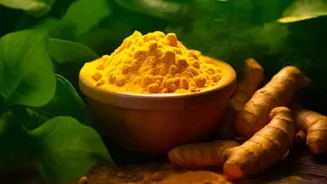







Turmeric (Haldi): The Golden Healer
A staple in every Indian kitchen, turmeric is a powerhouse during the monsoon. Its active compound, curcumin, has potent anti-inflammatory, antioxidant, and antimicrobial properties that help your body fight off infections. The rainy season is notorious
for colds, coughs, and sore throats, and a daily dose of turmeric can help strengthen your immune cells to combat these common ailments. For maximum benefit, always pair it with a pinch of black pepper, which enhances the absorption of curcumin. Adding it to curries, dals, or a comforting glass of warm milk before bed is an easy way to harness its benefits.
Ginger (Adrak): The Digestive Aid
That warm cup of ginger tea is more than just a comforting ritual on a rainy day. Ginger is a warming spice that helps the body adapt to the cool, damp weather. It contains gingerol, a compound known for its ability to soothe an upset stomach, relieve sore throats, and clear congestion. The monsoon season often weakens our digestive fire, or 'Agni', according to Ayurveda, leading to bloating and indigestion. Ginger stimulates digestion and helps keep your gut healthy. Whether brewed in tea, added to soups, or grated into your cooking, it’s an essential ingredient for monsoon wellness.
Garlic (Lehsun): Nature's Antibiotic
Garlic is highly valued as nature's antibacterial and antiviral booster. When crushed or chopped, it releases a potent compound called allicin, which actively targets harmful bacteria and viruses. This is particularly crucial during the monsoon when the risk of waterborne illnesses spikes. Regular consumption of garlic can significantly boost the activity of your white blood cells, which are your body's first line of defence against disease. Incorporating a few fresh cloves into your daily dals, curries, or soups provides a powerful shield against common seasonal infections.
Seasonal Fruits: Amla and Pomegranate
While many fruits are available year-round, focusing on seasonal options is key. Amla, or Indian Gooseberry, is an exceptional source of Vitamin C, which is vital for producing the white blood cells that fight infection. Pomegranates are also packed with Vitamin C and powerful antioxidants that protect your cells from damage. Including these fruits in your diet can significantly bolster a weakened immune system during the damp and humid months. Enjoy them whole or as fresh juice to get a natural dose of immunity-boosting nutrients.
Yoghurt (Dahi): The Gut Health Guardian
A healthy gut is directly linked to a strong immune system. Fresh, homemade yoghurt is an amazing source of probiotics—the good bacteria that support gut health and regulate digestion. This is especially important during the monsoon when digestive issues are common. Consuming probiotics can help prevent stomach-related problems and boost your body's overall immunity. It's best to consume fresh dahi during the daytime. You can have it plain, as part of a raita, or in a refreshing glass of buttermilk (chaas).
A Note on Leafy Greens
While leafy vegetables like spinach and cabbage are nutritional powerhouses, they require extra caution during the monsoon. The damp, humid weather is a perfect breeding ground for germs and bacteria, which can easily contaminate the leaves. If you choose to eat them, it is essential to wash them thoroughly. Soaking them in salt or vinegar water for 15-20 minutes, followed by a rinse under running water, can help remove contaminants. Most importantly, always cook your leafy greens well during this season; avoid consuming them raw in salads or chutneys to minimize health risks.