


The Hidden Water in Your Greens
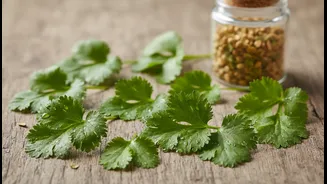
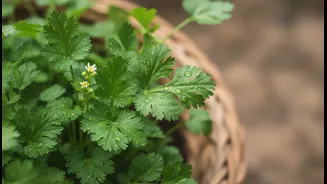
The hero of this story, the coriander stem, is much more than just a flavourful herb. Fresh coriander leaves and stems are composed of over 92% water. While the leaves are delicate, the stems act as microscopic pipelines, holding a significant amount
of this moisture within their fibrous structure. This high water content is the crucial first ingredient for the phenomenon that follows. When you mix chopped coriander, stems and all, into your pakora batter, you're essentially embedding tiny water balloons throughout the mixture.
A Plunge into Extreme Heat
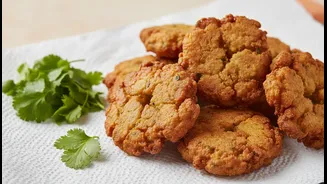
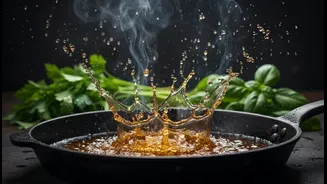
The second act begins the moment the pakora is dropped into hot oil, typically heated to between 175-190°C. This temperature is nearly twice the boiling point of water. As the pakora hits the oil, the heat immediately begins to cook the outer layer of the batter. The batter itself, often made from gram flour (besan), starts its transformation. Gram flour is excellent at forming a crust, creating a framework that begins to solidify almost instantly. This rapid crust formation is key, as it sets the stage for the main event happening inside.
The Great Escape of Steam
Trapped inside the rapidly cooking batter, the water within the coriander stems heats up dramatically. When the water reaches 100°C, it turns into steam. This phase change from liquid to gas is incredibly powerful; water expands to roughly 1,700 times its original volume when it becomes steam. This explosive expansion exerts immense pressure on its surroundings. It's the same principle that makes popcorn pop and leavens puff pastry. In the pakora, this rapidly expanding gas needs to go somewhere, pushing violently against the still-pliable batter from the inside.
The Batter's Critical Role
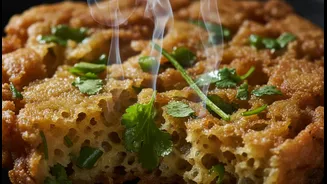
This is where the unique properties of the pakora batter come into play. The gram flour batter is not just a coating; it's a structural element. As it fries, the starches in the flour hydrate and then harden, creating a crisp, porous shell. This shell is strong enough to contain the initial force of the expanding steam, but also flexible enough to stretch and expand around it. Instead of the steam bursting right through, the batter framework balloons outward, creating a hollow cavity—the steam pocket. The process dehydrates the outer surface, ensuring the signature crispiness of a good pakora.
The Delicious Result: A Pocket of Air
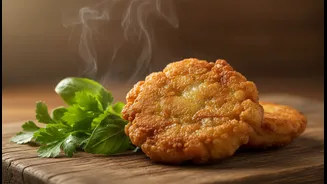
Once the pakora is cooked and removed from the oil, it begins to cool. The steam that was trapped inside the pocket condenses back into a minuscule amount of water, leaving behind a near-empty space. The result is a pakora that is light, airy, and has a fascinating textural contrast between the crispy outer shell and the tender, cooked ingredients within. This very process prevents the pakora from becoming dense and heavy. That delightful pocket of air is a testament to the perfect interplay between a wet ingredient, a hot cooking medium, and a batter that can hold it all together just long enough for science to do its delicious work.