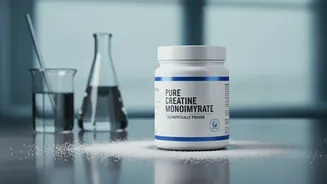







Myth: Creatine Is a Performance-Enhancing Steroid
This is one of the most persistent and incorrect myths. Creatine is not a steroid. It's a naturally occurring compound made from amino acids, which are the building blocks of protein. Your own body produces it in the liver, kidneys, and pancreas, and it's
also found in foods like red meat and fish. Its primary role is to help your muscles produce energy during short, high-intensity activities. Supplements simply increase your body's existing stores of creatine, allowing you to train harder and recover more efficiently. It has nothing in common with anabolic steroids, which are synthetic hormones.
Myth: Creatine Will Damage Your Kidneys and Liver
The concern about kidney and liver health is understandable but largely unfounded in healthy individuals. Decades of research, including hundreds of studies, have consistently shown that taking creatine at recommended doses does not cause harm to the kidneys or liver. One long-term study followed participants for four years and found no negative side effects. The confusion often arises because creatine can slightly increase blood levels of creatinine, a waste product that doctors measure to check kidney function. However, this small increase is a normal part of creatine metabolism and doesn't indicate kidney damage in people with healthy kidneys.
Myth: Creatine Causes Baldness and Hair Loss
The fear of hair loss from creatine stems from a single, small study from 2009 which suggested it might increase levels of DHT, a hormone linked to hair loss. However, that study had limitations and, crucially, did not actually measure hair loss. More recent and direct research, including a 12-week randomized controlled trial from 2025, found no significant differences in DHT levels or hair loss between participants taking creatine and those taking a placebo. The current body of scientific evidence provides strong evidence against the claim that creatine supplementation contributes to hair loss.
Myth: A High-Dose 'Loading Phase' Is Mandatory
You've probably heard that you need to start creatine with a “loading phase,” taking a high dose of around 20 grams per day for a week. While loading is a scientifically valid way to saturate your muscles with creatine quickly—usually within a week—it is not necessary. You can achieve the exact same level of muscle saturation by taking a smaller, consistent daily dose of 3 to 5 grams. This slower approach just takes longer, typically three to four weeks, to reach the same endpoint. For most people, skipping the loading phase is simpler, more sustainable, and can help avoid the potential for minor stomach discomfort that sometimes comes with high doses.
Fact: The Right Way for Beginners to Use It
For beginners, the most effective strategy is the one you can stick with consistently. A daily maintenance dose of 3 to 5 grams of creatine monohydrate is sufficient to achieve and maintain full muscle saturation over time. Timing is less important than consistency; simply take it at a time of day that you'll remember, such as with a meal or in a post-workout shake. Mixing it with carbohydrates may slightly improve retention. Staying well-hydrated is also important, as creatine pulls water into your muscle cells. This effect contributes to muscle fullness and is not the same as fat gain or bloating.
Fact: It Genuinely Improves Performance
Creatine is one of the most effective supplements for improving strength, power, and muscle mass when combined with resistance training. It works by increasing the availability of ATP, your body's main energy source, which allows you to perform more work during intense exercise. This means you might be able to lift more weight or complete a few extra reps, which, over time, leads to greater gains. Beyond the gym, research is also exploring its potential benefits for brain health, cognitive function, and healthy aging.