





The Seated Spinal Twist
A gentle twist is one of the most effective ways to relieve tension along the spine. To perform this stretch, sit upright in your chair with both feet flat on the floor. While keeping your hips facing forward, slowly twist your upper body to one side,
using the armrest or the back of the chair for a gentle pull. Hold the position for 15 to 30 seconds, breathing deeply to lengthen your spine. You should feel a relieving stretch, not a sharp pain. Gently return to the center and repeat on the opposite side. This movement helps improve spinal mobility and can counteract the slumped posture many of us adopt during the day.
Seated Cat-Cow Stretch
This classic yoga pose is perfectly adapted for the office chair and works wonders for spinal flexibility. Sit with your feet on the floor and your hands on your knees. As you inhale, arch your back, push your chest forward, and look up toward the ceiling (the “Cow” pose). As you exhale, round your spine, tuck your chin to your chest, and gently pull your belly button inward (the “Cat” pose). Repeat this fluid movement 5 to 10 times. It helps to warm up the spine, reduce stiffness, and encourage better posture by moving your vertebrae through their full range of motion.
The Chest Opener
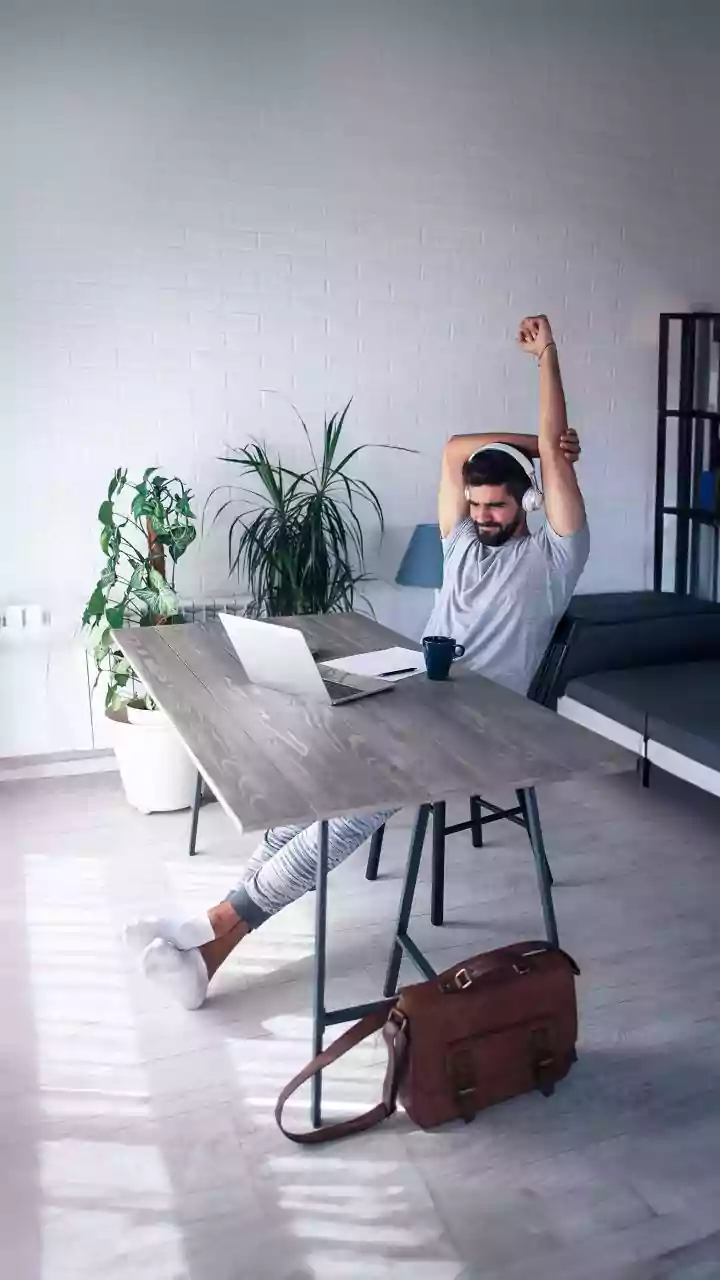
Hours spent leaning over a keyboard can cause your chest muscles to tighten and your shoulders to round forward, contributing to upper back pain. To counteract this, perform a chest opener. Sit at the edge of your chair and clasp your hands behind your back. If you can't reach, simply grab the sides or back of your chair. Straighten your arms and gently pull your shoulder blades together, opening up your chest. Lift your chest toward the ceiling and hold for 15 to 20 seconds. This stretch helps correct a slouched posture and relieves tension in both the chest and shoulders.
Shoulder Blade Squeezes
This simple move directly targets and strengthens the muscles in your upper back that are responsible for maintaining good posture. Sit tall with your arms relaxed at your sides. Gently squeeze your shoulder blades together, imagining you are trying to hold a small object between them. Be careful not to shrug your shoulders up toward your ears; keep them down and relaxed. Hold the squeeze for five seconds, then release. Repeating this 10 to 15 times can help build endurance in your postural muscles, making it easier to sit upright without conscious effort throughout the day.
Upper Trapezius and Neck Stretch
Neck and shoulder tension are common complaints for desk workers. To gently release this area, sit up straight and slowly tilt your right ear toward your right shoulder until you feel a light stretch along the left side of your neck. To deepen the stretch slightly, you can place your right hand on your head, but do not pull. Simply let the weight of your hand add gentle pressure. Hold for 15-20 seconds, then slowly return to the center and repeat on the other side. This helps release tightness that can lead to headaches and upper back discomfort.
The Link Between Movement and Productivity
These exercises do more than just fight physical stiffness. Taking short, active breaks increases blood flow and oxygen to your entire body, including your brain. This improved circulation can help reduce fatigue, enhance mental clarity, and boost your ability to focus on complex tasks. By reducing the distracting discomfort of a sore back or tight neck, you free up mental energy that would otherwise be spent coping with pain. Integrating these micro-breaks into your daily routine is a proven way to not only feel better physically but also to maintain a higher level of performance and productivity throughout your workday.