


What is a Light-Day?
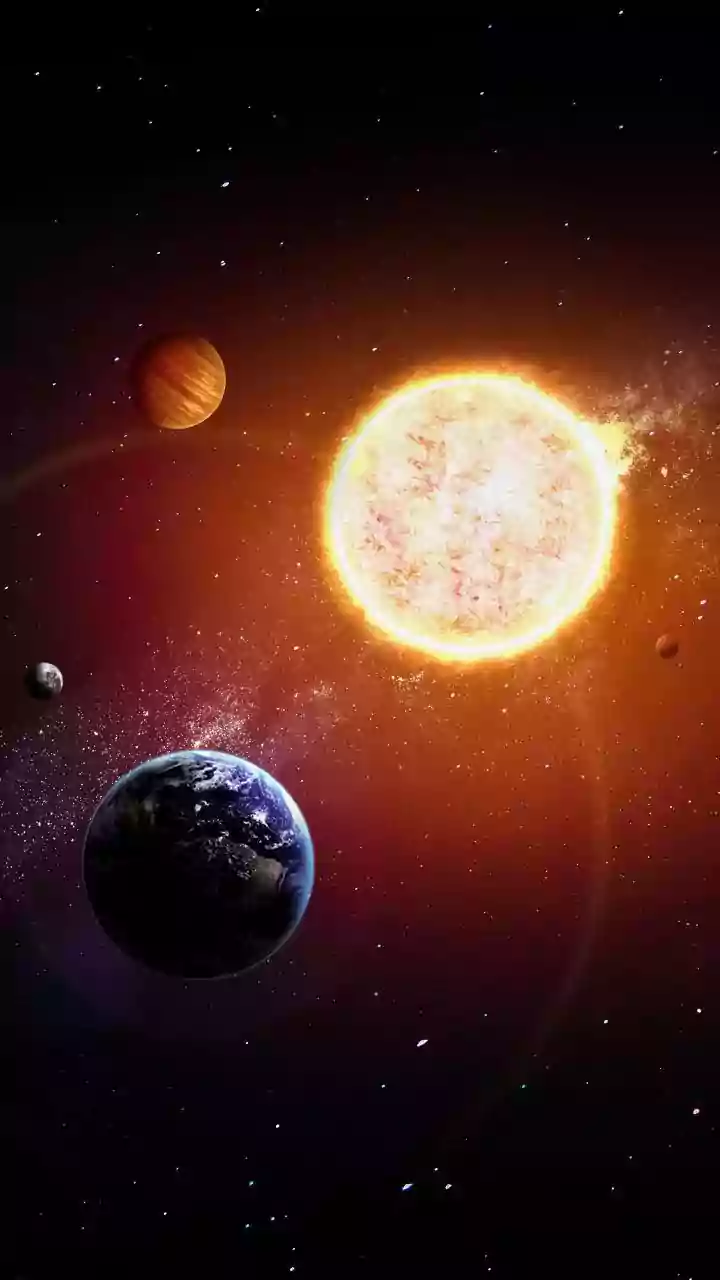
A light-day is a measure of distance, not time. It is the distance that light, the fastest thing in the universe, travels in a single 24-hour period. That distance is an almost incomprehensible 25.9 billion kilometres. To put that into perspective, light from
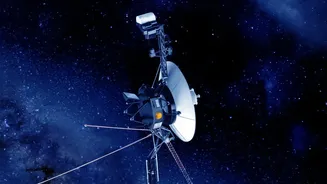
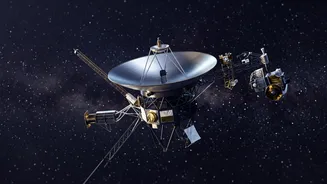
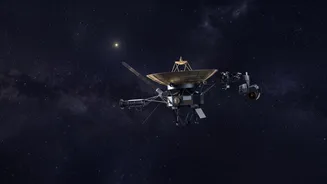
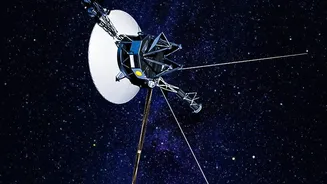
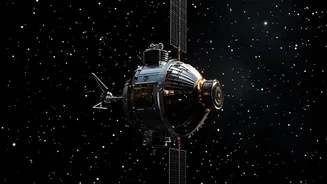
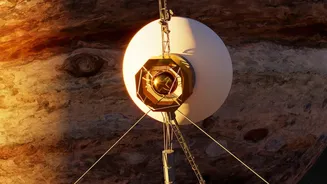
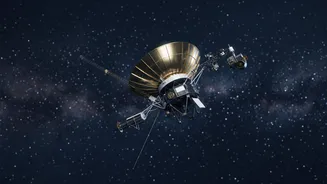
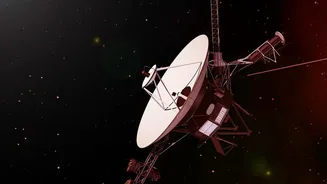
the Moon reaches us in about 1.3 seconds, and sunlight takes just over eight minutes to travel to Earth. Voyager 1 will be so far away that a radio signal, which travels at the speed of light, will take a full day to reach it. A round-trip communication — sending a command and receiving a confirmation — will take 48 hours. This milestone marks the first time any human-made object has ever reached such a distance from our planet.
A Journey for the Ages
Launched on September 5, 1977, Voyager 1's original mission was to explore Jupiter and Saturn. It revolutionised our understanding of these gas giants and their moons, discovering volcanic activity on Jupiter's moon Io and revealing the complexities of Saturn's rings. After its planetary flyby of Saturn in 1980, a gravitational slingshot sent it hurtling up and out of the plane of the solar system. On August 25, 2012, it made history by crossing the heliopause — the boundary where the Sun's solar wind gives way to the interstellar medium — officially becoming the first spacecraft to enter interstellar space. Since February 1998, it has held the title of the most distant human-made object from Earth.
Keeping a Legend Alive
Keeping a nearly 50-year-old spacecraft functioning in the frigid emptiness of interstellar space is a monumental challenge. Voyager 1 is powered by Radioisotope Thermoelectric Generators (RTGs), which convert the heat from decaying plutonium into electricity. With its power supply dwindling by about four watts each year, NASA engineers have become experts in energy conservation, strategically shutting down non-essential systems to keep the remaining science instruments running. A recent power-saving manoeuvre in September 2026 is expected to extend the probe's scientific operations. This came shortly before a communications scare in October 2026, when the probe went silent for 48 hours before its signal was reacquired, a reminder of the mission's fragility at such extreme distances.
Humanity's Farthest Messenger
Beyond its scientific mission, Voyager 1 serves a profound cultural purpose. Attached to its side is the Golden Record, a 12nd goldndated copper disc intended as a message in a bottle for the cosmos. Curated by a committee led by the late astronomer Carl Sagan, the record contains a story of our world. It includes 116 images, a variety of natural sounds, music from different cultures and eras, and spoken greetings in 55 languages. There are sounds of wind and surf, diagrams of human anatomy, Bach and Beethoven, and the brainwaves of a woman in love. While the chances of it being found are incredibly slim, Sagan noted that launching this 'bottle' into the cosmic 'ocean' says something very hopeful about life on this planet.