



The Invisible Toll of Space
For decades, we’ve known that space is tough on the human body. Without Earth’s gravity and protective magnetic field, astronauts face a barrage of challenges: bone density loss, muscle atrophy, immune system changes, and exposure to cosmic radiation.
Astronauts often report fatigue and a decline in physical and cognitive abilities during long missions. But a persistent question has been whether we can see the damage starting before it becomes a noticeable problem. What if we could spot the earliest signs of trouble at a biological level? This question has become urgent as space agencies like NASA and ISRO plan for long-duration missions to the Moon and Mars, where medical support is light-years away.
A Look Inside the Cellular Powerhouse
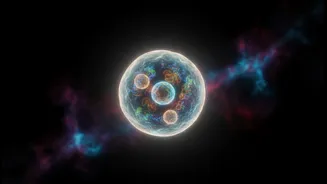
To find the answer, scientists are looking deep inside the body, at the very machinery that powers us: mitochondria. Think of mitochondria as the microscopic power plants within each of our cells. They take the food we eat and the air we breathe and convert it into adenosine triphosphate (ATP), the energy currency that fuels everything from muscle contractions to brain activity. When these power plants run efficiently, we feel energetic and healthy. But when they are damaged or become dysfunctional, energy production falters, leading to cellular stress, inflammation, and eventually, organ and system-level problems. This is what researchers now believe is happening to astronauts.
The Breakthrough Discovery
A wave of recent studies has provided a stunning insight: spaceflight directly impairs mitochondrial function. By analyzing blood and urine samples from dozens of astronauts who have served on the International Space Station (ISS), researchers found a consistent pattern. The stressors of space—a combination of microgravity, radiation, and even psychological stress—cause mitochondria to become dysfunctional. More importantly, biomarkers indicating this damage appear in the astronauts' bodies before they report significant performance drops or feelings of illness. This is a crucial discovery. It’s like having an engine warning light that comes on before the car starts sputtering, giving the driver time to fix the issue.
From Lab Bench to Launch Pad
This research isn't based on a single study but a comprehensive effort involving multi-omics analysis, which looks at everything from genes (transcriptomics) to proteins (proteomics) and metabolic byproducts (metabolomics). The NASA Twin Study, which famously compared astronaut Scott Kelly during his year in space to his Earth-bound twin Mark, was a key source of data, revealing differences in mitochondrial activity. Scientists also studied tissue from mice flown into space, and across different studies and different tissues, the conclusion was the same: mitochondrial function was adversely affected by space travel. This consistent finding across human and animal models makes the evidence particularly strong.
Why Early Detection Is a Game-Changer
On a three-year mission to Mars, an astronaut can't just call a doctor for a check-up. Identifying a problem only after an astronaut becomes too sick or fatigued to perform their duties could be catastrophic for the mission. This is why detecting mitochondrial dysfunction early is so revolutionary. It provides a new way to monitor astronaut health in real-time. With early warnings, mission control could recommend specific countermeasures. These interventions could be as simple as adjusting an astronaut’s diet with antioxidant-rich foods, prescribing specific exercise regimens to stimulate mitochondrial health, or developing targeted supplements or medications to protect these cellular powerhouses from the stresses of space.
The Future of Deep Space Health
Understanding this hidden, cellular damage is the first step toward overcoming it. The research opens the door to developing a new generation of health monitoring tools and protective measures for astronauts. It shifts the focus from simply treating symptoms to proactively managing health at a fundamental biological level. As humanity pushes further into the solar system, ensuring our explorers can not only survive but thrive will be paramount. This deeper understanding of how the body adapts—and fails to adapt—to the alien environment of space is critical. It’s the knowledge that will help turn the dream of becoming a multi-planetary species into a safe and sustainable reality.