



This Year's Cosmic Portrait: Centaurus A
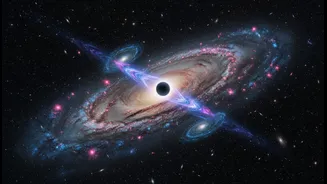
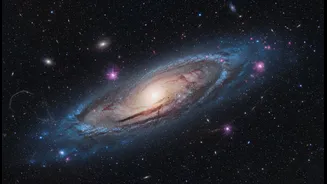
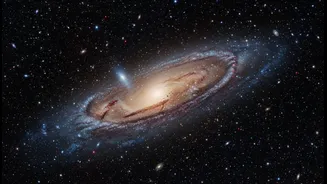
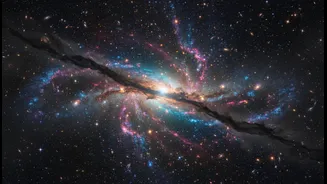
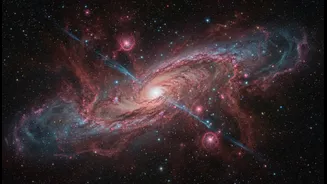
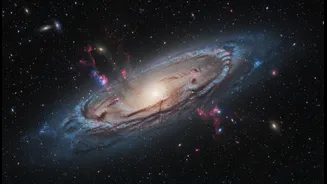
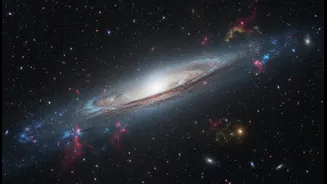
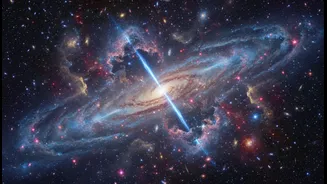
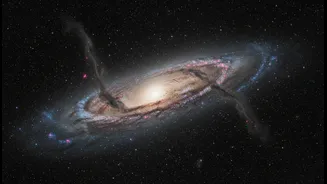
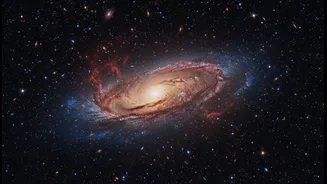
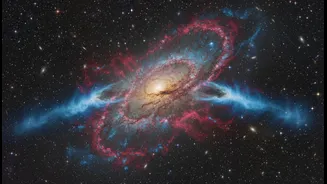
For its fourth anniversary, NASA has released an astonishingly detailed image of Centaurus A, a galaxy located a relatively close 11 million light-years from Earth. This isn't just any galaxy; it's what astronomers call a 'starburst' galaxy, a place of intensely
high star formation. Its peculiar shape is the result of a violent collision with another galaxy that occurred about two billion years ago. This cosmic crash left Centaurus A with an abundance of gas and dust, the raw materials for both new stars and a ravenous supermassive black hole at its center. This activity makes it a perfect natural laboratory for scientists to study how galaxies and black holes evolve together.
Seeing Through the Dust
Previous attempts to study Centaurus A’s core with telescopes like Hubble were blocked by thick lanes of cosmic dust that obscure visible light. While NASA's retired Spitzer Space Telescope could see the galaxy in infrared, it couldn't resolve individual stars. This is where Webb's power shines. Using its Mid-Infrared Instrument (MIRI) and Near-Infrared Camera (NIRCam), Webb pierces through the dust to reveal what lies beneath. What was once a hazy glow is now a breathtaking landscape of millions of individual stars. The new image showcases glowing reddish-purple dots, which are either old stars shedding material or stellar nurseries where new stars are being born.
The Science Behind the Spectacle
These new images are far more than just pretty pictures. By being able to see individual stars, scientists can now perform a kind of 'galactic archaeology'. They can map out the millions of stars to create a timeline of Centaurus A's history—pinpointing when bursts of star formation happened after the ancient collision. The data also reveals a complex relationship with the galaxy's central black hole. Webb’s instruments detected fast-moving gas being blasted away from the black hole, which can stunt star birth by removing raw material. At the same time, the black hole's activity can also trigger star formation by compressing nearby gas and dust, offering a rare, close-up view of this cosmic interplay.
A New Era of Astronomy
In just four years of science operations, the James Webb Space Telescope has fundamentally changed our view of the cosmos. It has peered back in time to see galaxies that existed only a few hundred million years after the Big Bang, challenging our models of how the universe began. It has analyzed the atmospheres of distant exoplanets, detecting molecules like water and methane that are crucial in the search for habitable worlds. The anniversary image of Centaurus A is a perfect demonstration of its unique capabilities, showing off how Webb's clarity and depth open new windows into the universe that were previously locked shut.