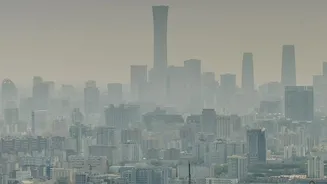






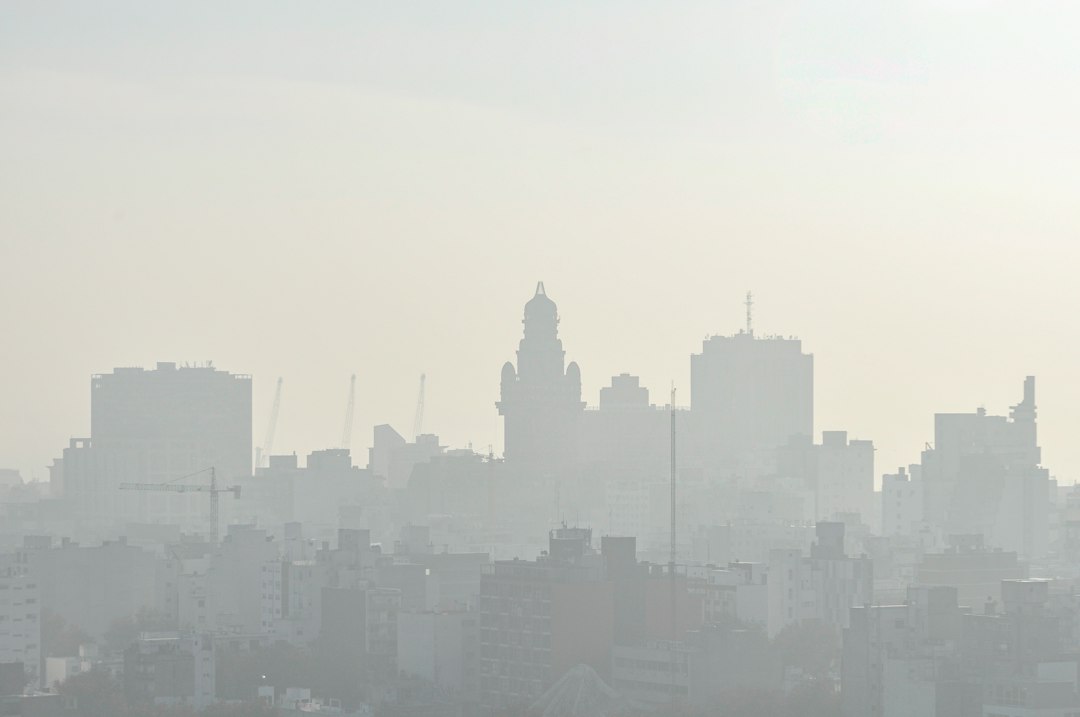

As smog season descends, every household faces a difficult choice: open windows for fresh air and risk letting in pollutants, or seal the house and trap stale, unhealthy air inside. Understanding how to decide is key to protecting your family.
The Indoor Air Dilemma
It's a common
belief that staying indoors during heavy smog keeps you safe. While it helps, it's not a complete solution. Your home is not an airtight fortress; polluted outdoor air inevitably seeps in through gaps around windows and doors. At the same time, indoor activities generate their own pollutants. Cooking, cleaning products, and even breathing in a poorly ventilated room can increase levels of particulate matter, carbon dioxide, and other harmful compounds. This creates a scenario where indoor air can sometimes be just as polluted, or even more so, than the air outside, making strategic ventilation essential.
Using the AQI to Make Your Decision
The Air Quality Index (AQI) is your most important tool. It measures key outdoor pollutants on a scale, typically from 0 to 500, to tell you how clean or hazardous the air is. For families in India, checking the local AQI on a reliable app or government website should become a daily habit during pollution season. This number will guide your window strategy. While different scales exist, the principle is the same: the higher the number, the greater the health risk, and the more cautious you need to be.
AQI 0-100: 'Good' to 'Satisfactory'
When the AQI is in this range, it's generally safe to ventilate your home freely. This is the ideal time to open windows and doors for at least 15-30 minutes to flush out stale indoor air and reduce the concentration of pollutants that have built up inside. Taking advantage of these cleaner air windows is crucial for maintaining a healthy indoor environment before the next pollution spike arrives. Consider ventilating in the mid-afternoon, as pollution levels are often highest in the early morning and late evening.
AQI 101-300: 'Moderate' to 'Poor'
This range requires more judgment. If the AQI is between 101 and 200 ('Moderate'), you can still ventilate, but it's best to do so for shorter periods. However, households with children, elderly members, or individuals with respiratory conditions like asthma should be more cautious and consider keeping windows shut. Once the AQI climbs above 200 into the 'Poor' category, the advice shifts decisively: keep your windows and doors closed as much as possible. The risk from incoming pollutants now outweighs the benefit of ventilation.
AQI 301+: 'Very Poor' to 'Severe'
On days when the AQI is 'Very Poor' or 'Severe', the rule is simple: keep your home sealed. Opening windows, even for a moment, can allow a significant influx of harmful fine particles (PM2.5) that pose serious health risks. On these days, your focus should be on preventing outdoor air from getting in and cleaning the air that's already inside. This is when sealing any obvious gaps around window frames and under doors with weather stripping becomes a low_cost, high_impact strategy. Also, avoid activities that generate indoor pollution, such as burning incense, frying food, or using aerosol sprays.
Beyond the Windows: Filters and Fans
Relying on closed windows alone isn't enough, especially on severely polluted days. If you have an air purifier with a HEPA filter, run it continuously in the rooms you use most, keeping the doors to those rooms closed. This will capture the fine particles that inevitably find their way inside. When cooking, always use your kitchen's exhaust chimney to vent fumes directly outside. A common mistake is to dry_sweep floors, which kicks settled dust back into the air; damp_mopping is a much better alternative to trap these particles. These supplementary actions work together to create a much safer indoor breathing space when the world outside is choked with smog.