




The Sun’s Hidden Danger
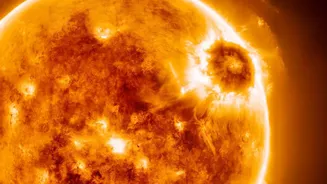
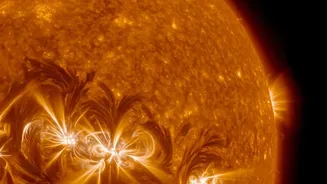
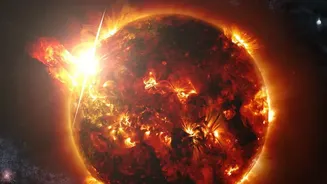
When we think of solar activity, we might picture gentle sunlight or the spectacle of the Northern Lights. But the sun is a volatile star capable of immense eruptions. The two main events that concern space weather experts are solar flares and coronal
mass ejections (CMEs). A solar flare is an intense burst of radiation that reaches Earth in about eight minutes. While it can disrupt radio and satellite signals, the real threat to physical infrastructure comes from CMEs. Think of a flare as the flash from a cannon, and the CME as the cannonball. A CME is a colossal cloud of magnetised plasma and charged particles that travels much slower, taking anywhere from 15 hours to several days to reach Earth. When one of these clouds slams into our planet’s magnetic field, it can trigger a powerful geomagnetic storm.
A Vulnerable Global Grid
The backbone of our modern society is the electrical grid, a vast network of high-voltage transmission lines. Unfortunately, these long conductors are uniquely vulnerable to geomagnetic storms. A major storm can create what are called geomagnetically induced currents (GICs) that flow through the power lines. These are powerful, uncontrolled direct currents flowing into a system designed for alternating currents. This surge of rogue electricity can overload and overheat the massive transformers at the heart of substations, potentially causing them to melt or even catch fire. The 1859 Carrington Event, the most powerful geomagnetic storm on record, caused telegraph systems to fail and electrocute operators. A similar event today could trigger cascading blackouts across continents, with damage to transformers taking months or even years to repair, costing trillions.
An Eye on the Storm
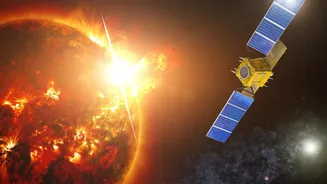
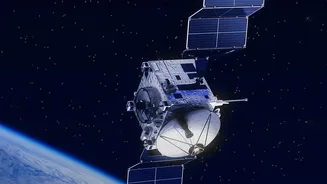
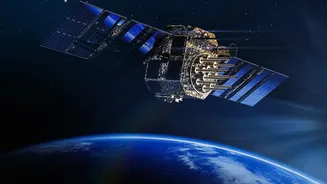
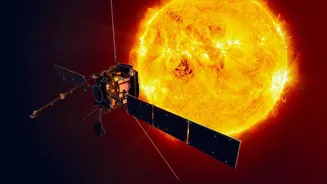
To defend against a threat you cannot see coming is impossible. This is where satellite-based coronagraphs become essential. A coronagraph is a special telescope that uses an occulting disk to block the blindingly bright face of the sun, creating an artificial eclipse. This allows scientists to see the sun’s much fainter outer atmosphere, the corona, which is where CMEs are born. By placing these instruments on satellites, we get a constant, unobstructed view that isn't hampered by Earth’s atmosphere or daytime-only observation. Satellites like the Solar and Heliospheric Observatory (SOHO) have been our sentinels for years, but a new generation of operational coronagraphs like NOAA's CCOR instruments are being deployed to ensure this watch is never interrupted.
The Critical Gift of Time
The crucial advantage a coronagraph provides is time. By observing a CME as it erupts from the sun, forecasters can calculate its speed, size, and direction. This gives us between 15 hours and a few days of warning before the storm of charged particles arrives at Earth. That advance notice is the difference between preparation and catastrophe. While satellites positioned closer to Earth, like the Deep Space Climate Observatory (DSCOVR), provide a final, more precise warning of 15 to 60 minutes, it is the initial detection by a coronagraph that sets all defensive measures in motion. This early warning allows authorities to move from a general forecast to a specific, actionable alert.
From Warning to Action
With hours or days of notice, grid operators are not helpless. They can take concrete steps to protect the system. Actions include analyzing which transformers are most at risk, rerouting power to lessen the load on vulnerable parts of the grid, and even taking highly sensitive equipment offline preemptively. Utility companies can postpone non-essential maintenance and put repair crews on standby. Other critical infrastructure, from satellites to airlines, also uses this warning. Satellites can be put into a protective safe mode, and flights can be rerouted to avoid polar regions where radiation exposure is highest during a storm. These defensive maneuvers are only possible because a coronagraph first spotted the storm leaving the sun.