





The Gritty Reality of Lunar Dust
The fine, grey powder covering the Moon’s surface, known as regolith, is nothing like the dust on Earth. Formed over billions of years by micrometeorite impacts in a waterless, windless environment, lunar dust particles are not worn down into smooth grains.
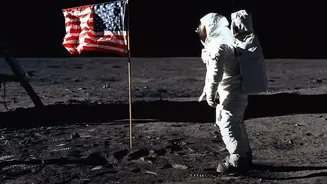
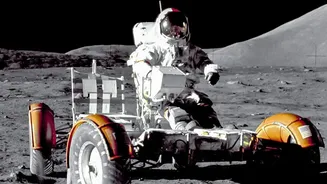
Instead, they are sharp, abrasive, and electrostatically charged, causing them to cling to everything. During the Apollo missions, this became a serious nuisance. Astronauts reported that the dust got everywhere, scratching visors, clogging mechanisms, and covering instruments. Once inside the lunar module, it caused what Harrison Schmitt of Apollo 17 famously called “lunar hay fever,” leading to sneezing, watery eyes, and sore throats. While these symptoms were temporary, scientists now know that long-term exposure could pose serious health risks, including bronchitis or even cancer.
Simulating a Lunar Landing
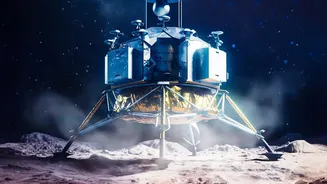
To avoid repeating and amplifying the problems of the Apollo era, NASA is now conducting sophisticated tests to understand exactly how lunar dust behaves, particularly during a rocket landing. The Plume-Surface Interaction (PSI) project is central to this effort. At facilities like NASA's Langley Research Center, engineers are firing scaled rocket engines into bins of simulated lunar soil inside large vacuum chambers. These tests, some lasting only six seconds, are designed to precisely measure how the engine exhaust kicks up regolith. High-speed cameras and sensors track the speed, trajectory, and spread of the dust cloud, creating data that helps predict how it will behave during an actual Artemis mission landing. The goal is to understand how this high-velocity spray of particles could damage the lander itself, nearby equipment, or future habitats.
High-Stakes Consequences
The danger from rocket plumes interacting with lunar dust is immense. The ejected particles can travel at speeds up to 800 meters per second, creating a sandblasting effect that can erode sensitive equipment, jam seals, and compromise the integrity of astronaut spacesuits. This cloud of dust can also interfere with landing sensors, making a safe touchdown more difficult. For the Artemis program, which aims to establish a sustained human presence on the Moon, this is a critical challenge. Any permanent outpost, like the planned Moon Base at the South Pole, would be vulnerable to damage from the frequent arrivals and departures of landers. Protecting astronauts and billions of dollars in hardware from being pelted by tiny, sharp projectiles is a non-negotiable step toward long-term lunar habitation.
Forging Solutions for the Future
Understanding the problem is the first step; solving it is the next. NASA is working with a range of commercial partners through its Commercial Lunar Payload Services (CLPS) initiative to develop and deliver the next generation of lunar hardware. Companies like Blue Origin, Intuitive Machines, and SpaceX are building landers designed to mitigate dust issues. Potential solutions are varied and complex. They include developing special dust-repellent coatings for equipment, designing new types of airlocks and filtration systems, and even building hardened landing pads at high-traffic areas like the future Artemis Base Camp. Some researchers are exploring how to use the regolith itself, heating it to create solid surfaces for roads and landing zones or even extracting oxygen from it. These innovations, born from the data gathered in today's tests, will be essential for ensuring the safety and success of humanity's return to the Moon.