



Choosing between a mountain trail and open water for your workout? Both hiking and paddleboarding offer incredible cardio benefits, but they challenge your body in fundamentally different ways, using nature's resistance to build strength and endurance.
The Battle Against Gravity on the Trail
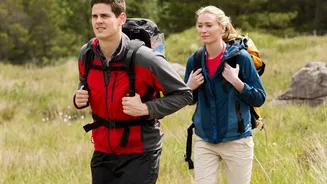
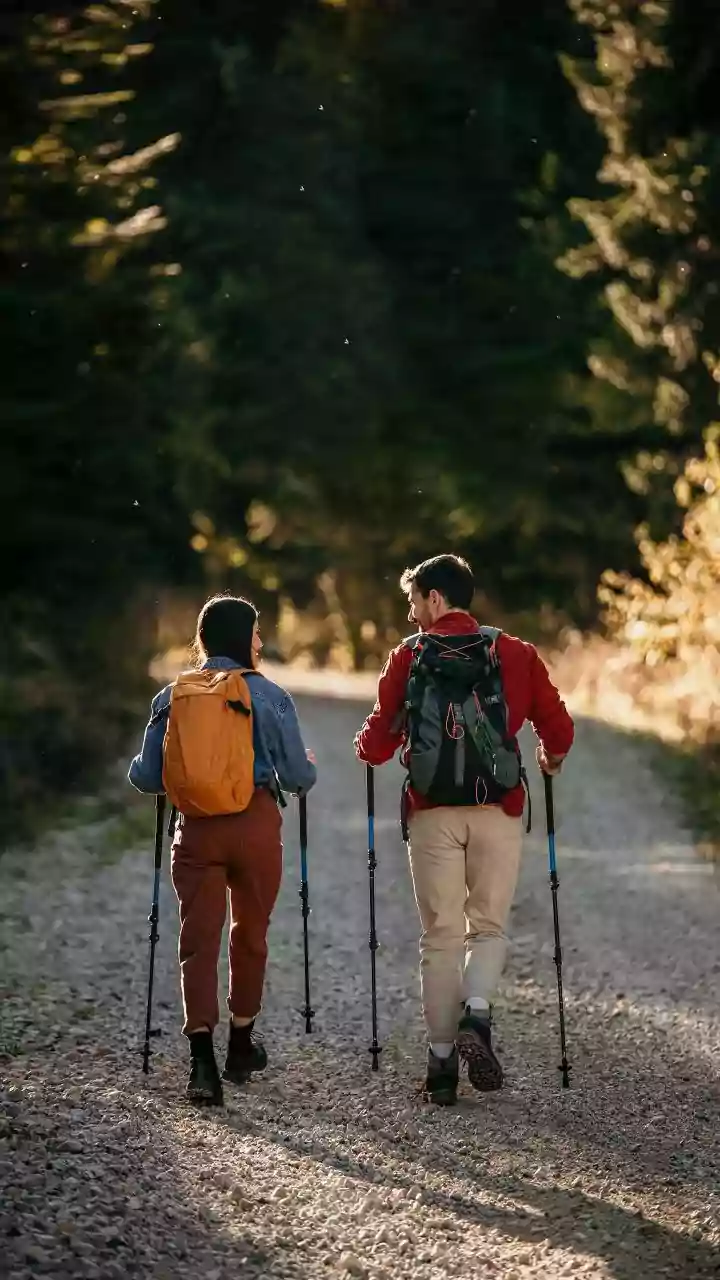
Hiking's primary challenge is terrain, which forces a constant fight against gravity. When you walk uphill, your body must generate significant force to propel itself upward, intensely engaging the large muscle groups of the lower body: the glutes, quadriceps, hamstrings, and calves. This concentric muscle work is a powerful form of strength training disguised as cardio. Your heart rate climbs to pump oxygen-rich blood to these hardworking muscles, improving cardiovascular health and endurance. The biomechanics of your stride also change; steps become shorter and more frequent to maintain stability and efficiently use energy against the incline. Even the descent offers a unique challenge. While gravity helps you down, your muscles, particularly the quadriceps, work eccentrically—acting as brakes to control your speed and absorb impact, which can lead to greater muscle micro-damage and soreness but also builds significant strength.
The Unseen Resistance of Water
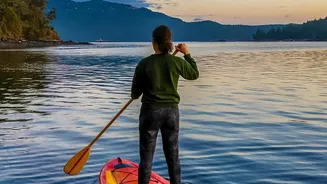
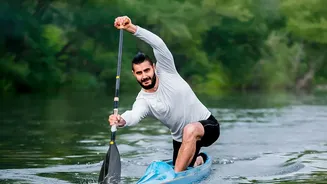
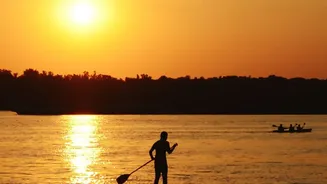
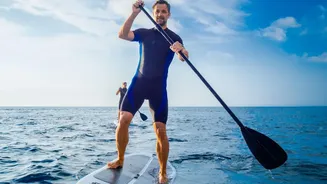
Paddleboarding, in contrast, pits you against the forces of water and wind. The primary resistance comes from drag—the force of water acting against the board and the paddle. Every stroke is an act of pulling against this constant, fluid resistance, creating a comprehensive upper-body and core workout. Your latissimus dorsi (lats), shoulders, and arms are engaged with each pull, while your core works continuously to transfer that power and maintain posture. Unlike hiking's variable intensity based on the grade of the trail, paddleboarding's resistance can be more consistent on calm water, making it excellent for steady-state cardio. However, factors like wind and choppy water can dramatically increase the challenge, forcing your body to make constant micro-adjustments to stay balanced and turning a calm paddle into a high-intensity session.
A Tale of Two Cores: Stability vs. Power
Both activities demand core strength, but in different ways. In hiking, the core acts as a stabilizer, keeping your torso upright and balanced as you navigate uneven ground, rocks, and roots. It's a functional stability that supports the power generated by your legs. Paddleboarding elevates the core to a primary role. Standing on an unstable surface forces your deep core muscles—the transverse abdominis, obliques, and lower back—to fire continuously just to keep you from falling in. This makes stand-up paddleboarding one of the most effective core-strengthening exercises available. Every paddle stroke involves a rotational movement, further engaging the obliques and building a strong, resilient midsection that protects the spine.
The Cardiovascular Question: Intervals or Steady State?
From a cardio perspective, the two activities offer different styles of training. Hiking often provides a natural form of interval training. Steep ascents spike your heart rate, followed by recovery periods on flatter sections or descents. This variation is excellent for improving aerobic capacity and overall heart health. Paddleboarding can be whatever you make it. A leisurely paddle on a calm lake provides a low-impact, steady-state workout, ideal for building endurance and burning calories over a long duration. Conversely, racing or paddling in windy, choppy conditions turns it into a high-intensity interval session that can burn upwards of 700 calories an hour. Because it is low-impact, paddleboarding is also easier on the joints than hiking, particularly downhill sections.