


After a half-century away, humanity has once again journeyed around the Moon. NASA's Artemis II mission, a landmark crewed flyby, concluded in April 2026, and the scientific world is now poring over the initial findings from this historic flight.
A Monumental Test Flight
The Artemis
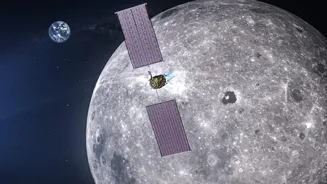
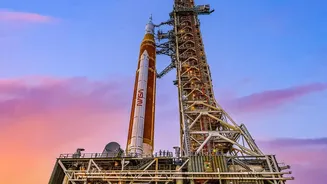
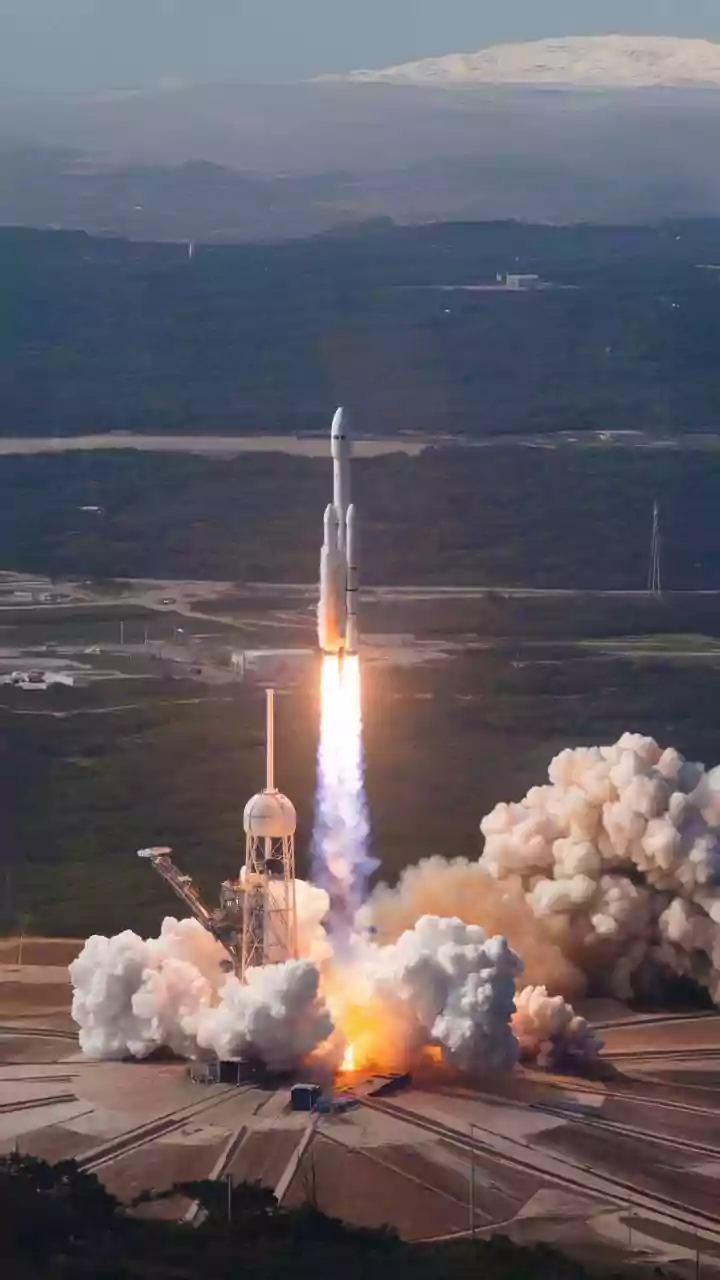
II mission was the first time since Apollo 17 in 1972 that astronauts have traveled beyond low Earth orbit. Launched on April 1, 2026, aboard the powerful Space Launch System (SLS) rocket, the Orion spacecraft 'Integrity' carried a crew of four on a journey of nearly 10 days. The primary goal wasn't to land, but to test the spacecraft's systems with humans on board, proving the technology and procedures necessary for future lunar landings and deep space exploration. The mission followed a free-return trajectory, looping around the far side of the Moon before heading back to a successful splashdown in the Pacific Ocean on April 10, 2026. Every step was a critical validation of the hardware and human endurance, setting the stage for the Artemis program's ambitious goals.
Meet the History-Making Crew
The four astronauts of Artemis II represent a new era of space exploration. The crew consisted of NASA Commander Reid Wiseman, NASA Pilot Victor Glover, NASA Mission Specialist Christina Koch, and Canadian Space Agency (CSA) Mission Specialist Jeremy Hansen. This crew made history on multiple fronts: Glover became the first person of color, Koch the first woman, and Hansen the first non-American to fly a lunar mission. For Hansen, it was his first-ever spaceflight. Their diverse backgrounds and extensive experience were vital to the success of a mission designed to push the boundaries of human spaceflight.
What Did We Actually Learn?
While Artemis II was primarily an engineering test, it yielded a wealth of scientific data, particularly concerning astronaut health. The crew served as both scientists and subjects, participating in studies on how deep space affects the human body. Key research focused on the impact of deep-space radiation, which is much higher outside the protection of Earth's magnetic field. One innovative experiment, AVATAR, used 'organ-on-a-chip' technology with the crew's own bone marrow cells to study the effects of radiation and microgravity at a cellular level during the flight. Scientists also analyzed blood and saliva samples to track changes in the immune system, building on data that shows space travel can suppress immunity. These health findings are crucial for developing countermeasures to keep astronauts safe on longer missions to the Moon and, eventually, Mars.
An Orbiter's-Eye View of the Moon
Beyond human health, the crew's observations are providing fresh insights into the Moon itself. Using their geology training, the astronauts photographed and documented lunar features from their unique vantage point, including the vast Orientale Basin and the scientifically intriguing south polar regions. Their records provide a human perspective that complements decades of robotic measurements. The crew also documented transient phenomena like flashes from meteorite impacts on the Moon's night side. NASA has begun releasing this treasure trove of data—including images, video, and the crew's own audio commentary—to the public and scientific community for further study.
Validating the Technology for Tomorrow
Every system on the Orion spacecraft was under scrutiny, from life support to navigation. The mission successfully validated the Orion Crew Survival System suits and the advanced Environmental Control and Life Support System (ECLSS), which managed the capsule's atmosphere. The crew also tested a high-speed optical communications system, using lasers to transmit data, which could revolutionize communications both in space and on Earth. The scorched heat shield of the Orion capsule, examined by Commander Wiseman after splashdown, stands as a testament to the success of the mission's most critical phase: a fiery, high-speed reentry that the spacecraft and its crew weathered perfectly.