



A Digital World in the Crosshairs
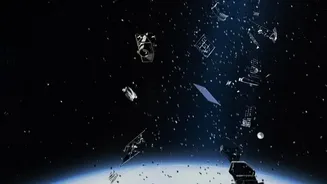
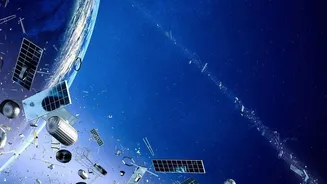
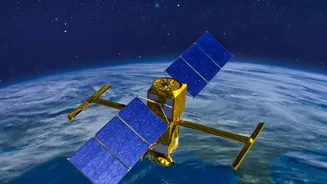
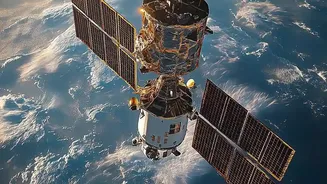
The invisible infrastructure holding up our hyper-connected society is more fragile than we think. Low Earth Orbit (LEO), the orbital band just a few hundred kilometres up, is crowded with over 13,000 active satellites. They are the backbone for everything
from weather forecasting and internet connectivity to banking services and critical military communications. A recent, chilling study from researchers at the University of Wisconsin-Madison and Princeton University has brought a once-hypothetical threat into sharp focus: a single nuclear weapon detonated in LEO could effectively wipe out this entire orbital plane. The simulation suggests that within a single week, 98% of LEO satellites would be disabled, not by the initial blast, but by the lingering, invisible killer it leaves behind.
The Ghost of Starfish Prime
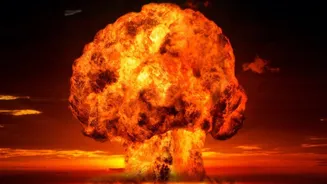
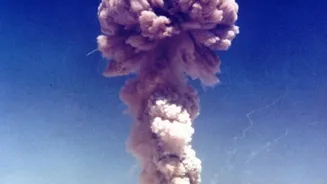
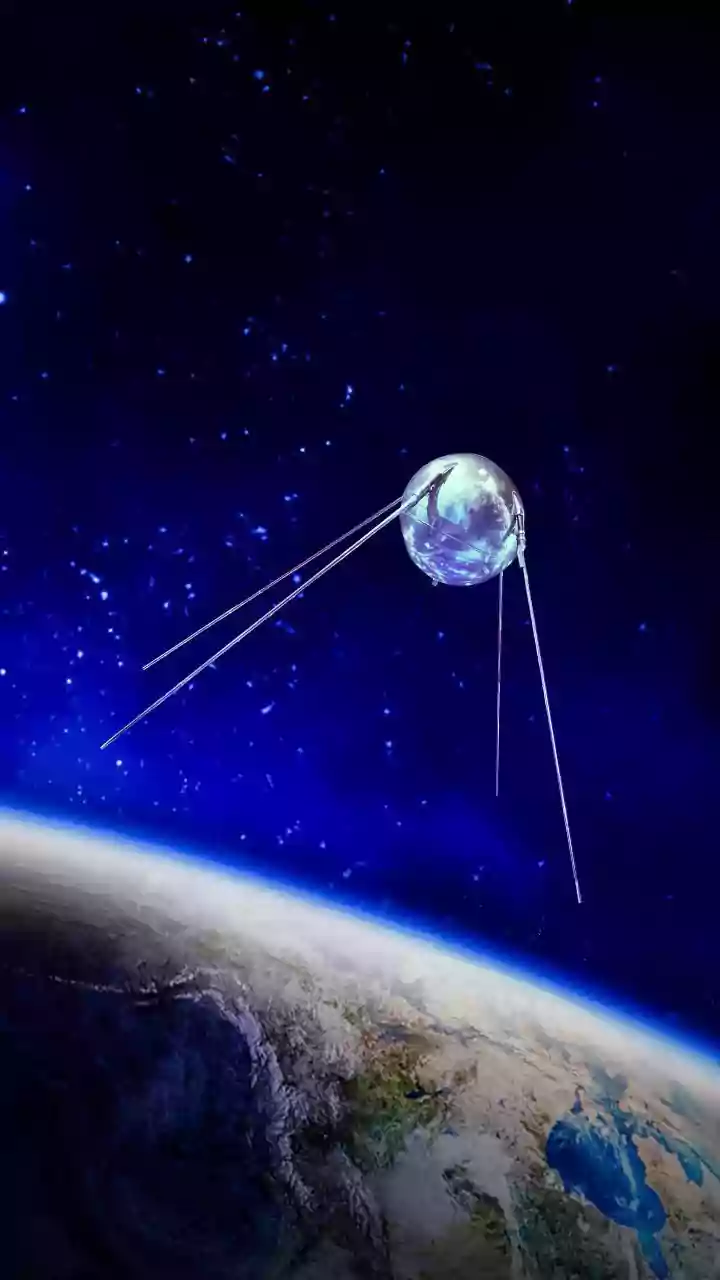
This is not science fiction. In 1962, the United States conducted the 'Starfish Prime' test, detonating a 1.4-megaton warhead 400 kilometres above the Pacific Ocean. The resulting electromagnetic pulse (EMP) was far larger than expected, knocking out streetlights and telephone links in Hawaii, nearly 1,500 kilometres away. More significantly, the blast created an artificial radiation belt of trapped high-energy electrons in Earth's magnetic field. In the months that followed, this lingering radiation caused at least a third of the few dozen satellites then in orbit to fail, including the pioneering Telstar 1 communications satellite. Today, with LEO thousands of times more crowded, a similar event would be catastrophic.
How a Blast Cripples Orbit
A nuclear detonation in the vacuum of space doesn't create the familiar mushroom cloud or blast wave. Instead, its energy is released as a flash of powerful radiation—gamma rays and X-rays—and a torrent of high-energy particles. Satellites in the direct line of sight can be immediately damaged by this prompt radiation. But the more insidious and widespread threat comes from the aftermath. The explosion's fission products release a massive number of electrons that become trapped by Earth's magnetic field, forming a new, intense radiation belt that can last for years. As satellites repeatedly pass through this belt, their sensitive electronics are bombarded, leading to cumulative damage known as Total Ionizing Dose (TID), which degrades and ultimately destroys their systems.
The Race for Resilience
The stark findings have intensified the focus on satellite resilience. The threat is no longer theoretical, with intelligence reports suggesting that nations like Russia are developing anti-satellite capabilities that may include a nuclear device. The challenge is immense. 'Hardening' satellites against radiation is possible but incredibly expensive. It involves using special materials like tantalum for shielding, radiation-resistant processors, and redundant circuit designs. Such measures can increase the cost of a single component by a factor of a thousand or more, a prohibitive expense for the tens of thousands of commercial satellites planned for launch. As a result, most satellites in LEO today, particularly those in large commercial constellations, have minimal protection. Researchers and defense agencies are now studying tiered approaches, focusing on hardening the most critical military and infrastructure satellites first, while exploring new shielding materials and designs to protect the next generation of orbital assets.