



The Spreading White Menace
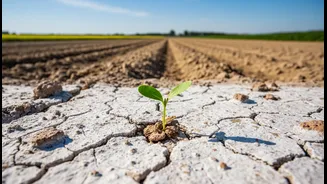
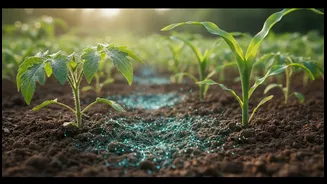
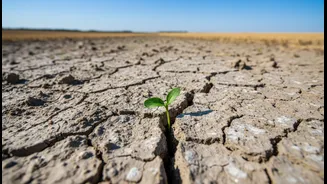
Imagine trying to grow a plant in a pot of salty water. The plant struggles, its growth is stunted, and it eventually wilts. Now, imagine this happening across vast stretches of farmland. This is the reality of soil salinisation. An excess of soluble
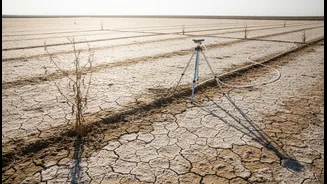
salts in the soil and root zone makes it difficult for crops to absorb water, leading to a kind of physiological drought even when the ground seems moist. In India, approximately 6.7 million hectares of land are already salt-affected, a figure that includes both saline (high in soluble salts) and sodic (high in sodium) soils. This isn't just a localised problem; it's a national issue impacting states from Gujarat and Uttar Pradesh to West Bengal and Rajasthan. The causes are varied, including natural processes, rising sea levels in coastal areas, and human activities like improper irrigation and the overuse of certain chemical fertilisers. The result is the same: declining crop yields, barren fields, and immense economic and emotional distress for farmers.
A Crisis for Food Security
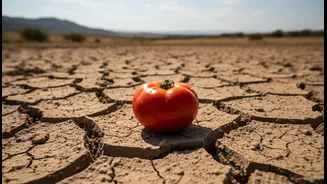
The impact of salty soil goes far beyond individual farms; it strikes at the heart of India's food security. Annually, the country loses an estimated 16.84 million tonnes of agricultural production, including essential cereals, pulses, and oilseeds, due to soil salinity. This translates into a staggering monetary loss, with some estimates putting the figure at over ₹23,000 crore. Uttar Pradesh and Gujarat are among the hardest-hit states in terms of production and monetary losses. With projections suggesting that up to 50% of India's arable land could be salt-affected by 2050 if current trends continue, the threat is existential. The Government of India has set a target of restoring 26 million hectares of degraded lands by 2030, a clear recognition of the urgency. Without healthy soil, the ability to feed a growing population is fundamentally compromised.
Science Offers Hope
The good news is that this is not an unsolvable problem. For decades, Indian research institutions like the ICAR-Central Soil Salinity Research Institute (CSSRI) have been at the forefront of developing solutions. These are not just theoretical ideas but proven, on-farm technologies. For sodic soils, the application of chemical amendments like gypsum can neutralise the harmful effects of excess sodium. For waterlogged saline soils, subsurface drainage systems can be installed to leach out excess salts from the root zone, dramatically improving crop yields. Furthermore, scientists have developed salt-tolerant varieties of key crops like rice, wheat, and mustard that can provide reasonable yields even in challenging conditions. Agroforestry, which involves planting salt-tolerant trees, also helps in the long-term biological reclamation of these degraded lands. These interventions have already helped reclaim nearly 2 million hectares, adding over 15 million tonnes of food grains to the national supply annually.
Lost in Translation
If the solutions exist, why does the problem persist and even grow? The gap is not in the science, but in its communication. Scientific recommendations can be complex and generalised, while a farmer's reality is local and specific. Challenges like language barriers, low literacy, lack of access to extension services, and even the overwhelming nature of digital information create a disconnect between labs and the land. Farmers often rely on traditional practices or are caught in vicious cycles, like using more fertilisers to combat falling yields, which can inadvertently increase soil salinity. A research paper might explain the benefits of subsurface drainage, but it cannot by itself convince a small farmer to invest in a system that seems expensive and complex. This communication breakdown is a critical barrier to adoption. Trust, accessibility, and relevance are paramount. Without effective knowledge sharing, even the most brilliant scientific breakthrough remains locked away in a journal.
The Power of a Better Story
This is where the need for "better stories" becomes urgent. A better story is not just a pamphlet or a technical bulletin; it is science translated into a human context. It is a case study of a farmer in a nearby village who successfully reclaimed their land, showing a tangible path to success. It's a demonstration on a local farm, a farmer field school, or a simple video in the local dialect that explains a technique visually. It’s about leveraging community-based workshops and empowering local extension agents who are trusted by the community. The public image of agriculture can often be stereotyped as slow and resistant to change, but the reality is that modern farming requires immense skill. Communicating the science effectively means respecting the farmer's knowledge while offering practical, accessible, and context-specific solutions. It means moving from a top-down information dump to a dialogue—a shared story of challenge and success.