



India's Next Frontier: The Bharatiya Antariksha Station
India is officially planning to establish its own space station, named the Bharatiya Antariksha Station (BAS), by the year 2035. This isn't just a distant dream; the first module, BAS-01, has already been approved and is slated for launch by 2028. The
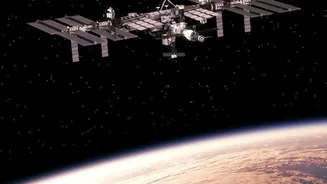
project is a natural and technologically crucial successor to the Gaganyaan mission, which is developing India's capability to send astronauts into space. The space station is envisioned as a modular facility, constructed piece by piece in Low Earth Orbit, approximately 400-450 kilometres above Earth. Once fully assembled, the station is expected to weigh around 52 tonnes and will be able to host astronauts for long-duration missions of three to six months, a significant leap from the short-term flights planned for Gaganyaan.
A Laboratory in the Sky
One of the primary drivers for building a space station is science. The BAS will serve as a permanent laboratory in a microgravity environment. This unique setting, where the pull of gravity is very weak, allows for experiments that are impossible to conduct on Earth. Scientists can study how materials behave differently, grow purer crystals for advanced electronics, or develop new metal alloys. Furthermore, the station will be a hub for research in life sciences, biotechnology, and medicine. Understanding the long-term effects of space travel on the human body—like muscle atrophy and bone density loss—is not only crucial for astronaut health on future missions but also provides invaluable insights into similar ailments on Earth, potentially leading to new treatments.
Strategic Importance and National Pride
Having a permanent address in space is a powerful statement of a nation's technological and geopolitical stature. By building the BAS, India will join an elite club of nations capable of maintaining a human presence in orbit, a group that currently includes the US, Russia, and China. This enhances India's strategic autonomy, ensuring it has independent access to space for research, technology development, and potentially, national security applications like Earth observation. It aligns perfectly with the goal of 'Atmanirbhar Bharat' (Self-Reliant India) in a critical high-technology sector. Moreover, the project is a massive source of national pride, inspiring a new generation to pursue careers in science, technology, engineering, and mathematics (STEM).
Fueling Economic Growth and Innovation
A project of this scale has significant economic benefits. The development of the Bharatiya Antariksha Station will drive high-tech manufacturing and create new opportunities for India's burgeoning private space industry. The government has explicitly positioned private participation as a key strategy to expand capacity and achieve its ambitious goals. The technological challenges involved—from advanced life-support systems to robotics and docking mechanisms—will spur innovation across various sectors. Many technologies developed for space have 'spin-off' applications that benefit life on Earth, ranging from medical devices and water purification systems to advanced materials used in everyday products. The space station is expected to be a catalyst in helping India increase its share of the global space economy.
A Stepping Stone to the Moon and Beyond
The Bharatiya Antariksha Station is not an end in itself but a critical stepping stone for India's future deep-space ambitions. ISRO has set a goal to land an Indian astronaut on the Moon by 2040, and the space station is essential to achieving this. It will serve as a vital testbed for the technologies and procedures needed for long-duration interplanetary missions. Astronauts will gain experience with extended stays in space, and ISRO can perfect crucial operations like docking, in-orbit refueling, and life-support for missions far from home. In essence, the BAS is the orbital base camp from which India will prepare for its next giant leap: to the Moon and perhaps, one day, even further.