








The Data Diet: English as a Main Course
The core of the issue lies in what AI models are fed: data. An AI system learns language, tone, and style from the vast amounts of text it processes. The problem is, the internet and the massive datasets used for training are overwhelmingly dominated
by English. Some estimates suggest English makes up around 44% of the web content used in major training datasets, with most other languages falling far behind. This creates a profound resource imbalance. While AI models have access to a rich, diverse buffet of English text—from academic papers to social media—they are often left with scraps for many other languages. This disparity means models develop a deep, nuanced understanding of English but a more superficial one for others, leading to less reliable and culturally flat outputs.
More Than Just Words: The Cultural Gap
Language is more than just vocabulary and grammar; it's a vehicle for culture. Tone, politeness, humor, and formality are all deeply embedded in cultural context. AI models trained predominantly on Western, English-language data tend to absorb and reproduce those cultural norms as a default. When asked to operate in a different language, the AI might translate the words correctly but fail to capture the appropriate cultural tone. For instance, a direct, efficiency-focused style that works in an American business context might come across as rude or demanding in a Japanese setting. This can result in communication that feels 'off' or even culturally insensitive, as the AI lacks the lived-in context that a native speaker possesses. It's been described as being multilingual, but essentially monocultural.
The Technical Hurdles of Translation
Beyond the data imbalance, there are technical challenges. One is 'cross-language interference,' where learning multiple languages at once can cause patterns from one to negatively affect another—like a German word for 'poison' being 'Gift,' which means present in English. Another issue is tokenization, the process of breaking down text into smaller pieces the AI can understand. Tokenizers optimized for English often struggle with languages that have more complex grammatical structures, like Turkish or Finnish. This can lead to inefficient processing and higher error rates. Simply translating English data into other languages to fill the gaps isn't a perfect solution either. This process, often used to create synthetic data, can strip out cultural nuances and even perpetuate errors, leading to grammatically plausible but soulless output.
Real-World Consequences of Uneven Tone
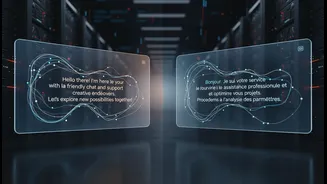
For businesses aiming for a global presence, this uneven reliability is a major headache. A brand that prides itself on a warm, friendly voice in its English marketing can find its AI-powered chatbots sounding cold and impersonal in Spanish or French, undermining the customer experience. This inconsistency can erode trust and lead to lost revenue. For users in non-English speaking regions, the problem is more fundamental. They may face AI systems that are more prone to errors, hallucinations, and biases. This creates a digital divide, where the benefits of the AI revolution—from educational tools to economic opportunities—are not distributed equally.
The Path to a Truly Multilingual AI
Fixing this tension requires more than just adding more translated text. It demands a deliberate effort to build more inclusive and culturally aware AI. Researchers and developers are working on several fronts. One key area is sourcing higher-quality, diverse data for underrepresented languages. Another involves developing better methods for 'cross-lingual transfer,' allowing knowledge and nuance to move more effectively between languages. Some studies are exploring 'cultural prompting,' where users can instruct an AI to adopt a specific cultural perspective, which has shown promise in reducing bias. Ultimately, achieving true bilingual fluency in AI requires a shift from an English-first mindset to one that prioritizes linguistic and cultural diversity from the very beginning of the development process.