
The Promise of Lithium-Metal
For years, lithium-ion batteries have been the undisputed champion, powering everything from smartphones to electric cars. But the technology is approaching its theoretical limits. Enter lithium-metal batteries, a long-sought-after successor with the potential
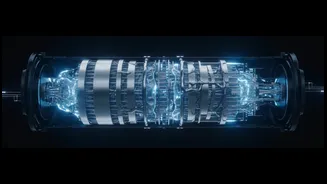
to store significantly more energy. Instead of using graphite for the anode (the negative electrode), these next-generation cells use pure, lightweight lithium metal. This fundamental change could dramatically increase energy density, potentially doubling the range of an EV without increasing the battery's size or weight. This makes lithium-metal the holy grail for applications where weight and space are critical, from aviation to long-range electric vehicles. The promise is a battery that is lighter, more powerful, and can go much farther on a single charge.
The Dendrite Dilemma
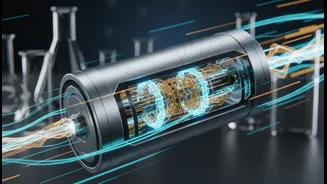
Despite its potential, lithium-metal has a critical flaw: dendrites. During charging, as lithium ions deposit on the anode, they don't always do so evenly. Instead, they can form microscopic, needle-like crystals that resemble tree branches. These dendrites can grow long enough to pierce the separator that keeps the anode and cathode apart, causing the battery to short-circuit. This not only leads to rapid battery failure but also poses a significant fire and explosion risk. This instability, along with the high reactivity of lithium metal with traditional liquid electrolytes, has been the primary barrier to commercialization for decades.
A Breakthrough in Electrolyte Engineering
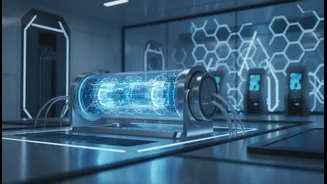
Recent innovations are tackling the dendrite problem head-on through advanced electrolyte engineering. The electrolyte is the medium that allows lithium ions to flow between the electrodes, and its composition is crucial for stability. Researchers are developing new formulations, including solid-state electrolytes, that are less reactive with lithium metal. A solid ceramic or polymer electrolyte creates a physical barrier that is much harder for dendrites to penetrate. Other strategies involve creating weakly solvating electrolytes or high-concentration formulas that change how lithium ions behave at the anode surface, encouraging smooth, uniform deposition instead of sharp, dangerous growths. These new designs aim to create a more stable interface between the lithium metal and the electrolyte, suppressing dendrite formation even under the stress of fast charging.
The Hurdles of Safety and Scale
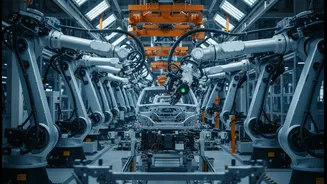
While lab results are promising, the path from a successful prototype to mass production is fraught with challenges. The first and most important is safety. Any new battery chemistry must prove it can operate reliably over thousands of charge cycles without risk of fire, especially under real-world conditions like extreme temperatures or physical damage. The manufacturing process for lithium-ion batteries is a complex, multi-billion dollar global operation. A new lithium-metal design must either be compatible with this existing infrastructure or justify the immense cost of building entirely new production lines. Materials sourcing is another concern; while lithium is the key ingredient, the complex chemistries of new electrolytes may require other rare or expensive materials.
The Road to Commercialization
Automakers like Toyota, Nissan, BMW, and Ford are actively working with battery developers to bring solid-state and lithium-metal batteries to market, with some targeting commercial availability around 2028. However, proving reliability at scale is a monumental task. A battery that works perfectly for 100 cycles in a lab may fail unexpectedly after 500 cycles in a vehicle. Scaling up production from single cells to the millions required for the automotive industry often reveals new, unforeseen defects and quality control issues. The cost must also be competitive. Even with superior performance, a battery that is prohibitively expensive will not replace the well-established and continually improving lithium-ion technology.