

From Frugal Engineering to Future Tech
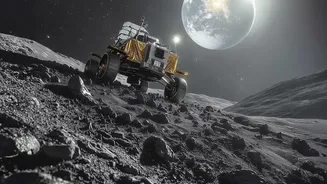
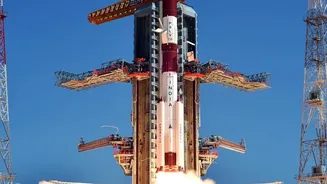
For decades, the Indian Space Research Organisation (ISRO) built a global reputation on a simple but powerful premise: frugal innovation. It mastered the art of sending reliable, low-cost missions into space, epitomized by the Chandrayaan moon missions and the Mars
Orbiter Mission, which famously cost less than the Hollywood movie "Gravity." This approach made India a serious player in the global launch market and a source of immense national pride. But as space becomes more crowded and complex, simply getting there is no longer enough. The next chapter for ISRO involves a strategic shift from being a master of access to space to achieving mastery in space. This new phase is less about the launchpad and more about the advanced brains and secure communication networks operating hundreds or thousands of miles above Earth.
The Artificial Intelligence Advantage
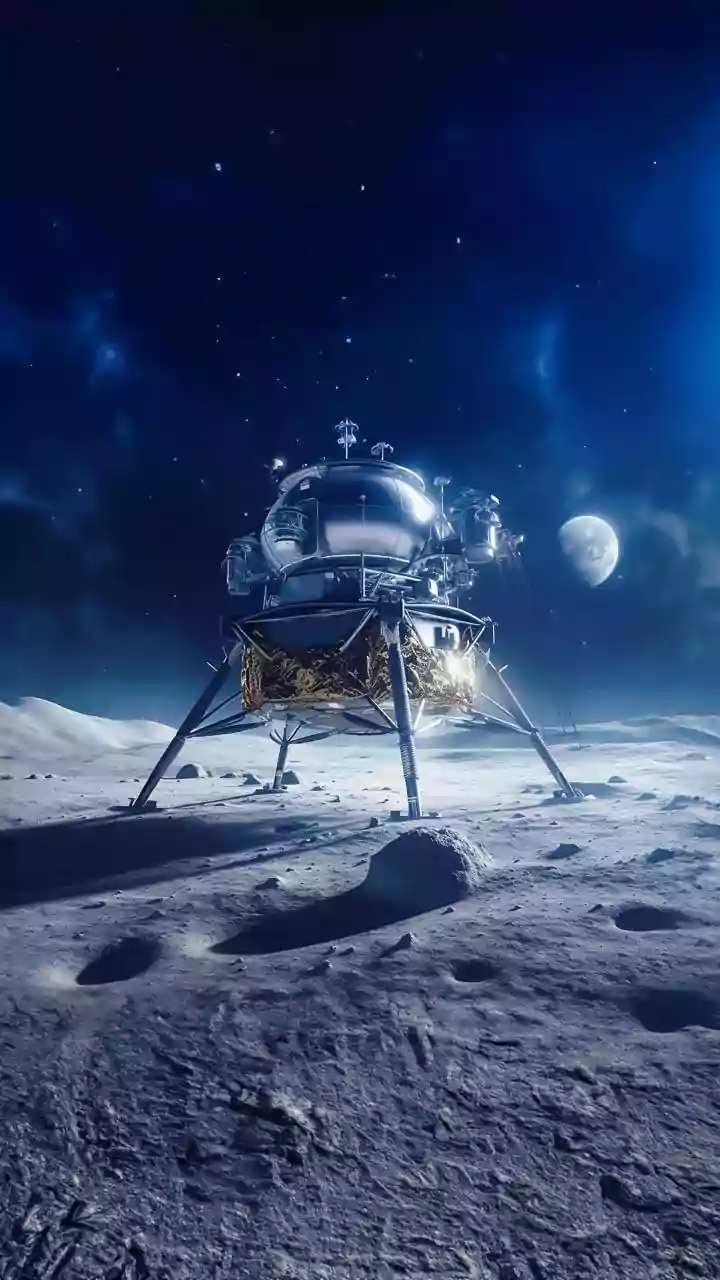
The first pillar of this new strategy is artificial intelligence. ISRO is integrating AI and machine learning into nearly every facet of its operations. One of the most critical applications is in the analysis of the enormous volumes of data sent back by Earth observation satellites. AI algorithms can sift through this data to provide predictive insights for agriculture, forecast weather and natural disasters, and monitor urban expansion with incredible speed and accuracy. AI was also a key player in the successful landing of the Chandrayaan-3 mission, where it helped the lander's camera identify and avoid hazards on the lunar surface in real time. Looking forward, ISRO is developing AI for autonomous navigation, allowing spacecraft and rovers on deep-space missions to make decisions without constant input from ground control. It's also being used to monitor the health of satellites in orbit, predicting potential failures before they happen and optimizing their operational lifespan.
Securing the Cosmos with Quantum
Perhaps the most futuristic element of India's new space push is its investment in quantum technology. The primary goal is to develop ultra-secure communication channels that are, for all practical purposes, unhackable. By using the principles of quantum entanglement, where two particles remain linked no matter the distance, ISRO can create secure keys for transmitting sensitive data. Any attempt to intercept the communication would instantly alter the state of the particles, alerting both sender and receiver. ISRO, in collaboration with Indian research institutes, has already demonstrated free-space quantum communication over a distance of 300 meters, a crucial first step toward a satellite-based quantum communication network. The plan is to launch a dedicated quantum satellite to establish secure links between ground stations across India and, eventually, with other countries. This has massive implications not just for civilian data but for military and strategic communications, making India one of the few nations pursuing this next-generation security infrastructure in space.
A New Space Race for a New Era
This technological pivot is driven by more than just scientific curiosity; it is a core part of India's national strategy. The Indian Space Policy of 2023 was designed to open the sector to private companies and startups, encouraging innovation and aiming to significantly increase India's share of the global space economy. By developing expertise in AI and quantum services, India isn't just building government assets; it's fostering a commercial ecosystem. Former ISRO Chairman S. Somanath has spoken about how this new, stakeholder-driven model is fueling innovation in areas from reusable launchers to data services. This strategic shift positions India not just to compete in the traditional launch market but to become a leader in the high-value, data-driven space economy of the future. It's a move to ensure the country is shaping global trends in space, not just following them.