


The Challenge of Martian Air
The atmosphere on Mars is fundamentally hostile to human life. It is incredibly thin, with a pressure less than 1% of Earth's, and composed of about 95-96% carbon dioxide (CO2). For humans to survive, let alone establish a long-term presence, they need
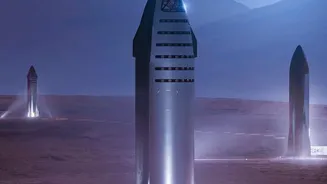
a reliable and continuous source of oxygen. Transporting the vast quantities of oxygen required for both life support and, even more critically, rocket propellant for the return journey is prohibitively expensive and logistically complex. To get four astronauts off the Martian surface would require an estimated 25 metric tons of oxygen, compared to just one metric ton for breathing over the course of a year. This reality has pushed scientists to embrace a concept called In-Situ Resource Utilization (ISRU), which essentially means living off the land.
Meet MOXIE: A Mechanical Tree on Mars
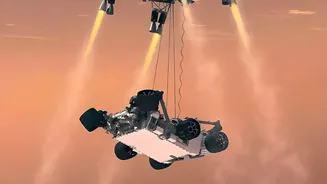
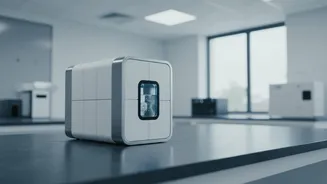
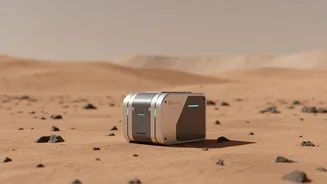
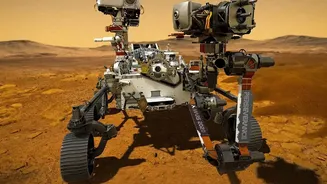
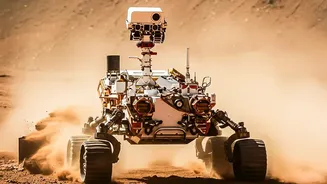
The key technology at the heart of this effort is the Mars Oxygen In-Situ Resource Utilization Experiment, or MOXIE. Housed aboard NASA's Perseverance rover, this instrument, roughly the size of a toaster or car battery, is the first device to successfully produce oxygen on another planet by extracting it from the atmosphere. Developed through a collaboration led by MIT, MOXIE serves as a crucial proof of concept, demonstrating that manufacturing breathable air from Martian resources is not just science fiction, but a viable engineering reality. Its mission concluded in 2023 after proving far more successful than even its designers had hoped, a landmark achievement in preparing for human exploration.
How It Works: Turning CO2 into O2
MOXIE’s process is a form of high-temperature electrolysis. First, it pulls in the Martian air through a filter to remove dust. A scroll compressor then pressurizes the thin CO2 gas. The compressed gas is heated to approximately 800 degrees Celsius and fed into the Solid Oxide Electrolyzer (SOXE), the core of the instrument. Inside, an electrochemical process splits the CO2 molecules (which are made of one carbon and two oxygen atoms) into oxygen ions and carbon monoxide. The oxygen ions are then separated out and combine to form breathable, pure oxygen (O2), while the carbon monoxide is harmlessly vented back into the Martian atmosphere. Over its 16 successful runs, MOXIE proved it could reliably produce high-purity oxygen.
Proven Success and Future Plans
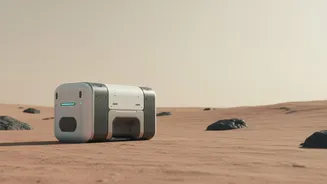
Throughout its mission, MOXIE produced a total of 122 grams of oxygen—enough for a small dog to breathe for about 10 hours. While this sounds modest, the experiment exceeded its goals, at its peak producing 12 grams of oxygen per hour, which was twice the initial target. It successfully operated in various seasons and times of day on Mars, gathering critical data on its performance under different atmospheric conditions. The success of this small-scale demonstrator has paved the way for the next phase: scaling up. Scientists envision a future, much larger system—perhaps 200 times the size of MOXIE—that could operate autonomously on Mars, producing the tens of tons of oxygen needed to fuel a rocket for the return journey. This full-scale reactor would likely be powered by a dedicated 25-30 kilowatt power plant.
The True Impact: Unlocking Human Exploration
The ability to manufacture oxygen on Mars is a game-changer, fundamentally altering the economics and feasibility of human exploration. By producing the heaviest component of rocket propellant on-site, missions can launch from Earth with significantly less mass. Every kilogram of equipment launched into space is expensive, so being able to generate 25 to 30 tons of oxygen on Mars eliminates the need to haul it all the way from Earth. This technology is a cornerstone for creating a sustainable presence, enabling not just breathing air for habitats but also oxidizer for ascent vehicles and potentially water if combined with hydrogen. MOXIE's success represents a critical first step toward a future where astronauts can truly live off the land on the Red Planet.