







Understanding Humidity Stress in Plants
High humidity, a common feature of Indian monsoons and coastal climates, can be surprisingly tough on many indoor plants. While we often worry about dry air, excessively moist air presents its own set of problems. When the air is saturated with water
vapour, it slows down a plant's ability to transpire—the process of releasing water through its leaves. This function is crucial for pulling water and nutrients up from the roots. When transpiration slows, the plant’s internal plumbing gets sluggish, leading to symptoms like wilting or drooping leaves (even when the soil is wet), yellowing foliage, and stunted growth. Furthermore, the persistently damp leaf surfaces can become a breeding ground for fungal diseases like powdery mildew.
Why Banana Peels Are Your Garden's Best Friend
So, where do banana peels fit into this picture? The magic lies in their nutritional profile. Banana peels are a fantastic source of potassium (K), a vital macronutrient for plants. Potassium is often called the 'regulator' nutrient. It plays a critical role in managing a plant’s water pressure (turgor) and controlling the opening and closing of stomata—the tiny pores on leaves responsible for gas exchange and transpiration. By providing a potassium boost, you can help your plants better regulate their internal water systems, making them more resilient to the stresses of high humidity. Besides potassium, banana peels also contain smaller amounts of phosphorus, magnesium, and calcium, all of which contribute to overall plant health. Using them in a spray turns kitchen waste into garden gold, offering a natural, chemical-free boost for your plants.
Step-by-Step: How to Make the Spray
Creating your own banana peel spray is incredibly simple and requires no special equipment. It's a process often referred to as making 'banana tea'.
1. **Collect Your Peels**: Next time you eat a banana, save the peel. For a standard batch, the peels from one or two bananas are sufficient. You can use them fresh or dried.
2. **Soak the Peels**: Place the banana peels in a clean glass jar and cover them with water. A good ratio to start with is one peel per 500-750 ml of water. Seal the jar and let it sit in a cool, dark place for two to three days. You will notice the water turning a pale yellow or light brown.
3. **Strain the Liquid**: After a few days, the water will have absorbed many of the nutrients from the peels. Remove the peels (you can compost them) and strain the liquid through a fine sieve or a piece of cheesecloth. This step is crucial to prevent small particles from clogging your spray bottle.
4. **Dilute if Necessary**: The resulting 'tea' is a concentrate. For a foliar spray, it's best to dilute it. Mix one part of your banana tea with four or five parts of plain water. This ensures the solution is gentle enough for direct application on leaves.
How to Use Your Homemade Spray
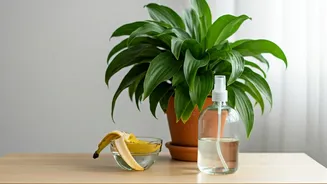
Proper application is key to getting the best results from your banana peel spray. Pour the diluted solution into a clean spray bottle. The best time to spray your plants is in the early morning or late evening, as spraying in direct, harsh sunlight can scorch the leaves.
Lightly mist the tops and undersides of the leaves until they are damp but not dripping. This is known as foliar feeding, and it allows the plant to absorb the nutrients directly through its leaves for a quick boost. Focus on plants that are showing signs of stress. This spray is particularly beneficial for tropical foliage plants like Philodendrons, Pothos (Money Plant), ferns, Syngoniums, and Peace Lilies, which often struggle with the circulatory slowdown caused by high humidity.
For frequency, start by applying the spray once every two weeks. Observe your plants and adjust as needed. During periods of extreme humidity, you might increase this to once a week.
A Few Important Considerations
While this homemade remedy is fantastic, it's not a cure-all. It's a supplement to support your plant's health, not a replacement for good overall care. Ensure your plants still have proper drainage, adequate light, and appropriate watering. Never leave soggy, decomposing banana peels directly on the soil of your potted plants, as this can attract fruit flies, pests, and promote fungal growth. Always use the strained liquid tea. If you notice any adverse reactions on a plant, cease application. Every plant is different, so it's always wise to test the spray on a small section first before applying it to the entire plant.