





Budgeting for Fuel Beyond the First Tank
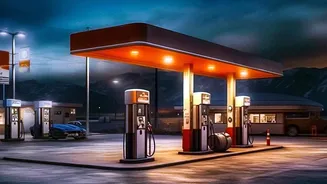
Fuel is often the single largest variable expense on a road trip, yet many travellers estimate it with a simple 'full tank' mindset. To create a more accurate budget, you need to consider three factors: your vehicle's real-world mileage, the total distance
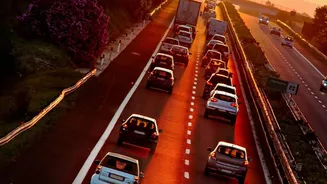
of your trip, and the variance in fuel prices across states. Don't rely on the manufacturer's claimed mileage; use your car's actual performance, which can be 15-20% lower in real-world conditions. The basic formula is straightforward: (Total Distance ÷ Mileage) × Fuel Price = Total Fuel Cost. For instance, a 1000 km trip in a car that delivers 15 km/l with petrol at ₹102/litre would require approximately 67 litres, costing around ₹6,834. Several apps and websites like TollGuru and FUELabc can help automate this calculation, even factoring in potential traffic that can affect your mileage. Planning for fuel also means knowing where you'll get it. On long highway stretches, don't risk letting your tank drop below the quarter-full mark, as the next petrol pump could be further than you think.
Calculating Your Highway Toll Expenses
With the mandatory implementation of FASTag, stopping to pay cash at toll plazas is becoming a thing of the past. Tolls are a significant and often underestimated cost. These fees are collected to fund road construction and maintenance. The charges vary based on the highway, the distance covered, and your vehicle type, with trucks and buses paying significantly more than cars. Fortunately, you no longer have to guess the total cost. The National Highways Authority of India (NHAI) and various apps like TollGuru, Mappls, and even Google Maps provide detailed toll calculations for your intended route. These tools show you the cost for each plaza you'll cross. To use them, you typically enter your starting point, destination, and vehicle type. It’s also wise to keep your FASTag wallet sufficiently funded. Many services offer discounts for a return journey through the same toll plaza within 24 hours, automatically applying a reduced rate on your second crossing.
The Critical Importance of Driver Rest
This is the most crucial yet most neglected part of road trip planning. Driver fatigue is a silent killer on Indian highways. Studies have shown that dozing off at the wheel is a factor in up to 40% of highway accidents, with crashes three times more likely to be fatal. The danger isn't just on winding mountain roads; a recent study found 68% of sleep-related accidents happen on straight, monotonous stretches where drivers become hypnotised by the road. Experts recommend a break of at least 15 minutes for every two to three hours of continuous driving. During these breaks, get out of the car, stretch, wash your face, and hydrate. Do not try to 'power through' drowsiness. If you feel tired, pull over at a safe, well-lit place like a dhaba or fuel station and take a 20-minute power nap. It is far better to arrive late than not at all. Recent data has even pinpointed the hours between 9 PM and midnight as particularly risky due to a combination of fatigue and reduced visibility. Scheduling overnight stops for long journeys isn't a luxury; it's a vital safety measure.
Using Technology to Plan Smarter
Modern technology makes integrating these planning steps easier than ever. Start with Google Maps or Mappls to plot your route. Google Maps now shows estimated toll prices by default on its mobile app, drawing data from local authorities. Next, use a dedicated trip calculator like TollGuru, which combines both fuel and toll estimates in one place. These platforms allow you to input your specific car model for more accurate mileage figures and can even show you the cheapest or fastest route options. Some apps, like FUELabc and MargNav, go a step further by showing real-time fuel prices along your route, helping you decide where to refuel for less. Before you leave, check your route for planned rest stops. Identifying clean, safe fuel stations or restaurants beforehand removes the stress of searching for a decent place when you're already tired and hungry. A few minutes of digital planning can save you hours of hassle and significant money on the road.