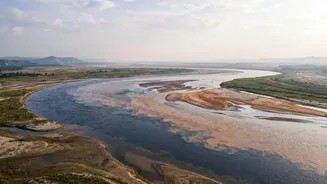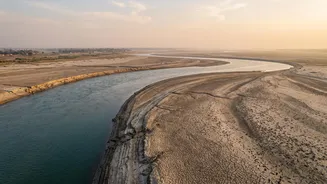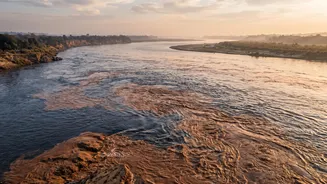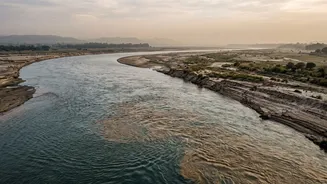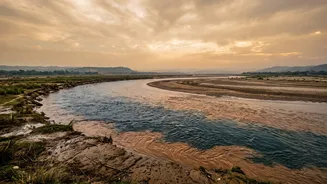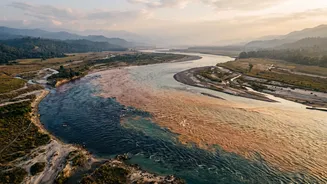







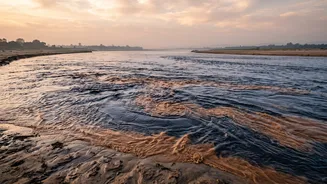
For both India and Bangladesh, the Ganges is more than a river; it's a lifeline. A landmark 1996 treaty governs how its precious water is shared during the critical dry season, a pact that has shaped diplomacy for three decades.
A Contentious History
The heart of the issue
lies at the Farakka Barrage in West Bengal, commissioned by India in 1975. This structure was built to divert water into the Hooghly River to flush out silt and maintain the navigability of Kolkata's port. However, as the upper riparian nation, India's diversion had an immediate and significant impact downstream in Bangladesh. The reduced flow during the dry months led to increased salinity in the delta, harmed fisheries and agriculture, and threatened the delicate ecosystem of the Sundarbans mangrove forest. After years of friction and short-term arrangements, the two nations signed the comprehensive Ganges Water Sharing Treaty on December 12, 1996, marking a major diplomatic achievement.
How the Sharing Formula Works
The treaty provides a detailed formula for water sharing specifically during the dry season, from January 1 to May 31 each year. The allocation is determined in 10-day periods based on the total water flow available at Farakka. If the flow is 70,000 cubic feet per second (cusecs) or less, India and Bangladesh share it equally. If the flow is between 70,000 and 75,000 cusecs, Bangladesh is guaranteed 35,000 cusecs, with India receiving the rest. When the flow exceeds 75,000 cusecs, India's share is capped at 40,000 cusecs, and Bangladesh receives the remainder. A critical clause also guarantees each country a minimum of 35,000 cusecs in alternating 10-day blocks during the leanest period from March to May.
The Stakes for Both Nations
This agreement is about far more than just water volume; it's about economic survival and ecological stability. For Bangladesh, the predictable flow is essential for agriculture, which supports millions, providing drinking water, and pushing back against saltwater intrusion that degrades fertile land. The health of the Padma river system, as the Ganges is known there, is vital for inland navigation and the unique biodiversity of the Sundarbans. For India, the treaty allows it to secure the water needed to keep the Kolkata Port operational, a key hub for trade in its eastern states. It also serves as a cornerstone of its 'Neighbourhood First' policy, showcasing a commitment to resolving transboundary issues through cooperation.
Challenges and Future Outlook
The 30rd treaty is set to expire in December 2026, and its renewal is a major topic of diplomatic discussion. While the pact has been a success in maintaining stability, it faces modern challenges. Critics point out that it focuses solely on water quantity, ignoring issues like sediment management, which contributes to flooding and erosion in states like Bihar. Furthermore, the growing impacts of climate change on river flows and increasing water demands in both countries are putting pressure on the existing formula. Bangladesh has expressed a desire for a new agreement that includes stronger guarantee clauses to ensure it receives its due share, especially during critically dry periods.
Negotiating a New Chapter
As the 2026 deadline approaches, both nations are preparing for negotiations. Bangladesh has formed a committee to outline its priorities, focusing on long term interests and the countrys rightful water needs. India has maintained that discussions will proceed through the established Joint Rivers Commission, a bilateral mechanism designed for these matters. While Indias internal demands particularly from states like West Bengal and Bihar complicate the picture there is a shared recognition that a cooperative framework is essential. The upcoming talks will not just be about renewing a treaty but about reimagining a partnership to sustainably manage a shared life giving resource for generations to come.