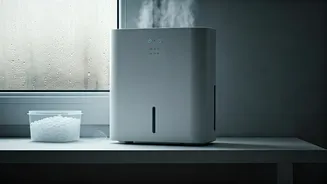









What Exactly Is Dry Mode?
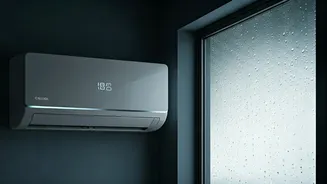
Look for the water droplet icon on your air conditioner's remote—that's your gateway to Dry Mode. In simple terms, this setting turns your AC into a dedicated dehumidifier. Its main job isn't to blast cold air, but to specifically remove excess moisture
from your room. Think of it as tackling the clammy, sticky feeling that makes a room uncomfortable, especially during India's notorious monsoon season or in coastal cities. Instead of aggressively dropping the temperature, Dry Mode focuses on making the air feel lighter and more pleasant to be in.
How It Works Its Magic
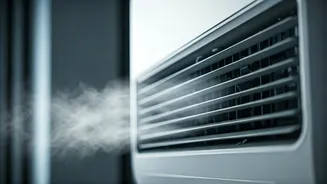
When you switch to Dry Mode, your AC changes its strategy. The internal fan slows down, and the compressor—the part that does the heavy lifting for cooling—runs intermittently or at a lower speed. This allows warm, moist air to pass slowly over the unit's cold evaporator coils. As the air lingers on the coils, moisture condenses into water droplets, which are then collected and drained away. The result is that the air pushed back into your room is significantly drier, providing relief from humidity without making the room feel like an icebox.
Dry Mode vs. Cool Mode: Key Differences
It's a common mistake to think Dry Mode and Cool Mode do the same thing. Cool Mode's primary goal is to lower the temperature. It runs the compressor continuously and the fan at a higher speed to pump cold air into the room as quickly as possible; removing humidity is just a side effect of this process. Dry Mode, on the other hand, prioritises removing moisture. The temperature might drop by a degree or two, but that’s not its main purpose. This targeted approach is why it's so effective on days when the temperature is mild, but the humidity is making you feel hot and sticky.
The Big Payoff: Saving Power
Here's the best part: using Dry Mode can lead to significant savings on your electricity bill. Because the compressor doesn't have to work as hard and runs in shorter cycles, the AC consumes far less power than it does in Cool Mode. Some estimates suggest that running your AC in Dry Mode can reduce energy consumption by anywhere from 20% to 50% under the right conditions. During months with high humidity but moderate heat, switching to Dry Mode offers a smarter way to stay comfortable without the high cost associated with continuous cooling.
More Than Just Savings: Boosting Comfort
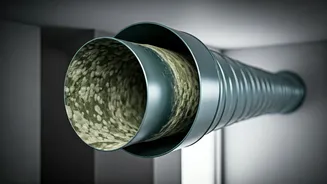
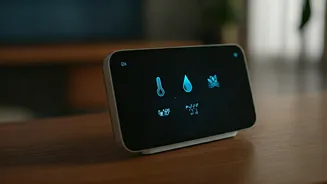
Beyond the financial benefits, Dry Mode dramatically improves your personal comfort. High humidity prevents your body's sweat from evaporating efficiently, which is our natural way of cooling down. This is why a humid 28°C can feel more suffocating than a dry 32°C. By pulling that excess moisture out of the air, Dry Mode helps your body cool itself properly, making the room feel fresher and less oppressive. It also improves indoor air quality by discouraging the growth of mould, mildew, and dust mites, which thrive in damp environments and can trigger allergies.
When Is the Best Time to Use It?
Dry Mode is not a complete replacement for Cool Mode. It's a specialised tool for specific situations. The ideal time to use it is when the air feels heavy and damp, but the temperature is not excessively high. Think of rainy days during the monsoon, muggy evenings after a storm, or in coastal areas where humidity is a constant battle. It's perfect for those days when Cool Mode would make the room too cold, but doing nothing leaves you feeling sticky. For optimal results, it's best to run Dry Mode for one to two hours at a time with the doors and windows closed.