






An Accidental Experiment
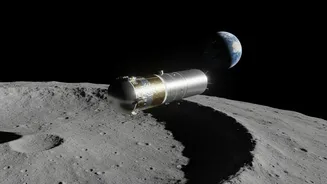
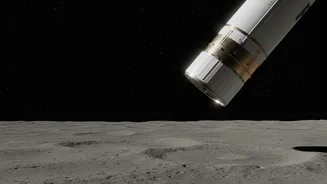
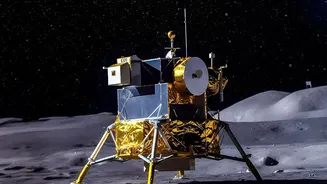
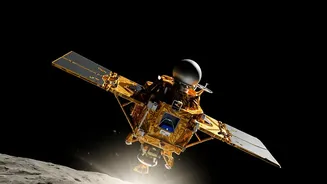
A 45-foot upper stage from a SpaceX Falcon 9 rocket, which launched in January 2025, is on a collision course with the Moon. After successfully deploying two lunar landers, the spent booster was left in a chaotic orbit. Gravitational forces and solar
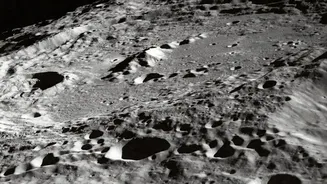
activity have since nudged it onto a path that will end with a high-speed impact near the Moon's Einstein Crater on August 5, 2026. Though unintentional, this event serves as a valuable scientific opportunity. Scientists will be observing the collision to gain insights into how the lunar surface reacts to such impacts, which is crucial for planning future missions.
What is Lunar Regolith?
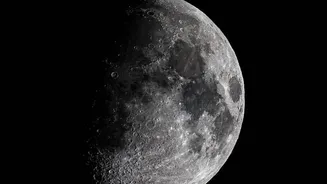
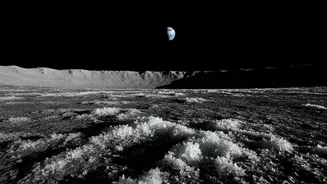
The Moon's surface is covered by a layer of loose, fragmented material called regolith. Unlike Earth's soil, which is formed by organic processes and weathered by wind and water, lunar regolith is the product of billions of years of bombardment by micrometeorites and charged solar particles. This process has pulverised the surface rock into a mix of sharp, abrasive, and fine particles that are electrostatically charged and stick to everything. This 'moondust' is not uniform; recent findings from India's Chandrayaan-3 mission showed that the top few centimetres are loose, but the layer beneath is surprisingly dense and compact.
The Plume of Discovery
The rocket stage, weighing nearly 45 tons, is expected to hit the Moon at a speed of around 8,700 km/h. The impact will unleash energy equivalent to about three tons of TNT, carving out a new crater estimated to be about 60 feet wide. The key scientific event is the resulting plume of ejecta—a cloud of dust and rock thrown outwards from the impact site. By analysing this plume with space-based assets like NASA's Lunar Reconnaissance Orbiter (LRO), scientists can study material from beneath the immediate surface that might not have seen sunlight in ages. The size, shape, and behaviour of this plume will provide invaluable data on the physical properties of the regolith, such as its cohesion and density.
Why This Data Matters for India and the World
Understanding regolith is not just an academic exercise; it's vital for the future of lunar exploration. For nations with ambitious moon programs like India, this knowledge is critical. The abrasive and sticky nature of regolith can damage spacesuits and equipment, posing a hazard to astronauts and robotic missions. Furthermore, this lunar 'soil' is a potential resource. The practice of using local materials, known as in-situ resource utilization (ISRU), is seen as the key to sustainable, long-term human presence on the Moon. Regolith contains oxygen and metals and may hold water ice in permanently shadowed regions. Learning how to excavate, handle, and process it is essential for building habitats, landing pads, and even producing breathable air and rocket fuel on the Moon.