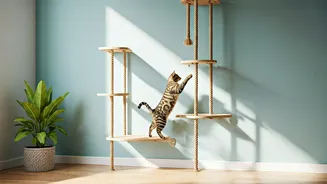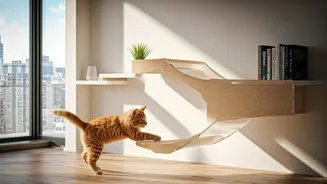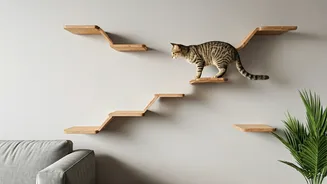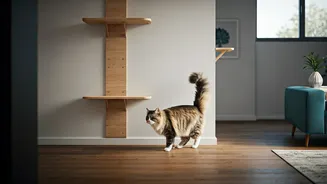



Why Your Cat Needs to Climb
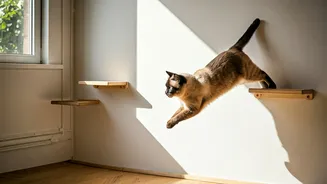
In the wild, cats are both predators and prey. The instinct to seek high ground is deeply ingrained in their DNA. From a high vantage point, a cat can survey its territory for potential threats, keep an eye on household activities, and spot opportunities
for play or a meal. It's their safe space, their lookout tower, and their private throne, all in one. In a multi-pet household, vertical space also helps establish hierarchy and provides an escape route from a pestering dog or another cat. For a solitary apartment cat, it simply makes a small space feel infinitely larger and more stimulating, reducing boredom and stress-related behaviours like scratching furniture or over-grooming.
The Benefits of Sturdy Wood
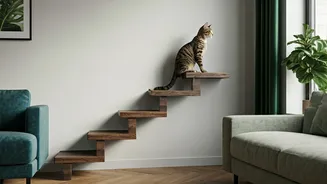
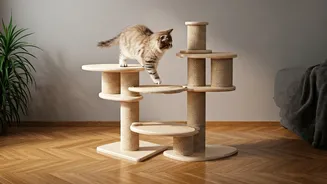
While many cat trees are made of particleboard and carpet, custom wooden steps offer distinct advantages. Solid wood, when properly installed, is far more stable and durable. It won't wobble or tip over like a freestanding cat tower, which is a major safety concern, especially for larger or more boisterous cats. Wood also offers a clean, modern aesthetic that can be integrated into your home decor. You can paint or stain it to match your furniture, turning a piece of pet equipment into a stylish design element. Furthermore, the surface can be customised with non-slip materials like sisal rope, cork, or small carpet pads, providing excellent grip for your cat’s ascent and descent.
What to Look for in Cat Steps
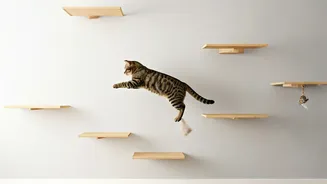
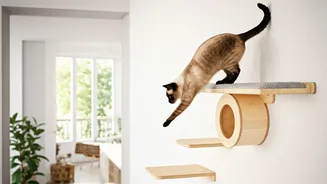
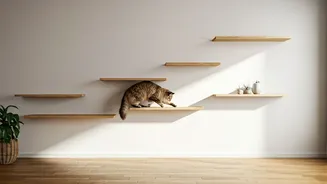
Whether you're buying a pre-made set or designing your own, several key features ensure the steps are both safe and appealing to your cat. First, check the depth. Each step should be deep enough for your cat to comfortably stand or sit on—at least 20-25 cm is a good rule of thumb. The spacing, or 'rise' and 'run', between steps is also critical. They should be close enough for an easy hop, but staggered to create an engaging path. Look for steps with a secure mounting system. The best options are designed to be screwed directly into wall studs for maximum stability. Avoid anything that relies on adhesive strips or weak drywall anchors, as these are likely to fail over time.
DIY vs. Store-Bought Solutions
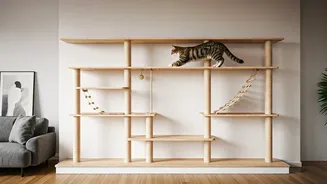
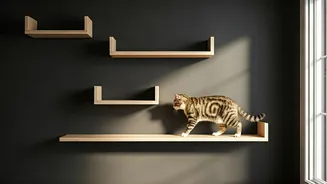
The decision to build or buy depends on your budget, time, and DIY skills. Buying pre-made wooden cat shelves or steps is the fastest and easiest option. Many sellers on platforms like Etsy offer beautiful, handcrafted sets that are ready to install. The downside is that they can be expensive and may not perfectly fit your specific space. Building your own steps, on the other hand, offers complete customisation. You can choose the exact type of wood, the dimensions, and the layout to create a unique 'cat superhighway'. Simple floating shelves from a hardware store can be a great starting point. Just be sure to use strong, L-shaped brackets and anchor them securely to the wall studs.
Safe Installation and Placement
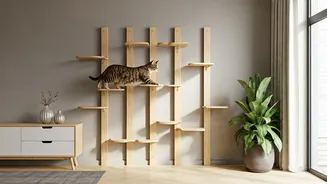
Proper installation is non-negotiable. Always use a stud finder to locate the wooden beams inside your walls. Securing the steps to these studs is the only way to guarantee they can support your cat's weight as it jumps and plays. After installation, give each step a firm tug to test for any movement or wobble. The ideal placement for your new cat steps is near a window, giving your pet a front-row seat to the world outside—a form of cat entertainment often called 'cat TV'. You can also create a pathway leading up to the top of a bookshelf or cabinet, providing a cosy, high-up napping spot. Arrange the steps in a way that encourages exploration, creating a route that flows naturally around the room.