





The Monsoon Gardener's Dilemma
A balcony garden is a cherished green oasis in the concrete jungle. Yet, with the arrival of the monsoon, this haven faces a significant threat. The combination of torrential downpours and soaring humidity creates a perfect storm for plant problems. Heavy
rain can quickly lead to waterlogged pots, a condition where soil becomes so saturated that roots can't access oxygen, leading to devastating root rot. This excess moisture, coupled with a lack of air circulation, turns your balcony into an ideal breeding ground for fungal diseases like powdery mildew. Furthermore, the constant barrage of raindrops can wash away essential nutrients from the soil, leaving plants weak and vulnerable. For the passionate urban gardener, it's a seasonal battle against overwatering, fungal attacks, and nutrient depletion.
Beyond Simple Tarps: What is Modular Tech?
When we talk about 'modular rain-proofing tech', we're not just referring to throwing a simple plastic sheet over your plants. This is a more sophisticated approach involving adaptable, customisable systems designed to protect your garden without creating new problems. 'Modular' means the components work together but can be adjusted, expanded, or reconfigured to fit your specific balcony size and plant layout. These systems go beyond just blocking water; they are designed to manage the entire micro-environment. Key features include letting in sufficient sunlight, withstanding wind, and, most importantly, ensuring proper ventilation to combat the high humidity that plagues rainy seasons. The goal isn't to seal your garden off, but to shield it intelligently.
The Building Blocks of Protection
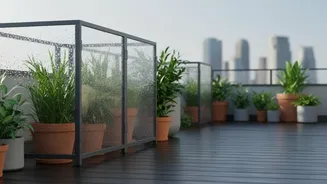
Modular systems are typically built from two or three key components. First are the covers. These can range from retractable fabric awnings that you can extend during a downpour, to more permanent structures using translucent polycarbonate sheets that offer protection while allowing light to pass through. Polycarbonate or clear PVC solutions are often preferred because they don't block out the light your plants need to thrive. The second vital component is an advanced drainage system. This isn't just about ensuring your pots have holes. It involves using modular, interlocking deck tiles that raise your pots off the floor, allowing water to drain away freely and preventing them from sitting in puddles. Some gardeners also use elevated stands or benches to improve drainage and airflow around the base of the pots.
Winning the Fight Against Humidity
Simply covering your plants from rain isn't enough, especially in India's humid climate. A sealed plastic cover can trap moisture and heat, creating a sauna effect that is even more conducive to fungal growth than the rain itself. This is where the design of modular systems proves its worth. Effective solutions prioritize airflow. This might be achieved through the use of breathable fabrics, or with hard-cover designs that are installed to leave a gap between the roof and the balcony railing, allowing air to circulate freely. Some of the best solutions include roll-up sides or vents that can be opened on dry, breezy days to whisk away trapped humidity, ensuring that your plants stay dry and healthy. Spacing plants adequately to improve air circulation is a parallel strategy that works hand-in-hand with these tech solutions.
Smarter, Not Harder Gardening
For the truly tech-savvy gardener, some modular systems can even be automated. Imagine a retractable awning equipped with a weather sensor that automatically extends when it starts to rain and retracts once the sun is out. While these advanced systems represent a higher initial investment, they offer the ultimate convenience and peace of mind. On a simpler, more accessible level, the 'tech' is in the materials themselves. Modern waterproof fabrics are treated to resist mildew, while polycarbonate sheets are UV-resistant and built to last for years without yellowing. Even the use of well-draining potting mixes with perlite or coco peat is a form of low-tech innovation that complements these protective structures perfectly.