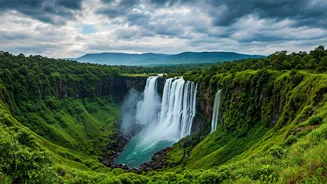





First, What Is a Reverse Waterfall?
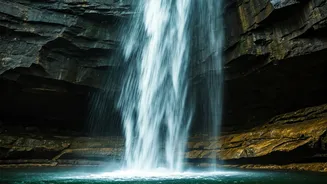
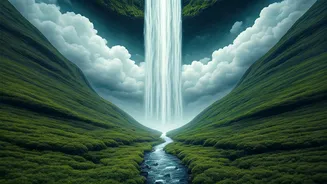
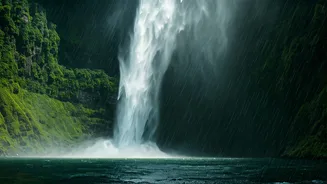
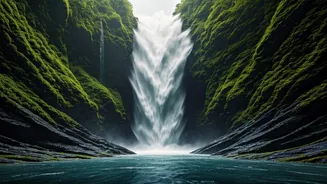
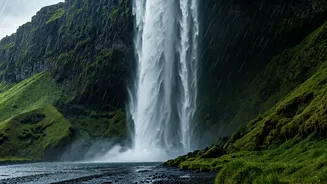
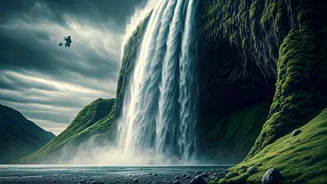
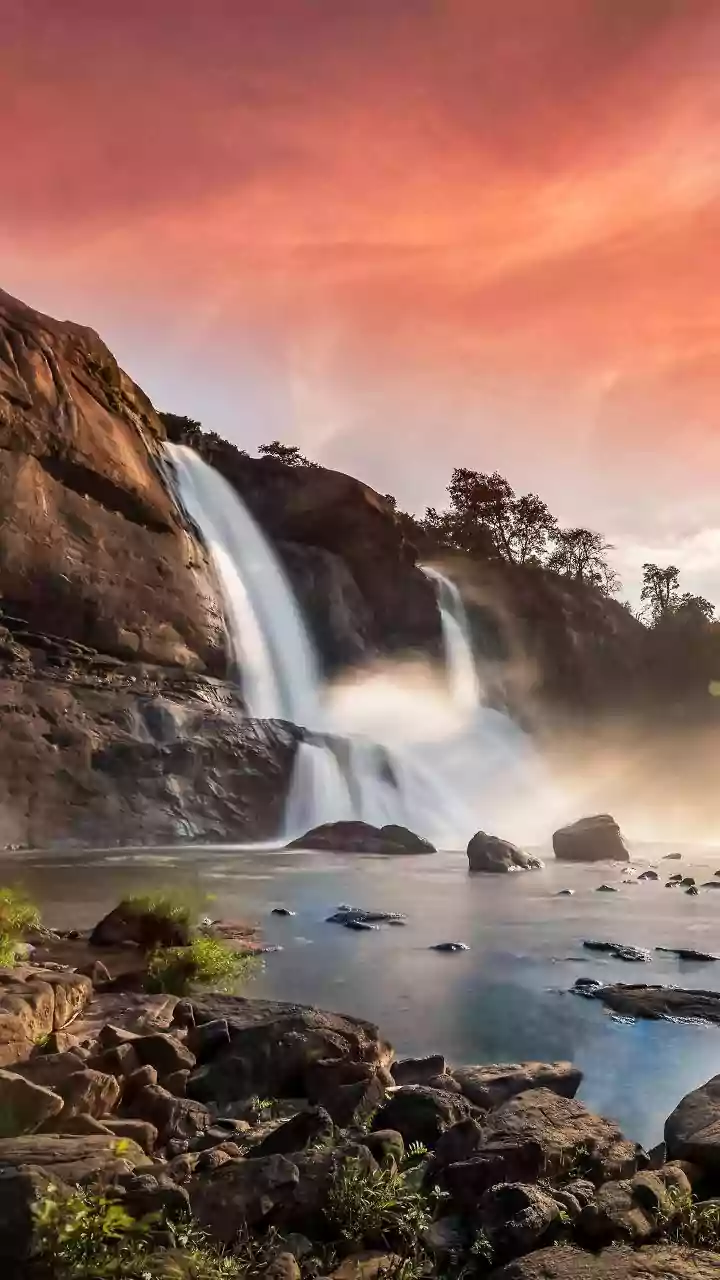
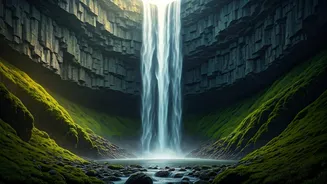
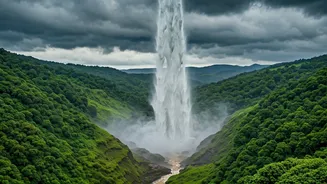
Before you start questioning the laws of physics, let's clarify what’s really happening. A “reverse waterfall” isn’t a case of water literally flowing uphill. Instead, it’s a spectacular illusion created by a perfect storm of geography and meteorology.
The phenomenon occurs when incredibly strong winds—often funnelled through valleys or up cliff faces—hit a cascading waterfall with such force that the water is blown upwards and backwards. The water droplets are carried high into the air, creating a misty spray that looks like the entire waterfall is defying gravity. It's not magic, but it’s the closest thing you might see to it in the natural world. This mesmerising effect typically happens in coastal areas or mountainous regions during specific seasons with high winds.
Naneghat, Maharashtra: The Monsoon Marvel
For anyone in India, the most famous example of this phenomenon is found in the Western Ghats of Maharashtra. During the peak of the monsoon season, from July to September, the Naneghat mountain pass transforms into a scene of otherworldly beauty. As rain lashes the region, numerous waterfalls cascade down the ancient cliffs. At the same time, fierce westerly winds surge up the valley from the Konkan coast. When these powerful gusts meet the descending water, they push it back up the cliff face in a fine, white spray. Trekkers and tourists gather at a specific point on the pass to witness this spectacle, where water that should be flowing into the valley below is instead atomised and sent soaring into the clouds. It’s a powerful reminder of nature’s raw energy and a must-see for anyone exploring the Sahyadris during the rains.
Samrad, Maharashtra: The Valley's Secret
Not far from Naneghat, near the legendary Sandhan Valley, lies another spot famous for its reverse waterfall: the village of Samrad. Nestled deep in the Ahmednagar district, this area is a trekker's paradise known for its rugged terrain and dramatic landscapes. Much like Naneghat, the reverse waterfall here is a gift of the monsoon. The unique topography of the surrounding hills creates a natural wind tunnel. As the monsoon winds gain speed and hurtle up the cliffs, they catch the falling streams of rainwater and hurl them skyward. What makes the Samrad experience so special is its raw, untouched feel. Standing there, surrounded by the lush greenery and dramatic rock formations of the 'Valley of Shadows', watching water dance upwards is a truly humbling experience. It feels less like a tourist spot and more like a private show put on by nature itself.
Kinder Downfall, UK: A Moorland Spectacle
This phenomenon isn’t exclusive to India’s monsoons. In the heart of the United Kingdom's Peak District lies Kinder Downfall, the tallest waterfall in the area. Situated on the rugged, windswept moorlands of Kinder Scout, the waterfall is famous for reversing course on windy days. When strong westerly winds blow in from the Irish Sea, they sweep across the vast plateau and hit the 30-metre cascade head-on. The water, which is often a gentle trickle in dry weather, is caught by the gale and blown back up onto the plateau. On a particularly blustery day, the spray can be seen for miles, resembling a cloud of steam rising from the moors. It’s a wild and dramatic sight, perfectly matching the stark, brooding beauty of the English countryside.
Cascada Invertida, Chile: The Andean Anomaly
Traveling to South America, we find another stunning example in Chile’s Maule region. Known locally as Cascada Invertida, which literally translates to 'Inverted Waterfall', this spot showcases the phenomenon in a dramatic Andean setting. The waterfall is located along the route to Paso Pehuenche, a mountain pass connecting Chile and Argentina. Here, the combination of a narrow river gorge and relentless winds creates the perfect conditions for the 'reverse' effect. The wind funnels through the landscape with such intensity that it completely overpowers the flow of the water, creating a constant plume of mist that rises vertically from the canyon. For travellers making the journey through this part of the Andes, it’s an unexpected and jaw-dropping sight that perfectly captures the untamed spirit of the mountainous region.