




The Perils of Deep Space Travel
A trip to Mars could take over 500 days, exposing astronauts to a hostile environment unlike any on Earth. Outside the protection of our planet's magnetic field, space is awash with dangerous radiation that can damage DNA and increase cancer risk. The
near-total absence of gravity, or microgravity, takes a profound toll on the body. Astronauts can experience significant muscle atrophy and bone density loss, with some studies showing a reduction of 1.5-2% in weight-bearing bones for every month in space. The cardiovascular system also changes, with fluids shifting towards the head, which can lead to vision problems and other complications. These physiological challenges must be understood and countered if we are to make the giant leap to another planet.
Enter Dr. Anil Menon
Dr. Anil Menon, a US Space Force colonel and emergency medicine physician, is uniquely qualified to tackle these problems. Born in Minnesota to a father from Kerala, India, and a Ukrainian mother, his career has been a fusion of medicine and extreme environments. Before being selected as a NASA astronaut in 2021, he served as a first responder in disasters in Haiti and Nepal, provided medical care to climbers on Mount Everest, and was SpaceX's first-ever flight surgeon. In that role, he helped establish the company's medical program and supported its historic first human spaceflights, including the Demo-2 mission. This extensive background in aerospace and wilderness medicine gives him a deep understanding of how to keep people safe in the most unforgiving conditions.
A Laboratory in Orbit
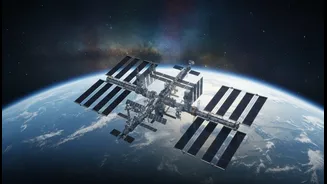
On July 14, 2026, Menon launched aboard a Soyuz spacecraft for an eight-month mission on the International Space Station (ISS). The ISS serves as a crucial laboratory for preparing for Mars. During his stay, Menon is conducting a series of experiments designed to understand and mitigate the effects of long-duration spaceflight. A key part of his research involves studying how microgravity affects blood flow, vein structure, and blood composition. He is also a test subject himself, helping researchers gather data on these changes. This work is vital, as issues like blood clots have been identified as potential risks on long missions. By studying these effects in low-Earth orbit, scientists can develop countermeasures to protect the health of future deep-space explorers.
Innovating Medical Care for Mars
On a mission to Mars, astronauts won't have a hospital nearby or the ability to return to Earth quickly for medical care. They will have to be much more self-sufficient. Menon's research directly addresses this challenge. He is helping to test technologies that could allow for the production of intravenous (IV) fluids in space using the station's own water supply, reducing the need to launch heavy medical supplies from Earth. He is also working with advanced medical technologies, including performing ultrasounds using augmented reality and AI-assisted guidance. This would allow astronauts with minimal medical training to perform complex diagnostics with remote support from doctors on Earth, a capability that will be essential for keeping crews healthy on the long journey to the Red Planet and back.