





India's immense cultural and natural heritage has received another nod on the global stage. Three new sites, including the remarkable archaeological landscape of Sirpur in Chhattisgarh, have been added to UNESCO's Tentative List.
What is the Tentative List?
Before we explore the
new sites, it’s important to understand what this step means. The UNESCO Tentative List is an inventory of properties that a country believes have 'Outstanding Universal Value' and intends to nominate for World Heritage status. Think of it as a formal declaration of intent. A site must be on this list for at least one year before it can be officially nominated for the prestigious World Heritage List. While inclusion isn't a guarantee of the final tag, it is the mandatory and crucial first step in a long and detailed process that involves preparing an exhaustive nomination file for evaluation by advisory bodies like ICOMOS and IUCN.
Sirpur: A Tapestry of Faiths
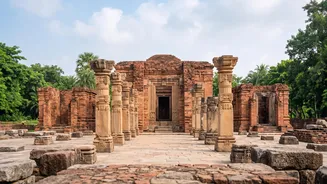
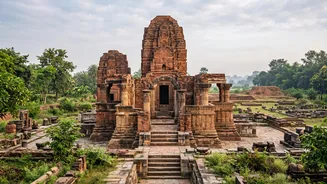
The headliner of the recent additions is the Sirpur Cultural and Archaeological Landscape in Chhattisgarh. Located on the banks of the Mahanadi River, Sirpur was the capital of the Dakshina Kosala kingdom between the 5th and 12th centuries. What makes Sirpur extraordinary is the rare synthesis of Hindu, Buddhist, and Jain traditions flourishing together in one urban centre. Excavations have unearthed a breathtaking array of structures: 22 Shiva temples, five Vishnu temples, ten Buddhist viharas, and three Jain viharas. The site's most famous monument is the 7th-century Lakshmana Temple, one of India's finest and best-preserved brick temples. The discovery of ancient markets, residential quarters, and intricate bronze sculptures further highlights its past life as a bustling commercial and cultural hub. The Chinese traveller Xuanzang, who visited in the 7th century, even noted the region's flourishing Buddhist tradition in his travelogues.
Andaman's Geological Marvels
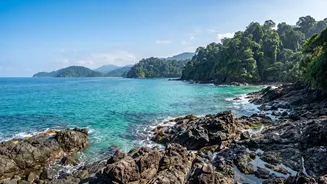
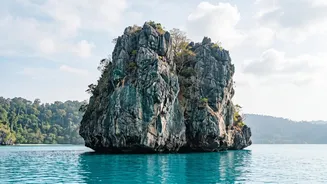
The other two sites added to the list are from the Andaman and Nicobar Islands, both recognized for their unique geological features. The first is the Karst-mud-volcano Complex of Baratang. This site features a distinctive landscape of limestone caves (karst) and active mud volcanoes, locally known as 'Jalki'. These mud volcanoes emit mud and gases, offering a window into the region's seismic activity. The second site is the Andaman Subduction Volcanoes, which comprises Barren Island and Narcondam Island. Barren Island is home to South Asia's only confirmed active volcano, a result of the Indian Plate subducting beneath the Burma microplate. Narcondam is another volcanic island known for its unique biodiversity and is recognized as an Important Bird Area.
The Path to World Heritage Status
With these three additions, India now has dozens of sites on its Tentative List, each representing a facet of the nation's unparalleled diversity. For Sirpur and the Andaman sites, the journey has just begun. The next phase involves the Archaeological Survey of India (ASI) and other bodies preparing a comprehensive nomination dossier. This document must meticulously detail the 'Outstanding Universal Value' of each site, including plans for conservation, management, and protection. This file will then be submitted to the World Heritage Centre for a rigorous evaluation. The process is lengthy, but the inclusion on the Tentative List provides a significant boost, placing these national treasures on the path towards global recognition.