








A Legend Whispered on the Coast
The story of Mahabalipuram, a UNESCO World Heritage site on the Tamil Nadu coast, has always been twofold. There are the magnificent rock-cut temples and sculptures we can see, and then there are the ones we can't. Local lore, passed down through generations
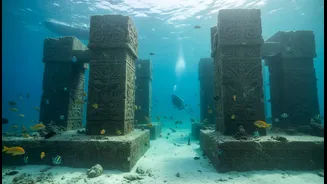
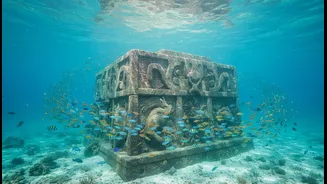
of fishermen and recorded by European travellers centuries ago, speaks of a grander city. The legend holds that the iconic Shore Temple was not solitary but was the last of seven spectacular pagodas, whose glittering copper domes once served as a landmark for sailors. The other six, it was said, succumbed to the wrath of the gods and the sea, sinking beneath the waves. For years, this remained a powerful but unproven tale—a piece of folklore that added to the site's mystique.
The Tsunami's Unsettling Revelation
The tragic Indian Ocean tsunami in December 2004 became an unexpected catalyst in this archaeological saga. In the moments before the colossal waves struck, the sea receded dramatically, pulling back hundreds of metres from the coastline. In that brief, eerie calm, eyewitnesses reported seeing long rows of large, man-made stone structures emerge from the seabed before being swallowed again by the deluge. The tsunami's immense power also scoured away centuries of accumulated silt, uncovering previously hidden statues, including a large stone lion from the Pallava era, on the beach. This dramatic, unintentional excavation spurred a new wave of scientific interest, providing a tangible reason to investigate the legends. Suddenly, the myths demanded a closer, more scientific look.
From Sonar Pings to Solid Proof
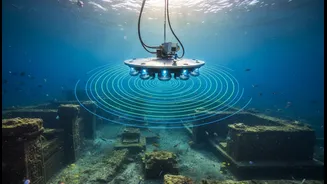
Acting on the eyewitness accounts, the Archaeological Survey of India (ASI) and the Indian Navy launched joint expeditions in 2005. Using side-scan sonar, they mapped the seabed off the coast. The results were astounding. The scans revealed what the naked eye had only glimpsed: the distinct remains of submerged structures. They identified a massive wall, nearly 70 metres long, along with the foundations and scattered ruins of what appeared to be at least two other temples and a cave temple, all within 500 metres of the shore. This was the first concrete, scientific evidence that a significant man-made complex did indeed exist beneath the waves, lending powerful credence to the age-old legend. Further explorations by the National Institute of Oceanography (NIO) over the years have corroborated these findings, discovering more walls, staircases, and chiselled stone blocks dating back 1,200 to 1,500 years.
A New Chapter of Deep-Sea Discovery
The latest chapter in this story began in 2025, when the ASI's Underwater Archaeology Wing resumed its explorations after nearly two decades, this time armed with even more advanced technology. The team is now deploying a Remotely Operated Vehicle (ROV), a sophisticated underwater drone that can capture high-resolution video and imagery without disturbing the fragile archaeological site. This modern approach allows researchers to explore deeper and more challenging areas with greater precision and safety. The ROV provides a virtual eye beneath the sea, meticulously documenting the layout of submerged ruins and helping archaeologists piece together the puzzle of this lost Pallava-era settlement. It marks a significant leap from the initial sonar scans, promising a far more detailed understanding of the scale and nature of what lies buried.
The Future: From Research to Public View
The ongoing work is not just about confirming a legend; it's about rewriting a piece of history. Each discovered wall and carved stone helps reconstruct the story of this ancient port city. But what does the future hold? The immediate goal is to analyse the vast amounts of data from the ROV to create a comprehensive map of the underwater site. Looking further ahead, the National Institute of Ocean Technology (NIOT) is already conceptualising a visionary project as part of its 'Vision 2047' roadmap: a large manned submersible designed for deep-sea tourism. This vehicle could one day carry visitors on an underwater tour of Mahabalipuram's submerged heritage, allowing the public to witness the legendary temples for themselves.