



What Are These Salts Anyway?
The term 'salt' might make you think of your kitchen shaker, but in the gardening world, it refers to the mineral compounds found in fertilizers and tap water. Fertilizers are made of soluble mineral salts like potassium nitrate and magnesium sulfate,
which are essential for plant growth in a contained pot. Additionally, the water from your tap contains naturally occurring minerals such as calcium and magnesium. When you water your plants, they absorb what they need, but over time, the excess minerals are left behind in the soil as the water evaporates. This is a common issue in container gardening because, unlike in the ground, these salts have nowhere to go and gradually accumulate.
Why Salt Buildup Is a Problem
A little bit of salt is normal, but high concentrations can be toxic. The primary issue is that excess salts make it harder for plant roots to absorb water. In a process sometimes called 'physiological drought', the high salt content in the soil can actually pull moisture out of the roots, causing the plant to dehydrate even when the soil feels damp. This can lead to a host of problems, including root burn, where the delicate root tips are damaged or killed. Furthermore, high salt levels can alter the soil's pH, leading to 'nutrient lockout', where the plant is unable to absorb the essential nutrients it needs to grow, even if they are present in the soil.
How to Spot the Signs
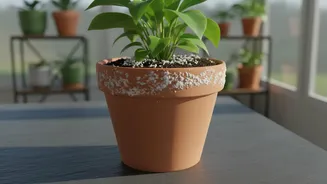
Fortunately, plants give several tell-tale signs of salt stress. The most obvious is a white, chalky crust forming on the surface of the soil or around the rim and drainage holes of the pot. This is the crystallized salt itself. You may also notice the tips and margins of leaves turning brown and crispy. Salts move with water through the plant and accumulate at the extremities, causing this 'leaf tip burn'. Other signs include stunted new growth, yellowing lower leaves, and general wilting or drooping, even when you’ve been watering consistently.
The Fix: How to Leach Your Soil
The good news is that fixing salt buildup is straightforward. The process is called leaching, which simply means flushing the soil with water to dissolve and wash away the accumulated salts. If you see a heavy crust, start by gently scraping off the top layer of soil without disturbing the roots. Then, take your plant to a sink or a spot outside where it can drain freely. Slowly pour a large volume of lukewarm water through the potting mix. A good rule of thumb is to use twice the volume of water as the pot can hold; for example, a 3-litre pot would need about 6 litres of water for a thorough flush. Let the water drain completely. Do not let the pot sit in the drained water, as it will reabsorb the salts you just flushed out.
Tips for Long-Term Prevention
While you can't prevent salt accumulation entirely in potted plants, you can manage it. Making leaching a regular part of your care routine—every four to six months—can prevent severe buildup. When you water, always do so thoroughly until water runs out of the drainage holes. This creates a mini-flush with each watering. Be mindful of fertilizing. Only feed your plants when they are actively growing, and consider using a diluted fertilizer solution to avoid adding excess salts. If your tap water is particularly 'hard' (high in minerals), using filtered, distilled, or rainwater can also make a significant difference in slowing salt accumulation over time.