





The Hidden Danger of a Flat Bottom
Most of us place our pots flat on the balcony floor. It seems logical, but it’s often the root cause of many plant problems. When a pot sits flush against a solid surface, its drainage holes can easily become blocked by collected grime or simply by the surface tension
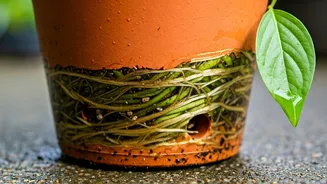
of the water itself. Water that can't escape has nowhere to go but up, creating a soggy, waterlogged layer at the bottom of the pot. This is what gardeners call 'wet feet,' and it’s a death sentence for most plant roots. Deprived of oxygen, the roots begin to rot, unable to absorb nutrients. You’ll see the signs above ground—yellowing leaves, wilting stems, and a general failure to thrive—but the problem started below, in that stagnant, hidden pool of water.
Elevate to Liberate Your Roots
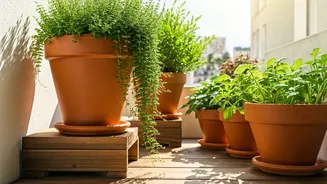
The solution is surprisingly simple: lift the pot. The idea of “tilted pots” isn’t necessarily about keeping your plants at a permanent, jaunty angle. It’s about ensuring there is a gap between the pot’s base and the floor. This gap breaks the seal, allowing excess water to drain freely and, just as importantly, letting air circulate underneath the pot. This helps the soil dry out more evenly between waterings, preventing root rot. You don’t need fancy equipment. You can achieve this by placing a small stone or even a sturdy plastic bottle cap under one edge of the pot to create a slight tilt. A more stable solution is to use 'pot feet'—small risers made of terracotta or plastic—placing three or four under each pot to lift it evenly. Even placing your pots on a wire rack or a simple wooden pallet works wonders.
Why Your Plants Need to Breathe
Just as roots need air, so do the leaves. Airflow is the unsung hero of a healthy balcony garden. In the close quarters of a balcony, especially one sheltered by walls, air can become stagnant. This is particularly true in humid climates or during the monsoon season in India. Stagnant, humid air creates the perfect breeding ground for fungal diseases like powdery mildew and devastating pests like spider mites and mealybugs. These problems thrive where air doesn't move. When plants are crammed together or pushed right up against a wall, they create pockets of still air around their leaves, inviting trouble. Good circulation helps to dry foliage quickly after rain or watering, whisk away fungal spores before they can take hold, and deter pests from settling in.
Simple Ways to Create a Breeze
Improving airflow doesn't require a personal fan for every plant. It’s all about strategic placement and smart arrangement. First, resist the urge to over-crowd. Give each plant its own personal space; a few inches between pots can make a huge difference. Pull your pots a little away from the back wall of the balcony to allow air to flow behind them. Consider using vertical space. Tiered plant stands, wall-mounted shelves, and hanging baskets are excellent for separating plants, allowing air to circulate around, above, and below each one. Finally, don’t be afraid to prune. Selectively trimming a few inner branches or dense leaves on a bushy plant can open up its structure, letting light and air penetrate its core and keeping it healthier from the inside out.