





What Is a Planetary Conjunction?
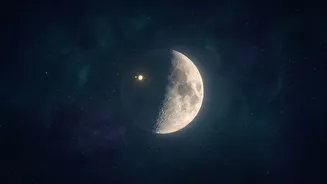
In simple terms, a conjunction is an astronomical event where two celestial bodies appear to be very close to each other in our sky. It's really a line-of-sight effect; the Moon and Saturn are, of course, still millions of kilometres apart. For us on Earth,
however, they will look like brilliant neighbours for a few nights, offering a striking visual that is easy to spot. This event provides a wonderful sense of the dynamic and ever-changing nature of our solar system, as we watch the Moon on its journey past the distant gas giant.
Prime Viewing Dates and Times for India
Mark your calendars for the nights of October 24 and 25, 2026. These are the prime dates to witness the Moon and Saturn pair up. The show begins shortly after sunset, once the sky begins to darken. You don't need to stay up late; the duo will be visible throughout the evening, giving you a generous window to step outside and look up. Saturn has been a brilliant object in the sky all month, having reached its annual peak brightness during its opposition on October 4. This close approach of the Moon simply adds to the spectacle.
How to Find the Moon and Saturn
Finding the pair will be incredibly easy. On the evenings of October 24 and 25, simply locate the bright, waxing gibbous Moon. Right next to it, you will spot a bright, steady point of light that doesn't twinkle like a star—that will be Saturn. It will appear as a distinct yellowish dot accompanying the Moon across the sky. No complicated star charts or coordinates are necessary. Just look for the Moon, and you will have found the ringed planet right beside it. The event will be high enough in the sky to be seen from most locations.
What You Can See With the Naked Eye
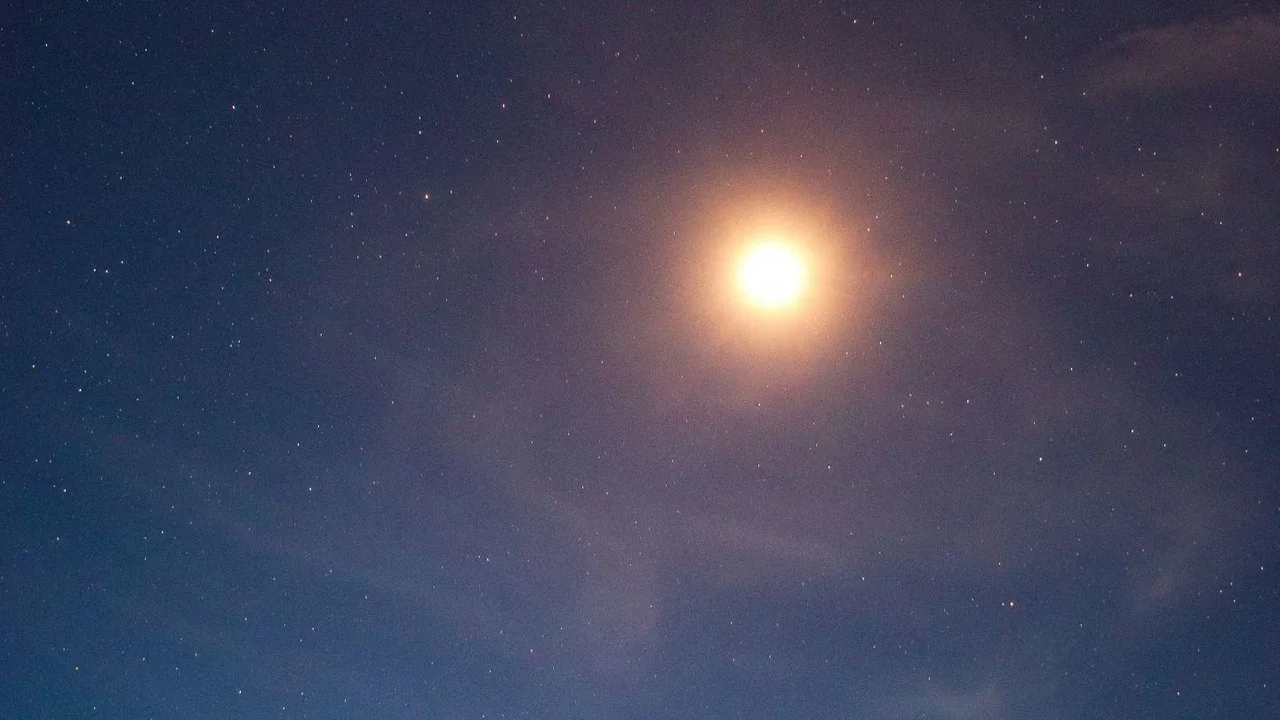
This conjunction is a fantastic naked-eye event, making it accessible to everyone. You will clearly see the Moon and the bright 'star' of Saturn sharing the same small patch of the night sky. On these nights, the Moon will be nearly full, providing a brilliant beacon to guide your eyes. Saturn will shine with a calm, golden glow. The sheer beauty of seeing a planet so close to our own Moon is a memorable experience in itself, requiring no special equipment to appreciate.
Enhancing the View with Binoculars or a Telescope
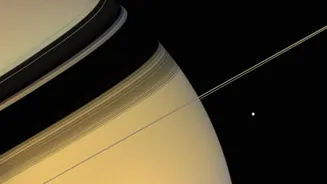
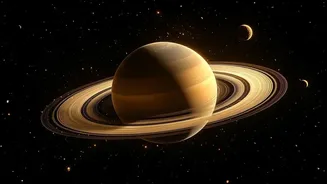
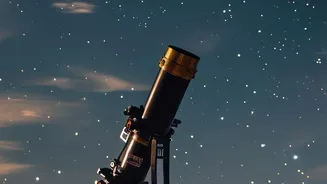
If you have a pair of binoculars or a small telescope, you're in for an even bigger treat. While Saturn's rings are not visible to the naked eye, even a basic telescope can reveal them. In 2026, the rings will appear as a very thin, bright line, as we are viewing them from a narrow angle following an 'edge-on' crossing in 2025. This subtle, elegant view is still breathtaking. A more powerful telescope might even allow you to glimpse the gap within the rings, known as the Cassini Division, or spot Saturn's largest moon, Titan, appearing as a tiny star-like point of light nearby.
Tips for the Best Viewing Experience
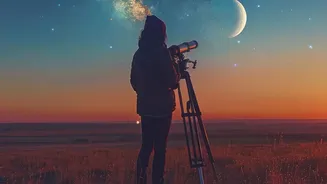
To make the most of this celestial event, try to find a viewing spot away from the glare of city lights. A park, a rooftop, or a location in the countryside will offer a darker backdrop, making Saturn's glow appear more prominent against the night sky. Give your eyes about 15-20 minutes to adjust to the darkness; this will help you see more detail. While stargazing apps on your phone can be helpful, the brightness of the Moon will make this particular pair unmissable. Finally, be patient and take your time to soak in the view.