




Starting Young: Sparking Curiosity in School
The journey into space can begin long before university. The Indian Space Research Organisation (ISRO) has a flagship programme called YUVIKA (YUva VIgyani KAryakram), or the Young Scientist Programme. This is a two-week residential course for students
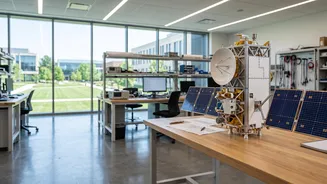
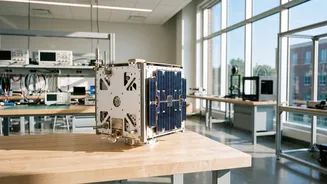
who have completed Class 9. It aims to provide a foundational understanding of space science and technology. Participants get to interact with senior scientists, visit ISRO's facilities, and get hands-on experience with activities like model rocketry and satellite assembly kits. Another crucial initiative is the Atal Innovation Mission's Atal Tinkering Labs (ATLs), established in schools nationwide. ISRO has adopted 100 of these labs to directly mentor students in STEM and space-related innovations, fostering a problem-solving mindset from a young age. These labs provide tools like 3D printers, robotics kits, and microcontrollers, allowing students to build projects and give shape to their ideas.
Higher Education: Building a Foundation
For those serious about a career in space, a strong academic foundation is key. A Bachelor's degree (B.E. or B.Tech) in a core engineering field is the most common route. While Aerospace or Aeronautical Engineering is the most direct specialisation, graduates in Mechanical, Electronics and Communication, and Computer Science are also in high demand. The Indian Institutes of Technology (IITs) in Bombay, Madras, Kanpur, and Kharagpur are consistently ranked among the top for aerospace engineering. A standout institution is the Indian Institute of Space Science and Technology (IIST) in Thiruvananthapuram, which is essentially a feeder college for ISRO and focuses intensely on space sciences. For students who may not opt for the IITs, strong private universities like SRM Institute of Science and Technology and Manipal Institute of Technology also offer respected aerospace programmes with good industry links.
The ISRO Pathway and Beyond
Joining ISRO remains a primary aspiration for many. The most structured route is through IIST, but ISRO also conducts an annual recruitment exam through its Centralised Recruitment Board (ICRB) for graduates in relevant engineering disciplines. However, the Indian space ecosystem is no longer just about ISRO. The landscape has been transformed by the emergence of a vibrant private sector. With the Indian space economy projected to reach $44 billion by 2033, private companies are becoming major employers. The government established the Indian National Space Promotion and Authorisation Centre (IN-SPACe) in 2020 as a single-window agency to promote and regulate the activities of these private entities. This has spurred the growth of over 400 space startups.
The New Frontier: Private Sector Roles
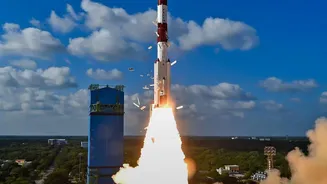
Companies like Skyroot Aerospace, which was the first Indian private company to launch a rocket, and Agnikul Cosmos are building launch vehicles and actively hiring. Others like Pixxel are creating constellations of earth-observation satellites, while Dhruva Space focuses on satellite manufacturing. These startups are not just looking for rocket scientists. They are hiring for a wide range of roles including propulsion engineers, satellite systems engineers, flight software developers, and data scientists. The growth of these firms, many founded by ex-ISRO engineers, has created a dynamic job market where practical skills and the ability to work in fast-paced environments are highly valued. This boom means that opportunities are now concentrated in hubs like Bengaluru, Hyderabad, and Chennai.
Beyond Engineering: Diverse Careers in Space
A career in the space sector is not limited to engineers and physicists. The modern space economy is a vast industry that requires a diverse range of expertise. With the massive amounts of data being sent back from satellites, there is a growing demand for data analysts and specialists in Geographic Information Systems (GIS) and remote sensing. These professionals help interpret satellite imagery for use in agriculture, urban planning, and disaster management. Furthermore, the rise of private space ventures has created a need for professionals in business development, finance, marketing, and space law. As companies navigate international treaties and domestic regulations, legal experts with knowledge of the space domain are becoming increasingly crucial.