





More Than Just Green Water
At its core, an algal bloom is a rapid increase in the population of algae in an aquatic system. These microscopic organisms, known as phytoplankton, are the foundation of the marine food web. In normal conditions, they are essential, producing a significant
portion of the oxygen we breathe through photosynthesis. However, when conditions are just right—or, more accurately, wrong—their growth can become explosive. These events, often called Harmful Algal Blooms (HABs), occur when a combination of warm water, sunlight, and an overabundance of nutrients like nitrogen and phosphorus are present. While some blooms are harmless, others produce potent toxins that can be dangerous to marine life and humans. Even non-toxic blooms can be destructive, creating vast “dead zones” by depleting oxygen in the water as the massive quantities of algae die and decompose, a process called eutrophication.
NASA’s Eye in the Sky
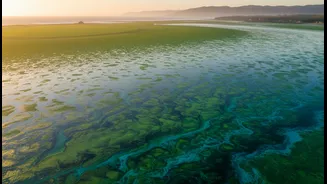
So, how does NASA keep watch on these blooms from space? The key is “ocean colour.” Phytoplankton contain chlorophyll, the same pigment that gives plants on land their green colour. This pigment absorbs blue and red light and reflects green light. From orbit, sophisticated satellite instruments can detect these subtle shifts in the ocean's hue. NASA’s Plankton, Aerosol, Cloud, ocean Ecosystem (PACE) mission, launched in early 2024, is a game-changer in this field. Its hyperspectral Ocean Color Instrument (OCI) can distinguish between hundreds of different colours, allowing scientists not just to see a bloom, but to identify the specific types of phytoplankton present based on their unique light signatures. This advanced capability helps differentiate benign blooms from potentially toxic ones, providing critical data for coastal managers and public health officials.
A Climate Change Fingerprint
The increasing frequency and intensity of massive algal blooms serve as a clear and visible indicator of global climate shifts. Climate change creates a perfect storm of favourable conditions for these events. Rising global temperatures lead to warmer sea surfaces, which many harmful algae species prefer, allowing them to grow faster and outcompete other organisms. Warmer surface water is also less likely to mix with cooler, deeper water, allowing blooms to concentrate at the top and grow thicker. Furthermore, climate change is intensifying weather patterns. More frequent and extreme rainfall events wash greater amounts of nutrient-rich agricultural fertilizers and urban runoff from land into coastal waters, providing an unnatural feast for algae. This combination of warmer waters and a surge in nutrients is making large-scale blooms a more common feature in our oceans and lakes.
From Blooms to Broad Impacts
The consequences of these massive blooms ripple through entire ecosystems and economies. The toxins produced by some HABs can accumulate in fish and shellfish, leading to poisoning in marine mammals like sea lions and dolphins, and posing a serious health risk to humans who consume contaminated seafood. In some cases, toxins can even become airborne, causing respiratory problems for people living near the coast. Economically, the impact is severe. Blooms can shut down commercial and recreational fisheries, devastate tourism by fouling beaches, and increase the cost of treating drinking water. The creation of oxygen-starved dead zones can lead to massive fish kills and long-term damage to marine habitats, threatening the biodiversity that coastal communities depend on.