

Why Simple Multiplication Fails
Every home cook has faced this frustrating moment: a trusted recipe fails when scaled up or down. The reason is that cooking is an act of science, and simply doubling your ingredients doesn’t account for changes in the cooking environment. Key factors
like surface area, volume, heat distribution, and evaporation rates don't scale in a linear way. A larger batch of stew in a deeper pot has less surface area for evaporation relative to its volume, changing its final consistency. A double batch of cake batter poured into a single, larger pan will be deeper, meaning the heat has farther to travel to cook the center. Understanding this fundamental mismatch between ingredient quantity and cooking physics is the first step to mastering recipe adaptation. It’s not just about more food; it's about a different cooking process that needs a different approach.
Rethink the Pan
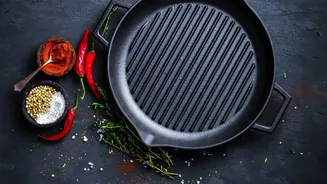
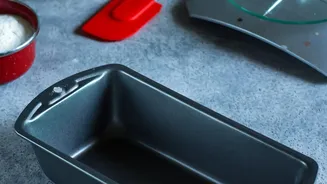
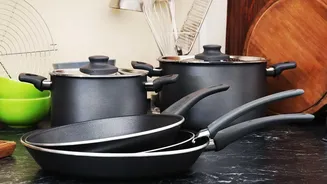
The single most important decision after adjusting your ingredients is choosing the right cookware. Simply pouring a double batch into the original pan will lead to overflow and uneven cooking. But even using a single larger pan can be problematic. The depth of your food is crucial. For instance, doubling a cake recipe originally for an 8-inch square pan doesn't mean you should just find a 16-inch pan. A better approach is often to use two 8-inch pans to maintain the original batter depth and ensure even baking. If you must use a different sized pan, a little math helps. Calculate the surface area of the original pan and your new pan. If the new pan results in the food being more than 10-15% deeper or shallower, you’ll need to make significant adjustments to time and possibly temperature. A deeper batter requires more time to cook through, while a shallower one will cook much faster.
Adjust the Clock, Not Just the Ingredients
One of the most common mistakes is assuming that doubling a recipe means doubling the cooking time. This is almost never the case. A larger volume of food will take longer to come to temperature and cook through, but rarely twice as long. A good rule of thumb is to start checking for doneness at the original time indicated in the recipe. From there, check in short increments, such as every 5 to 10 minutes, until the dish is properly cooked. An instant-read thermometer is your best friend here, especially for baked goods, casseroles, and roasts where an internal temperature signifies doneness. Conversely, if you halve a recipe, don't assume you can just cut the cooking time in half. Start checking much earlier, perhaps at 50% to 75% of the original time, to avoid overcooking.
Season with Caution and Taste
Ingredients like flour, sugar, and liquids generally scale well. However, potent ingredients like salt, spices, and leavening agents (baking soda, yeast) do not. Their impact on flavor and chemical reactions is not linear. Doubling the salt can easily make a dish unpalatably salty. The best practice is to increase these ingredients by a smaller factor. When doubling a recipe, for instance, start by increasing the salt and strong spices by about 1.5 times, not 2. The same logic applies to leavening agents, where using too much can result in a metallic taste or a collapsed structure. Professional chefs live by a simple mantra that serves well here: you can always add more, but you can't take it away. So, scale these ingredients down proportionally, taste your dish near the end of cooking, and adjust as needed to get the flavor just right.