




The Sun Sets on a Space Icon
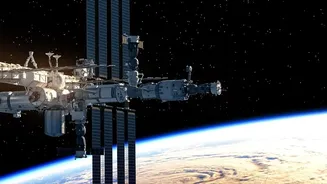
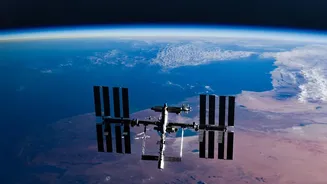
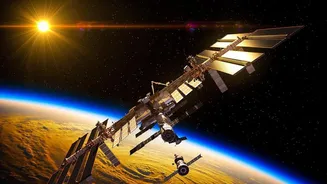
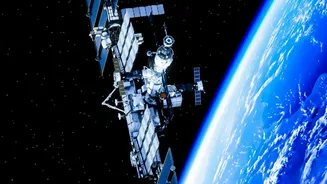
The International Space Station is an unparalleled success story of global cooperation and scientific achievement. Since 2000, it has hosted astronauts from dozens of countries, enabling countless experiments in its unique microgravity environment. However,
the station is aging. After three decades of continuous operation, rising maintenance costs and structural fatigue mean its mission is scheduled to end around 2030. At that point, the 450,000 kg structure will be carefully de-orbited to break up over a remote stretch of the Pacific Ocean. This isn't an end to human presence in low-Earth orbit (LEO), but a planned transition. Recognizing the need for continuity, NASA is actively fostering what comes next: a market of commercially owned and operated space stations.
The Rise of Commercial Destinations
To prevent a gap in orbital research capabilities, NASA initiated the Commercial LEO Destinations (CLD) program. The idea is to shift from being the owner and operator of a space station to becoming just one of many customers. This public-private partnership model provides seed funding and technical expertise to several companies, spurring competition and innovation. Key players have emerged, each with ambitious plans. Axiom Space is already building modules intended to first attach to the ISS before separating to become a free-flying station. Another major contender is Starlab, a joint venture between Voyager Space and Airbus, which aims to launch a single large habitat and science module. Blue Origin and Sierra Space are leading the development of Orbital Reef, envisioned as a 'mixed-use business park' in space for science, tourism, and industry.
A New Frontier for Research
Private stations promise to revolutionize commercial research by making it more accessible and specialized. The microgravity environment allows for breakthroughs that are impossible on Earth, where gravity affects everything from cell growth to the formation of crystals. Scientists can study diseases like cancer and diabetes, develop new pharmaceuticals, and create purer semiconductor crystals. Private stations can be purpose-built with state-of-the-art labs designed specifically for these high-value sectors, like biotechnology and materials science. Unlike the ISS, where research priorities are often set by national agencies, commercial stations will offer more frequent and flexible access to a wider range of customers, including universities, startups, and private corporations.
Lowering the Barrier to Entry
A key driver of this new era is economics. Operating a government-owned station like the ISS is incredibly expensive. By creating a competitive market, NASA hopes to drive down the cost of access to LEO, allowing its own budget to focus on deep-space exploration missions like Artemis. For commercial clients, these new outposts will offer end-to-end services, handling transportation, logistics, and operations. This 'space-as-a-service' model removes the immense complexity and cost barriers that have traditionally limited orbital research to governments and major aerospace contractors. A company could book lab space and crew time for a specific project without needing to build its own rocket. This opens the door for a diverse range of industries to leverage the unique properties of space for product development and innovation.
Building a True Orbiting Economy
The vision for these stations extends beyond just research laboratories. They are designed to be the foundational infrastructure for a self-sustaining LEO economy. Orbital Reef's concept of a 'business park' includes potential for space tourism, media production, and in-space manufacturing. Axiom Space is already planning for capabilities like orbital data centers. This ecosystem creates a virtuous cycle: diverse revenue streams from tourism and other activities help subsidize the cost of the station, making research and development even more affordable. This shift marks a fundamental change in how humanity approaches space—not just as a place for government-led exploration, but as a vibrant extension of the global economy, where new markets can be created and groundbreaking science can flourish.