


The Problem Hiding in Plain Sight
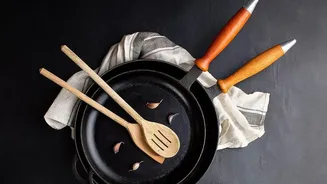
Recipes are roadmaps, but they often leave out crucial landmarks. A recipe developer might test a cake in a specific 8-inch square pan, but you might only own a 9-inch round one. This seemingly small difference can be the deciding factor between a triumph
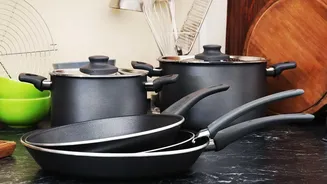
and a tragedy. The volume, surface area, and even the material of your pan dramatically influence how heat is transferred and how moisture evaporates. A recipe that works perfectly in a light-coloured metal pan might need adjustments in a dark metal or glass one, as they absorb and conduct heat differently. Without this context, you’re left guessing why your results don’t match the picture.
The Simple Science of Surface Area
Think about a puddle on a hot day versus a deep bucket of water. The puddle, with its wide, shallow expanse, dries up quickly. The bucket holds its water for much longer. This is the principle of surface area, and it's a game-changer in the kitchen. A wider, larger pan exposes more of your batter or sauce to the air. This leads to faster evaporation and quicker cooking. A smaller, deeper pan has less surface area relative to its volume, meaning moisture is trapped and heat takes longer to penetrate the centre. This is why a sauce you want to reduce is simmered in a wide skillet, not a tall stockpot.
It’s All About the Batter’s Depth
When you switch pans, you’re not just changing the pan's footprint; you’re changing the depth of the food inside it. What truly matters for baking time is how deep the batter is. Pouring a cake batter designed for a 9x13-inch pan (117 square inches) into an 8x8-inch pan (64 square inches) creates a much deeper bake. The centre will be undercooked long after the edges have started to burn. Conversely, spreading that same batter in a pan that's too large results in a thin, shallow cake that can easily become dry because the moisture evaporates too quickly. As a rule, you should never fill a cake pan more than two-thirds full to avoid overflow and ensure even baking.
How to Adjust on the Fly
You don't need to be a mathematician, but a little pan math goes a long way. You can calculate the surface area of your pans to find a suitable substitute. For square or rectangular pans, just multiply length by width. For a round pan, multiply the radius squared by 3.14. An 8-inch square pan (64 sq. in.) and a 9-inch round pan (about 63.5 sq. in.) are nearly identical in volume and can often be used interchangeably. If your new pan is smaller, the batter will be deeper. A common adjustment is to lower the oven temperature by about 15°C (25°F) and increase the baking time. If the new pan is larger, the batter will be shallower and cook faster, so you might need to check for doneness 10 to 15 minutes earlier than the recipe states.
The Timer Is a Suggestion, Not a Command
Ultimately, recipe cooking times are just an educated guess. So many variables can affect the outcome, from the accuracy of your oven to the humidity in your kitchen. The most important skill a home cook can develop is learning to check for doneness using their senses. For a cake, a wooden skewer inserted into the centre should come out clean. A sauce is ready when it coats the back of a spoon. Meats are done when they reach a safe internal temperature. Think of the timer as a helpful nudge to start checking, not a definitive signal that the food is ready. Trust your instincts and the visual cues.