






Ghee is a cherished staple in Indian kitchens, celebrated for its rich flavour and health benefits. But whether it's golden cow ghee or creamy buffalo ghee, 'too much of a good thing' can become a problem. Here's what you need to know.
Cow Ghee vs. Buffalo Ghee: What’s the Difference?
At first glance,
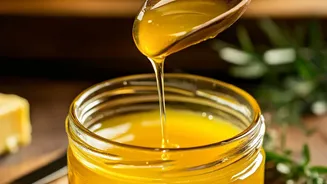
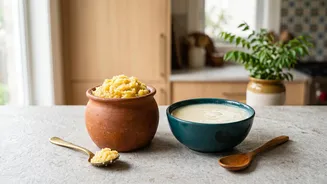
the most obvious difference is colour. Cow ghee is typically golden yellow, while buffalo ghee is creamy white. This is because cows pass some of the beta-carotene from their fodder into the milk fat, which gives it a yellow tint. Buffaloes, on the other hand, convert almost all beta-carotene into colourless vitamin A. Nutritionally, buffalo milk contains nearly double the fat content of cow's milk (6-8% vs 3.5-4.5%), which is why buffalo ghee is denser and richer. Cow ghee is considered lighter and easier to digest for many, especially children and the elderly. It also contains a slightly different fatty acid profile, sometimes with more polyunsaturated fatty acids (PUFAs).
The Undeniable Health Benefits
Both types of ghee are revered in Ayurveda and offer several health advantages when consumed mindfully. Ghee is an excellent source of fat-soluble vitamins like A, D, E, and K, which are crucial for everything from vision and immunity to skin health and bone strength. Ghee helps the body absorb these vitamins from other foods, making a spoonful on your vegetables a smart move. It is also rich in butyrate, a short-chain fatty acid that can reduce gut inflammation and support healthy digestion. For those with lactose intolerance, ghee is often a better choice than butter because the milk solids are removed during the clarification process.
The Tipping Point: When Good Fat Turns Bad
The main reason for moderation lies in ghee's high concentration of saturated fat. Ghee is about 99.5% fat, with roughly 62% of that being saturated. While our bodies need some saturated fat, excessive intake is a well-established risk factor for heart disease. Consuming large amounts of ghee daily can raise levels of LDL ('bad') cholesterol in the blood. Over time, this can contribute to the buildup of plaque in the arteries, a condition known as atherosclerosis, which increases the risk of heart attacks and strokes. It's not that ghee is inherently bad, but its high saturated fat content means portion control is essential.
Calories and Weight Management
Ghee is also incredibly calorie_dense. A single tablespoon contains around 120–130 calories. If you're adding several spoonfuls to your meals throughout the day without accounting for these extra calories, it can easily lead to weight gain and, over time, obesity. While some studies suggest that certain fatty acids in ghee, like conjugated linoleic acid (CLA), might aid in weight management, this benefit is negated by excessive consumption. The key is to use ghee as a replacement for other fats, like refined oils, not as an addition on top of an already high–fat diet.
How Much Ghee Is Healthy?
So, what's the magic number? Most nutrition experts and health bodies suggest a moderate intake of 1 to 2 teaspoons per day for a healthy adult. Active individuals or athletes may be able to accommodate slightly more, up to 1–2 tablespoons, to meet their higher energy demands. However, for those who are sedentary or have existing health conditions like high cholesterol, heart disease, or fatty liver disease, it's best to stick to the lower end of this range and consult a doctor or dietitian for personalised advice. The goal is to enjoy ghee for its flavour and benefits without overloading your system with saturated fat and calories.
Making the Right Choice for You
Choosing between cow and buffalo ghee often comes down to personal health goals and culinary use. If you are looking for a lighter option that's easier on the digestive system, cow ghee is generally the preferred choice. It is often recommended for daily consumption, especially for children. If your goal is to gain weight or you need a source of dense energy for high physical activity, the richer buffalo ghee might be more suitable. Buffalo ghee is also traditionally used for making sweets and for deep frying due to its richer texture. Regardless of which you choose, the principle remains the same: use it sparingly to enhance your food, not to dominate it.