





From Monks to Millennials
The story of matcha begins not in a trendy cafe, but in ancient China, where powdered tea first gained favour. It was Japanese Buddhist monks, returning from their travels in the 12th century, who brought this practice to Japan. A monk named Eisai is often
credited with popularizing it, recognizing that the tea provided a state of calm alertness, ideal for long meditation sessions. Over centuries, this practice became deeply intertwined with Zen Buddhism, where the preparation and drinking of matcha evolved from a simple beverage into a spiritual ritual. The samurai class also adopted matcha, using it to achieve mental clarity and focus before battle. This journey from a sacred elixir for monks and warriors to a global wellness symbol is a testament to its enduring appeal.
The Art of a Special Leaf
Matcha's unique qualities come from a highly specific cultivation and production process. It all starts with the same plant as other teas, Camellia sinensis. However, for about three to four weeks before the spring harvest, the tea bushes are carefully covered in shade. This crucial step slows photosynthesis, forcing the leaves to produce higher concentrations of chlorophyll, amino acids, and antioxidants. Only the youngest, most tender leaves, called tencha, are hand-picked. After harvesting, the leaves are quickly steamed to halt oxidation, preserving their vibrant green colour and nutrients. They are then dried, and the stems and veins are meticulously removed. Finally, the purified tencha leaves are slowly stone-ground into an incredibly fine powder. This traditional grinding process is so slow and deliberate that it can take an hour to produce just 30-40 grams of high-quality matcha.
A Calm, Focused Energy
One of the most celebrated effects of matcha is its ability to provide sustained energy without the jitters or crash associated with coffee. This is due to a unique combination of moderate caffeine and a powerful amino acid called L-theanine. While caffeine provides a stimulant effect, L-theanine promotes a state of relaxed alertness by stimulating alpha brain waves—the same state often associated with meditation. This synergy creates a calm, focused mindset that can last for hours. Beyond mental clarity, matcha is a powerhouse of antioxidants, particularly catechins like Epigallocatechin gallate (EGCG). Because you consume the entire ground leaf rather than just a steeped infusion, a single serving of matcha delivers a significantly more concentrated dose of these beneficial compounds than a standard cup of green tea.
The Soul of the Tea Ceremony
Nowhere is matcha's cultural depth more apparent than in the Japanese tea ceremony, known as chanoyu or sadō (The Way of Tea). Far more than just preparing a drink, this ceremony is a highly refined art form and a spiritual practice. Perfected in the 16th century by tea master Sen no Rikyū, the ceremony is guided by four core principles: harmony (wa), respect (kei), purity (sei), and tranquility (jaku). Every element, from the choice of utensils to the carefully choreographed movements of the host, is intentional. The ceremony is a form of hospitality, or omotenashi, where the host's entire focus is on creating a beautiful and peaceful experience for the guest. It’s an exercise in mindfulness, encouraging participants to appreciate the present moment and the simple beauty of sharing a bowl of tea.
Not All Green Powders Are Equal
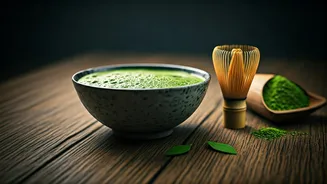
As matcha has grown in popularity, the market has filled with a wide range of products. Understanding the difference between grades is key to appreciating it fully. The two main categories are ceremonial and culinary. Ceremonial grade is the highest quality, made from the youngest first-flush leaves, and is intended to be whisked with water and enjoyed on its own. It has a delicate, nuanced, and naturally sweet flavour with a smooth finish. Culinary grade matcha is made from more mature leaves harvested later in the season. It has a bolder, more robust, and slightly more bitter flavour profile designed to stand up to other ingredients in lattes, smoothies, and baked goods. While both grades offer health benefits, their taste and intended uses are distinct.