




As the festive season approaches, city authorities across India are clarifying rules for bursting firecrackers. To ensure celebrations are safe, lawful, and less polluting, a clear set of expectations has been laid out for all residents.
The Two-Hour Bursting Window
The most critical
guideline is the strict time limit for bursting firecrackers. Following Supreme Court directives, most city authorities have mandated a two-hour window, typically from 8 PM to 10 PM on Diwali night. Some states may issue their own notifications altering these timings, so it is crucial to check for local announcements. However, the 8 PM to 10 PM slot remains the general rule nationwide. Bursting crackers outside of this designated period is prohibited and can attract legal action. For Christmas and New Year's Eve, the window is usually set from 11:55 PM to 12:30 AM.
Only 'Green' Crackers Are Legal
Authorities have been clear: only certified 'green crackers' are permitted for use. These are not a specific colour; the term refers to fireworks that are formulated to reduce emissions by at least 30%. Developed by the Council of Scientific and Industrial Research-National Environmental Engineering Research Institute (CSIR-NEERI), green crackers are made without banned chemicals like barium nitrate, arsenic, lithium, and mercury. To ensure you are buying a legal product, look for the official CSIR-NEERI logo and a QR code on the box. Scanning the QR code with the designated app verifies the cracker's authenticity and manufacturing details.
Community Bursting Over Individual Use
Many urban authorities and Resident Welfare Associations (RWAs) are strongly encouraging community firecracker bursting in designated open spaces. The goal is to move the activity away from dense residential lanes and individual balconies. Recent court orders, such as one from the Bombay High Court, have implemented a year-round ban on bursting firecrackers on public roads, streets, and footpaths. RWAs are expected to identify safe, open areas like parks or grounds for residents to use collectively, minimising risk and disruption. This approach helps in managing waste and ensuring safety for everyone.
Strict No-Go and Silence Zones
The bursting of any firecrackers is strictly forbidden in 'silence zones'. Authorities have defined these as areas within a 100-metre radius of hospitals, educational institutions, courts, and religious places. This rule is in effect at all times of the day and night to protect vulnerable individuals and prevent disturbances in sensitive areas. Furthermore, the sale of crackers is not permitted near residential colonies or under high-tension wires. Violating the silence zone rule can lead to significant penalties under the Environment (Protection) Act and Noise Pollution Rules.
Penalties for Non_Compliance
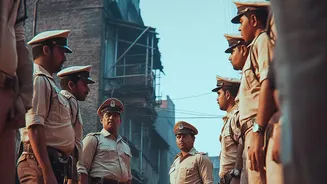
City authorities have warned that violations will be met with strict action. This includes the sale of unauthorised or non_green crackers, selling without a proper licence, and bursting crackers outside the permitted hours or in prohibited zones. Penalties can range from fines to the seizure of entire stocks of illegal crackers. For instance, the Kolhapur Municipal Corporation has announced a Rs 2,000 fine along with stock seizure for unauthorised sellers. In some cases, FIRs can be lodged against individuals for violations, with potential legal action under sections of the Bharatiya Nyaya Sanhita, 2023, and the Explosives Act.
How to Report Violations Safely
Citizens are encouraged to report illegal activities, such as the sale of banned crackers or bursting outside permitted hours. The national emergency number 112 is the primary point of contact for reporting violations that pose an immediate risk. Many city police departments also provide dedicated WhatsApp numbers or apps for citizens to send photos or videos of violations. For example, Delhi residents can use the 'Green Delhi' app or a government web portal to file complaints. It is advised not to confront violators directly but to report them to the authorities.