


The Robotic Vanguard
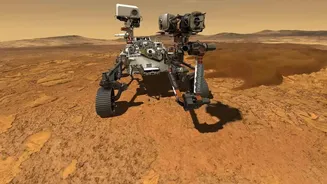
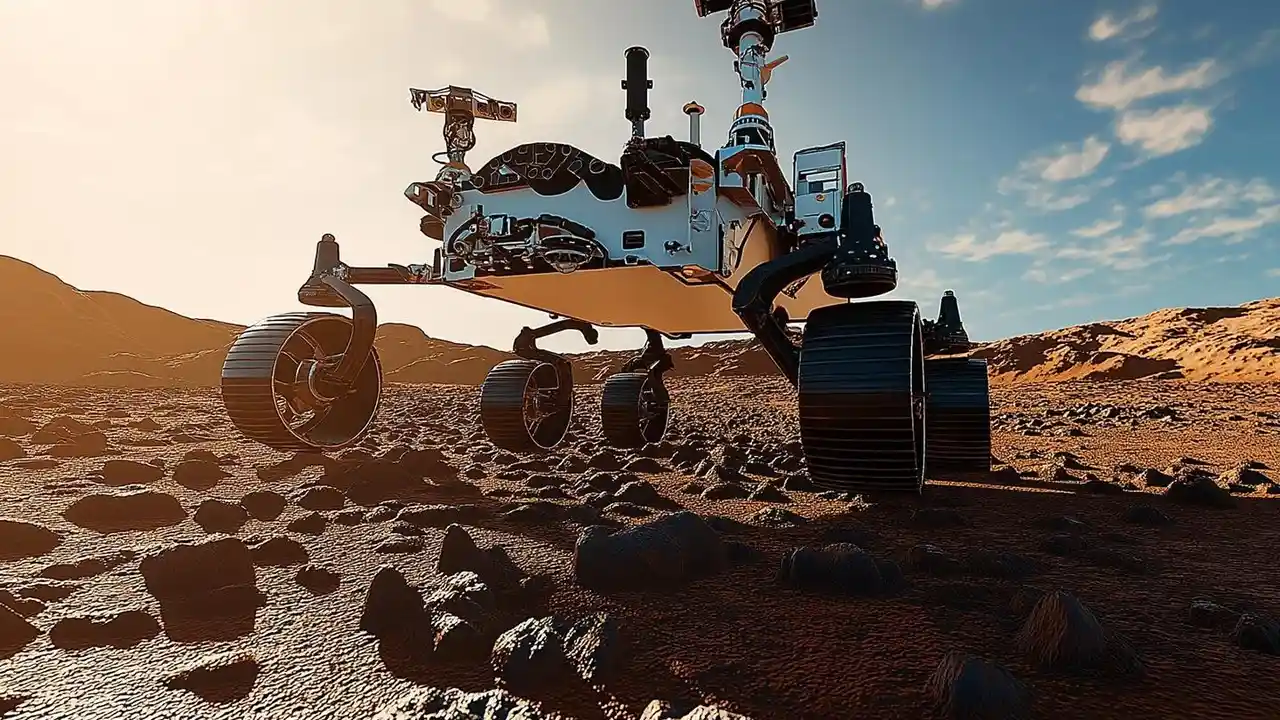
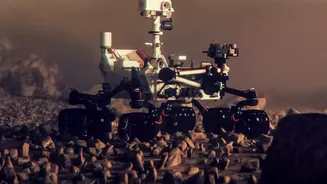
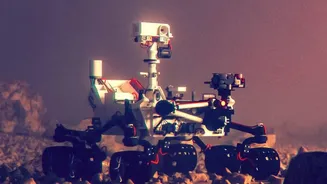
For decades, robots have been our eyes, ears, and hands on the Red Planet. From the early Sojourner to the sophisticated Perseverance and Curiosity rovers, these robotic emissaries have fundamentally changed our understanding of Mars. They've traversed
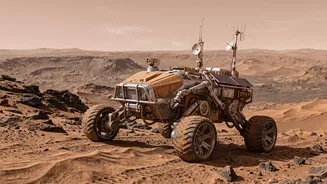
vast craters, analysed soil composition, and confirmed the presence of water ice, transforming Mars from a distant red dot into a complex world with a dynamic geological history. These missions are not just scientific endeavours; they are crucial reconnaissance. Robots can operate for years in conditions that would be instantly lethal to an unprotected human, braving extreme radiation and temperatures without needing food, water, or life support. This makes them the perfect scouts, mapping terrain, identifying potential hazards, and laying the groundwork for the far more complex task of sending people.
Pioneers in Advance
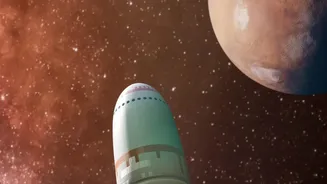
The primary reason to send robots first is risk reduction. A human mission to Mars is an incredibly complex and perilous undertaking. The journey alone takes six to nine months each way, exposing astronauts to deep space radiation and the physiological toll of microgravity. Landing a heavy, crewed spacecraft on Mars, which has an atmosphere less than 1% as dense as Earth's, is a monumental engineering challenge far beyond what was required for the one-tonne Perseverance rover. This is where robotic precursor missions become essential. The plan, embraced by agencies like NASA, is to send machines ahead to do the dangerous and repetitive work. Autonomous robots could be tasked with preparing landing sites, deploying habitats, and even beginning the process of In-Situ Resource Utilisation (ISRU). This means harvesting local Martian resources, such as converting atmospheric carbon dioxide into breathable oxygen—a technology already proven by Perseverance's MOXIE experiment—or extracting water from subsurface ice. By pre-deploying power systems, life support, and even 3D-printing structures, robots can create a prepared worksite, ensuring that when humans finally arrive, key infrastructure is already in place.
The Irreplaceable Human Element
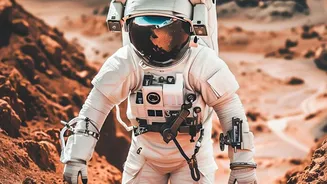
Despite their remarkable capabilities, robots have significant limitations. A key challenge is the communication delay between Earth and Mars, which can be up to 40 minutes for a round trip. This makes real-time control impossible and forces rovers to operate with a high degree of pre-programmed autonomy, limiting their ability to react to unexpected discoveries. This is where human explorers are irreplaceable. An astronaut geologist can identify a promising rock formation, make an intuitive leap, and conduct complex analysis on the spot in minutes—a process that could take a rover weeks. Humans possess a unique combination of creativity, adaptability, and problem-solving skills that are impossible to code. When faced with unforeseen circumstances, from equipment malfunctions to surprising scientific finds, human ingenuity is the ultimate tool. For long-term goals like establishing a sustainable presence or conducting in-depth searches for past life, the on-the-ground decision-making of a human crew is not just an advantage; it's a necessity.
A Partnership for the Red Planet
Ultimately, the 'Robots Vs Humans' framework is a false choice. The future of Mars exploration is a collaborative one, where the strengths of each are leveraged in a carefully planned sequence. NASA's 'Moon to Mars' strategy explicitly frames this partnership, using robotic missions to gather intelligence and test technologies that pave the way for human explorers. The Moon will serve as a crucial proving ground for many of these systems, from habitats to rovers, before they are deployed on the far more distant and challenging Mars. India's space agency, ISRO, also envisions a future with precursor missions to support an eventual human landing. The strategy is clear: robots are the advance team. They will build the initial infrastructure, identify the most scientifically valuable and safest locations, and mitigate the immense risks. Humans will follow, bringing their unique cognitive abilities to perform complex science, establish a permanent outpost, and take the next giant leap for humanity.