





An Architecture That Breathes
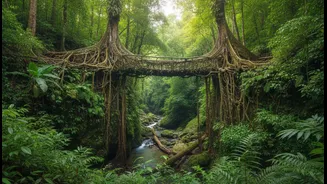
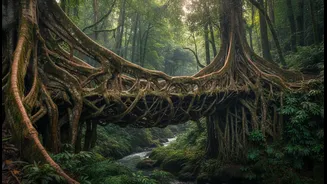
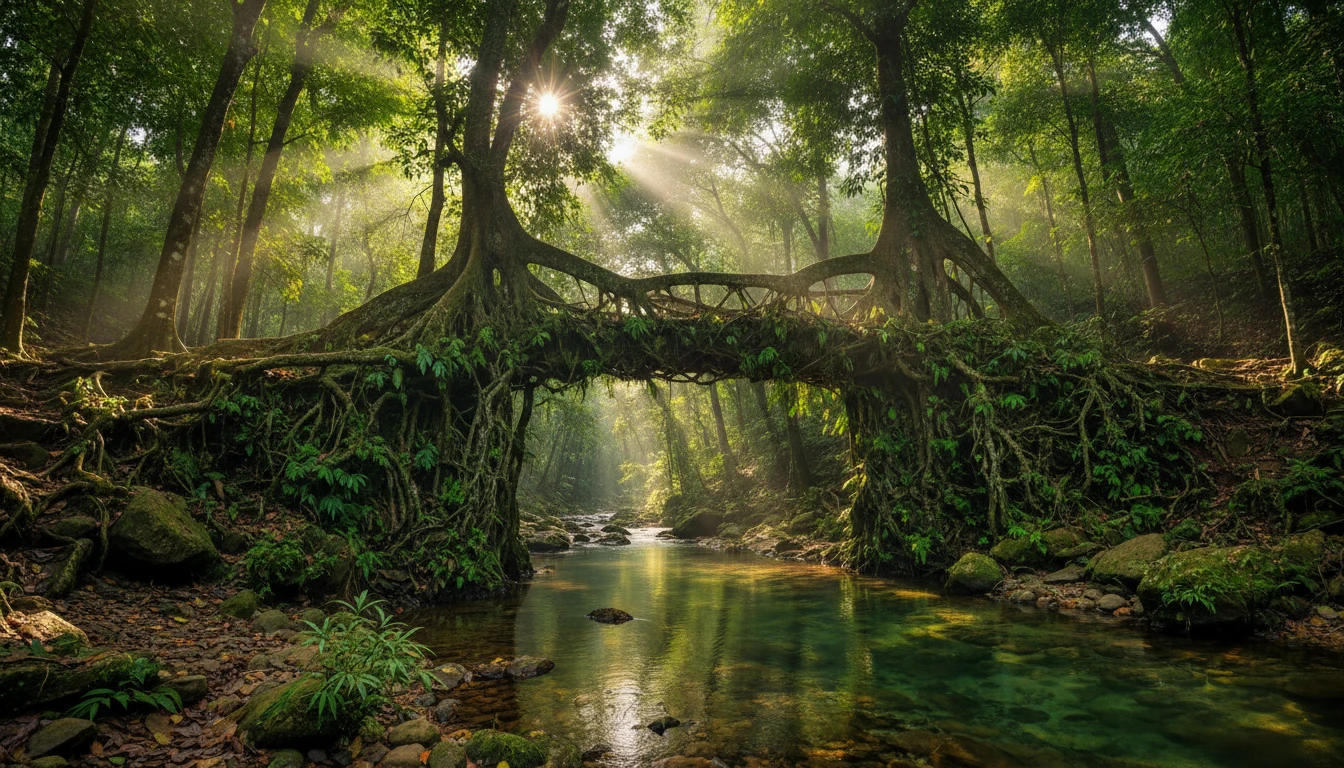
Deep in the hills of Northeast India, the Khasi and Jaintia peoples have mastered a form of bio-engineering that defies modern convention. For centuries, they have been creating living root bridges, or 'jingkieng jri', by guiding the aerial roots of the rubber
fig tree (Ficus elastica) across rivers and gorges. This is not rapid construction. The process is a patient collaboration with nature that can take 15 to 30 years. Young, pliable roots are guided, often through hollowed-out bamboo or areca palm trunks, across a waterway. Over time, these roots take hold on the opposite bank, and through a natural process called inosculation, they graft together, growing thicker, stronger, and more complex. The result is a living, breathing structure that becomes an integral part of the forest ecosystem.
A Masterclass in Longevity
Unlike concrete and steel bridges that begin to decay the moment they are completed, living root bridges do the opposite: they grow stronger with age. A mature root bridge can last for hundreds of years, with some estimated to be over 500 years old. Their structural integrity is exceptional. The interwoven, complex network of roots creates a highly redundant system that is incredibly resilient to the region's notoriously heavy monsoons and flash floods, which would wash away conventional structures. These bridges are self-repairing; as long as the parent tree remains healthy, the structure continues to grow and reinforce itself. A mature bridge can support the weight of 50 people at once, providing a vital and reliable connection for remote communities.
More Than Just a Crossing
To view these bridges merely as infrastructure is to miss their deeper significance. They are a profound expression of a sustainable lifestyle and a deep, reciprocal relationship with nature. This traditional ecological knowledge (TEK) demonstrates a way of living in harmony with the environment, rather than in opposition to it. The bridges themselves become miniature ecosystems, providing pathways for wildlife and habitats for birds and insects. They also play a crucial role in preventing soil erosion and stabilising the steep, rain-lashed slopes of the Khasi hills. For the Khasi people, these bridges are a cultural inheritance, a symbol of their identity, and a testament to the wisdom passed down through generations.
The Urgent Need to Braid Past and Future
This ancient knowledge system is facing a modern threat. As concrete roads and steel bridges become more common, the immediate utility of the living root bridges can seem to diminish, and with it, the incentive for younger generations to learn the patient art of their creation and maintenance. Without active care and the transfer of knowledge, these centuries-old structures could decay and this unique expertise could be lost forever. Training indigenous youth in these traditional technologies is therefore not just about preserving a cultural relic; it is an act of empowerment. It ensures the continuity of a practice that holds immense value for community resilience, cultural pride, and sustainable living. It keeps alive a body of knowledge that the modern world is only just beginning to appreciate.
A Living Lesson for Modern India
At a time when the world is grappling with climate change and searching for sustainable solutions, the living root bridges of Meghalaya offer a powerful, home-grown example of regenerative design. They are carbon-sequestering structures built with zero industrial emissions, showcasing a model of development that enriches, rather than depletes, the environment. The principles behind them—patience, ecological integration, and long-term thinking—provide a valuable counterpoint to the often short-sighted and resource-intensive methods of modern construction. By investing in the youth who are the inheritors of this tradition, we are not just safeguarding a piece of India's unique heritage. We are nurturing a source of inspiration and practical wisdom that can help us build a more resilient and sustainable future for all.