



Winter possesses a quiet magic, transforming familiar landscapes into stark, ethereal wonderlands. Nowhere is this more apparent than when a lake freezes, turning vast expanses of water into a solid canvas for nature’s most striking art.
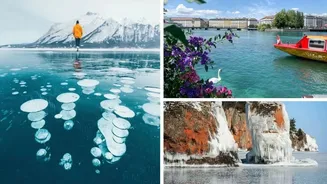
Abraham Lake, Canada
This man-made
lake in Alberta's Rocky Mountains becomes a natural art gallery each winter. When organic matter on the lakebed decomposes, it releases methane gas. As the lake freezes, these rising gas bubbles are trapped in layers, creating stacks of white, otherworldly discs suspended in the crystal-clear ice. Strong winds constantly sweep the ice surface clean of snow, making it one of the best places on Earth to witness this rare phenomenon. The prime viewing season is typically from mid-January to early February, when the ice is thickest.
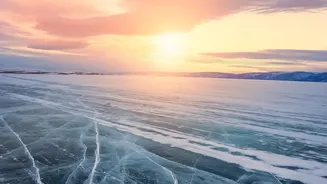
Lake Baikal, Russia
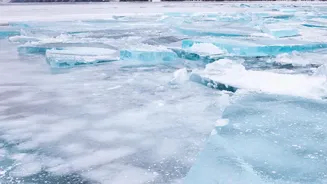
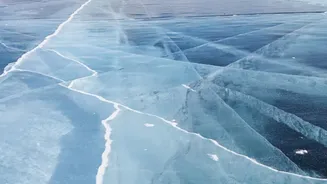
As the world's oldest and deepest freshwater lake, Baikal is a titan of nature. In winter, it transforms into a realm of surreal beauty. The lake freezes so clear that you can see up to 40 meters below the surface. This transparency reveals a world of rocks and aquatic life. The ice itself, which can reach 1.5 meters thick, is famous for its turquoise hummocks—shards of ice pushed up by pressure that glow a vibrant blue in the sun. Vehicles often drive across its frozen expanse, a testament to its formidable strength.
Jökulsárlón, Iceland
Jökulsárlón is not a typical lake but a glacial lagoon, where icebergs break off the Breiðamerkurjökull glacier and float out to sea. In winter, the scene is especially dramatic. While the lagoon itself doesn't freeze solid due to the constant movement of water and ice, the landscape is a mesmerizing mix of floating ice chunks, dark volcanic sand, and crystalline ice sculptures washed ashore on the nearby Diamond Beach. The low winter sun casts long shadows and illuminates the blue ice, and with luck, the Northern Lights might dance overhead.
Lake Louise, Canada
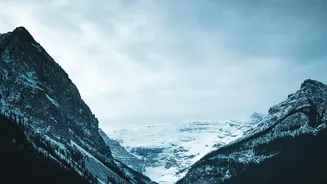
Famous for its Gatorade-blue water in summer, Lake Louise in Banff National Park offers a different kind of magic in winter. From mid-December to mid-April, the lake freezes solid and becomes one of the world's most scenic outdoor ice-skating rinks. Maintained daily by the nearby Fairmont Chateau, the rink is set against the stunning backdrop of the Victoria Glacier and snow-dusted peaks. An ice castle is often built on the lake, adding to the fairy-tale atmosphere.
Lake Bled, Slovenia
Lake Bled looks like a scene from a storybook year-round, but winter adds a layer of quiet enchantment. While the lake doesn't reliably freeze enough for skating every year, the surrounding scenery is spectacular. A medieval castle perched on a cliff overlooks the water, and a tiny, picturesque church sits on the lake's only island. When snow dusts the Julian Alps and the traditional 'pletna' boats rest on the shore, the view is serene and unforgettable.
Lake Superior, USA & Canada
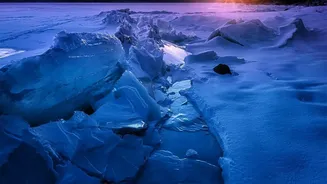
The largest of the Great Lakes, Superior puts on a dramatic winter show. In exceptionally cold years, the lake freezes enough to allow access to the Apostle Islands' sea caves in Wisconsin. Waves and seeping water freeze into spectacular formations, creating dazzling ice caves filled with needle-like icicles and frozen waterfalls. Access is rare and strictly controlled for safety, as conditions can change rapidly, but for those who get the chance, it's a truly unique experience.
Green Lake (Grüner See), Austria
Green Lake offers a bizarre and fascinating seasonal transformation. In winter, it's a small, shallow body of water only one or two meters deep, surrounded by a park with hiking trails and benches. But in the spring, snowmelt from the surrounding mountains floods the basin, submerging the entire park under up to 12 meters of crystal-clear water. Though its most famous spectacle is this underwater park in spring, its winter phase offers a tranquil, snow-covered landscape that is peacefully beautiful in its own right.
Lake Akan, Japan
Located in Hokkaido, Lake Akan is known for a delicate and ephemeral winter phenomenon: 'frost flowers'. When temperatures plummet below -15°C on calm mornings, water vapor crystallizes on the surface of the frozen lake, forming intricate, flower-like ice structures. These fragile creations can grow to the size of a palm but will shatter with the slightest breeze or melt as the sun rises, making them a magical and fleeting sight. Seeing the lake's surface covered in these 'flowers' is a rare treat.
Blue Pond (Aoiike), Japan
Also in Hokkaido, the Blue Pond is an artificial pond famous for its striking, milky-blue water, a result of naturally occurring minerals. In summer, it’s a vibrant blue, but winter brings a completely different kind of beauty. The pond freezes and is covered in snow, with the skeletal branches of withered larch trees poking through. From November to April, the site is illuminated at night, with lights casting changing colors across the frozen, snowy surface, creating a truly fantastical and dreamlike scene.
Pangong Tso, India & Tibet
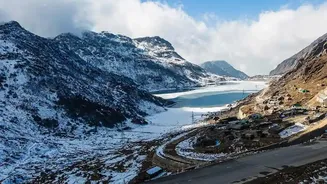
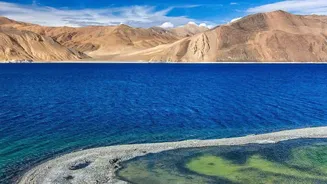
Stretching across the India-Tibet border at an elevation of over 4,350 meters, Pangong Tso is a high-altitude saline lake renowned for its ability to change colors. In winter, this vast body of water freezes solid, turning into a breathtaking expanse of ice set against the stark, arid mountains of the Himalayas. The sheer scale of the frozen lake, coupled with the dramatic high-altitude landscape, creates a sense of immense stillness and isolation, offering a profoundly different experience from its vibrant summer hues.