







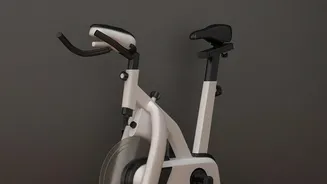
Decoding Zone 2 Training
Zone 2 training refers to exercising at a low-to-moderate intensity, typically around 60-70% of your maximum heart rate. It's often called the “conversational pace” because you should be able to hold a conversation without gasping for air. While it might
feel counterintuitive to slow down to get fitter, this intensity is the sweet spot for building a strong aerobic foundation. This type of training stimulates your Type I muscle fibers, which are key for endurance, and improves your body's ability to clear lactate, helping you sustain efforts for longer periods.
The Science of a Strong Aerobic Base
Working out in Zone 2 triggers powerful adaptations at the cellular level. Primarily, it enhances the function and density of your mitochondria, the energy factories within your cells. This makes your body incredibly efficient at using fat for fuel instead of relying on stored carbohydrates (glycogen). By becoming a better fat-burner, you preserve your limited glycogen stores for higher-intensity efforts and reduce overall fatigue. Furthermore, consistent Zone 2 work strengthens your heart muscle, allowing it to pump more blood with each beat and lowering your resting heart rate over time.
Why the Rower? The Low-Impact Advantage
This is where the rowing machine shines. It is a quintessential low-impact exercise because the seated position supports your body weight, removing the joint-jarring stress associated with activities like running. In running, your joints can absorb forces up to several times your body weight with every step. Rowing, however, involves a smooth, fluid motion that distributes the workload across approximately 86% of your muscles, from your legs and core to your back and arms. This full-body engagement provides a fantastic cardiovascular challenge without compressing or pounding your ankles, knees, and hips, making it ideal for long-term, sustainable fitness.
Your Guide to a Zone 2 Rowing Session
First, estimate your maximum heart rate (a simple formula is 220 minus your age) and calculate 60-70% of that number to find your target Zone 2 range. Begin your workout with a light warm-up. On the rower, focus on proper form: the stroke should be initiated by a powerful push from your legs, followed by a lean-back from your core, and finished with a pull from your arms. The recovery is the reverse: arms extend, core pivots forward, and legs bend. Maintain a steady, rhythmic pace, keeping your heart rate within your calculated Zone 2. A good rule of thumb is a 1:2 drive-to-recovery ratio; if your push takes one second, your return should take two. Aim for longer sessions of 30 minutes or more to maximize aerobic benefits.
Common Mistakes to Avoid
To get the most out of your session, steer clear of a few common errors. First, avoid poor posture. Sit tall and keep your spine neutral; don't hunch your shoulders or over-extend your back. Second, don't rely just on your arms. The power comes from your legs, which should be doing about 60% of the work. Finally, find the right resistance. The damper setting on a rower is like a bike's gears, not a volume knob. A setting between 3 and 5 often mimics the feel of rowing on water and is a great place to start for steady-state cardio.