



The Secret Language of Labels
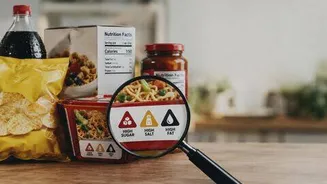
The Food Safety and Standards Authority of India (FSSAI) mandates that all packaged foods display nutritional information. This panel is your most reliable guide to what's inside, far more than the claims on the front. Ingredients are listed in descending
order by weight, so the first three items tell you what the product is mostly made of. If sugar, salt, or unhealthy fats are high on that list, it’s a red flag, regardless of buzzwords like "natural" or "multigrain". Another trick is the serving size. Manufacturers often list nutritional values for a small, unrealistic serving—like two biscuits—when most people eat the whole sleeve. Always check the "per 100g" column for a fair comparison between products.
The Salty Truth Hiding in Snacks
Indians consume, on average, around 11 grams of salt per day, more than double the World Health Organization's recommended limit of 5 grams. While some salt is necessary for bodily functions, excess sodium is a major contributor to high blood pressure, which increases the risk of heart disease and stroke. It can also strain the kidneys and lead to water retention, causing bloating and puffiness. Salt isn't just in obviously savoury foods; it's a cheap preservative and flavour enhancer found in everything from breakfast cereals and breads to sauces and processed meats. When reading a label, be wary of products with over 600mg of sodium per 100g, as this is considered high.
The Many Disguises of Sugar
Sugar is not just the white stuff you add to your chai. On ingredient lists, it hides under many names like high-fructose corn syrup, dextrose, sucrose, maltodextrin, and fruit juice concentrate. High intake of added sugars is linked to a host of health problems, including obesity, type 2 diabetes, fatty liver disease, and increased inflammation. It provides empty calories, meaning it offers energy with little to no nutritional value. Packaged fruit juices, breakfast cereals, biscuits, and even savoury ketchups can be loaded with sugar. A good rule of thumb is to be cautious with any product that has more than 15g of sugar per 100g. Choosing whole foods over packaged ones is the best way to control your sugar intake.
Fats: The Good, The Bad, and The Ugly
Fat is an essential nutrient, but the type of fat matters immensely. Labels break fat down into saturated fat and, sometimes, trans fat. Unsaturated fats (both monounsaturated and polyunsaturated), found in foods like nuts, seeds, and olive oil, are considered healthy fats that can help reduce bad cholesterol levels. Saturated fats, found in animal products like butter and ghee, as well as in palm oil and coconut oil, should be consumed in moderation. Diets high in saturated fat can raise 'bad' LDL cholesterol, increasing heart disease risk. The real villain is trans fat, created by an industrial process called hydrogenation. It has no health benefits and is so harmful that health organizations are working to eliminate it from the food supply. FSSAI has rules for products to be declared "trans fat free," so always check for this on the label.