






Beyond the Daily Forecast
The way we interact with weather information is undergoing a profound transformation. Gone are the days of relying solely on a district-level forecast that offered a broad overview. Today, the convergence of artificial intelligence (AI), machine learning
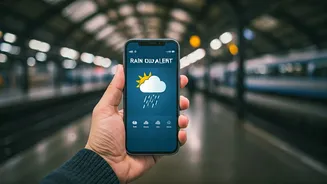
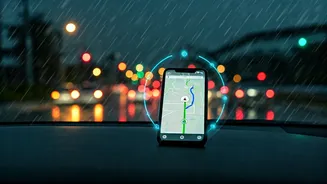
(ML), and a dense network of satellites and ground sensors is ushering in the era of hyperlocal weather intelligence. Instead of knowing the weather for an entire district, you can now get predictions for your specific neighbourhood, sometimes down to a few square kilometres. This leap in precision is powered by new AI models that can process decades of historical data and run complex simulations on a laptop, a task that once required a supercomputer. In India, government bodies like the India Meteorological Department (IMD) and a new wave of tech startups are making this granular data more accessible than ever, through apps and data gateways known as APIs. This shift from broad prediction to hyperlocal, real-time data is unlocking its potential for everyone.
Empowering Indian Agriculture
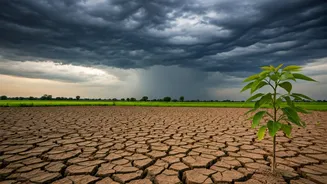
Nowhere is this transformation more impactful than in Indian agriculture. For millions of farmers, the weather is their business partner. In recent years, AI-powered initiatives have delivered monsoon forecasts with up to four weeks' notice to 38 million farmers via SMS. This allows them to make critical, data-driven decisions: when to sow, which crops to plant, and how much to invest in seeds and fertilisers. The system doesn't just say rain is coming; it can predict the onset of the monsoon, unusual dry spells, and provide tailored advice for 127 different agro-climatic zones. Tech startups are also providing satellite data that gives farmers insights on irrigation, pest control, and soil health, leading to increased yields and profits. One study showed that farmers using these tools increased their yields by an average of 30%.
A Tool for Modern Business
It’s not just farmers who are benefiting. Businesses across India are realising that weather data is a crucial input for success. Extreme weather, like heatwaves and floods, poses a significant risk to Micro, Small and Medium Enterprises (MSMEs), which form the backbone of the economy. Recent studies show that over 90% of MSMEs report that heat stress and flooding disrupt their operations, affecting worker productivity and supply chains. Access to accurate, short-term forecasts allows businesses to adapt. A small restaurant can anticipate a drop in footfall during a heatwave and adjust inventory. A logistics company can reroute deliveries to avoid a flooded street. The renewable energy sector uses weather data to assess the best locations for new wind and solar farms and to predict power generation.
Smarter Cities and Safer Lives
In India’s rapidly growing cities, hyperlocal weather data is becoming a critical tool for public safety and urban planning. With more precise information, city officials can issue timely warnings for floods, heatwaves, and cyclones, giving residents more time to prepare. Cities like Mumbai are already using integrated flood warning systems that provide early warnings for high rainfall events. This data also helps manage urban resources more effectively. It can inform traffic management systems to ease congestion during downpours and help utility companies prepare for spikes in energy demand during heatwaves. In the long term, this detailed climate information will be invaluable for designing more resilient infrastructure. For individuals, specialised apps can provide real-time air quality data and alerts for lightning, helping people make healthier and safer choices every day.