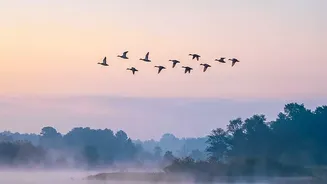







Before the sun asserts its authority, a different kind of life awakens in the forests of Chhattisgarh. It begins not with a roar, but a whisper—a subtle shift in the air, a rustle in the sal trees, and the first tentative notes of a daybreak chorus.
The Awakening Forest
Long
before the first light spills into the Kanger Valley, the forest is alive with sound. A chill hangs in the pre-dawn air, carrying the scent of damp earth and blooming flora. This is the hour of the birds. As darkness gives way to a deep indigo, the first calls echo through the dense canopy of sal and bamboo. This is birdwatching in Chhattisgarh, an experience less about ticking off a list and more about immersing oneself in a delicate, unfolding spectacle. The state, with over 44% of its land under forest cover, offers an unparalleled sanctuary for avian life. Places like the Achanakmar Tiger Reserve and the Kanger Valley National Park are not just refuges for tigers and leopards; they are cathedrals of birdsong. The quiet magic promised by the headline is found in these moments—the patient waiting, the cool air on your face, and the gradual realisation that you are a guest in a world that operates on its own ancient rhythm.
A Symphony of Wings
As dawn breaks, the performance begins in earnest. The forest floor comes alive with the flash of an Indian Pitta, while the melodic calls of a White-rumped Shama fill the undergrowth. A recent survey in the Kanger Valley National Park documented over 200 bird species, a testament to the region's incredible biodiversity. Birdwatchers can spot everything from the majestic Crested Serpent Eagle gliding overhead to the vibrant hues of the Malabar Trogon, a species typically found in the Western Ghats. The air hums with the chatter of parakeets and mynas, and the rhythmic drumming of woodpeckers—the park is home to 11 different species. This is a landscape where birds from the Himalayas, the Northeast, and the Ghats converge, creating a unique and surprising mix of fauna. Each rustle of leaves could reveal a Red Junglefowl or a shy partridge, making every moment a discovery.
The Famed Bastar Hill Myna
Among the state's avian treasures, one bird holds a special status: the Bastar Hill Myna. Declared Chhattisgarh's state bird in 2002, this jet-black bird is renowned for its remarkable ability to mimic the human voice. This talent, unfortunately, has also made it a target for the illegal pet trade, leading to conservation efforts to protect its population. The Bastar Hill Myna is endemic to the Kanger Valley, preferring to nest in the holes of mature sal trees. Efforts to conserve the bird have involved engaging local tribal youth as 'myna mitras' or 'friends of the myna', who monitor nests and raise awareness within their communities. Spotting one is a highlight for any visitor, a chance to see a protected species thriving in its natural, wild habitat.
Community and Conservation
The magic of birdwatching here is deeply intertwined with the local communities. Chhattisgarh is home to numerous tribal groups like the Gonds and Baigas, who have lived in these forests for centuries. Ecotourism initiatives are increasingly providing a sustainable livelihood that aligns with their deep connection to the land. When you hire a local guide, you are often being led by someone from a forest village whose family has known the rhythms of this ecosystem for generations. They know which trees the flycatchers prefer, where the owls are likely to roost, and can interpret the forest's subtle signals in a way no outsider could. This form of tourism ensures that the benefits flow directly to the people who are the ancestral custodians of this natural heritage, making your visit a part of a positive, sustainable cycle.
Planning Your Dawn Vigil
The ideal time for a birdwatching trip to Chhattisgarh is during the winter months, from November to March. The weather is cool and pleasant, and migratory birds join the resident populations, increasing the diversity of sightings. Essential gear includes a good pair of binoculars, a field guide to Indian birds, and neutral-coloured clothing that blends in with the forest. Most importantly, approach the experience with patience. The rewards of birding in forest villages are not delivered on demand. They are revealed slowly, to those who are willing to sit, listen, and let the quiet magic of the forest envelop them. Whether you're in the sal forests of Achanakmar or the riverine habitats of the Kanger Valley, the experience is a profound reminder of the rich natural heritage hidden in the heart of India.