







An Arrival on the Global Stage
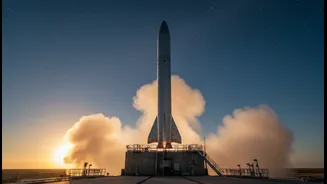
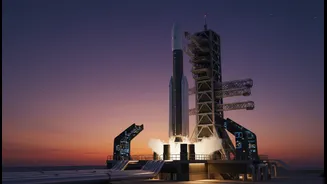
All eyes are on the Satish Dhawan Space Centre in Sriharikota, where Indian startup Skyroot Aerospace is set for the first orbital launch of its Vikram-1 rocket. The mission, aptly named 'Aagaman' or 'arrival,' is a pivotal moment for India's private
space industry. If successful, it will mark the first time an Indian private company has placed a satellite into orbit, moving the nation into a new era of commercial spaceflight. This test flight is designed to validate the vehicle's technologies and collect crucial data, paving the way for a future of regular, on-demand satellite launches. But beyond the launchpad, Vikram-1 represents a different kind of liftoff—an economic one that is creating high-value jobs and expanding career frontiers.
More Than Just Rocket Scientists
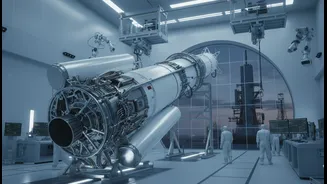
While astronauts and aerospace engineers are the visible face of the space industry, the reality of building a rocket company is far broader. Startups like Skyroot are hiring aggressively across a range of specialisations. Their recruitment drives target engineering graduates in mechanical, electrical, and aerospace fields, but also extend to software development, with a demand for skills in C++, Python, and data analytics. These companies seek talent for every stage of the process: design, development, testing, and production. This creates direct employment for hundreds of skilled professionals, from avionics technicians and flight test engineers to systems integration experts, many of whom are mentored by veterans from ISRO.
The Ripple Effect Through Ancillary Industries
A rocket launch is the culmination of a vast and complex supply chain, creating a significant ripple effect of indirect employment. For every Vikram-1 that reaches for the stars, a network of ancillary companies on the ground is activated. These are the unsung heroes of the space economy, providing everything from specialised materials to precision components. Legacy firms like Larsen & Toubro, Godrej Aerospace, and Hindustan Aeronautics have long supported India's space program by fabricating critical components like rocket engines, booster segments, and propellant tanks. Now, a new generation of over 400 space startups is joining them, focusing on everything from satellite subsystems and ground station software to propulsion technology and data analytics. This diversification creates demand for a wide array of industrial and technical jobs well beyond the launch vehicle manufacturers themselves.
A New Policy Frontier
This boom in private space activity and its associated job market is no accident. It is the direct result of a strategic policy shift by the Indian government. The establishment of the Indian National Space Promotion and Authorization Center (IN-SPACe) in 2020 was a game-changer. IN-SPACe acts as a facilitator, allowing private companies to use ISRO's world-class testing facilities and launch infrastructure, which significantly lowers the barrier to entry and accelerates development cycles. This policy push aims to grow India's share of the global space economy from around 2% to a more significant 8-10% by 2033, with projections suggesting the national space economy could reach $44 billion. This supportive environment is crucial for transforming deep-tech startups into globally competitive businesses and sustainable employers.
Building the Future Workforce
The long-term success of India's private space industry depends on a steady pipeline of talent. The growth of companies like Skyroot, Agnikul, Pixxel, and Dhruva Space is creating entirely new career pathways. The sector is not only absorbing traditional aerospace and mechanical engineers but also drawing talent from adjacent industries like automotive engineering, data science, and advanced materials. This convergence is creating a demand for new, hybrid skill sets in areas like robotics, avionics, and navigation systems. State governments are also getting involved, with Tamil Nadu's space policy, for example, aiming to create 10,000 high-value jobs and train thousands of professionals to meet this growing demand. This focus on workforce development ensures that the employment opportunities fueled by missions like Vikram-1 are just the beginning.